 Haplo
Haplo
4 Days in Tokyo: An Itinerary for First-Timers
Old Tokyo from Yanaka down to Asakusa, Shinjuku from a ramen breakfast to Golden Gai, Harajuku down to Shibuya, then Tsukiji and Ginza: twelve meals and 31 stops, each checked against its own mid-October 2026 hours.
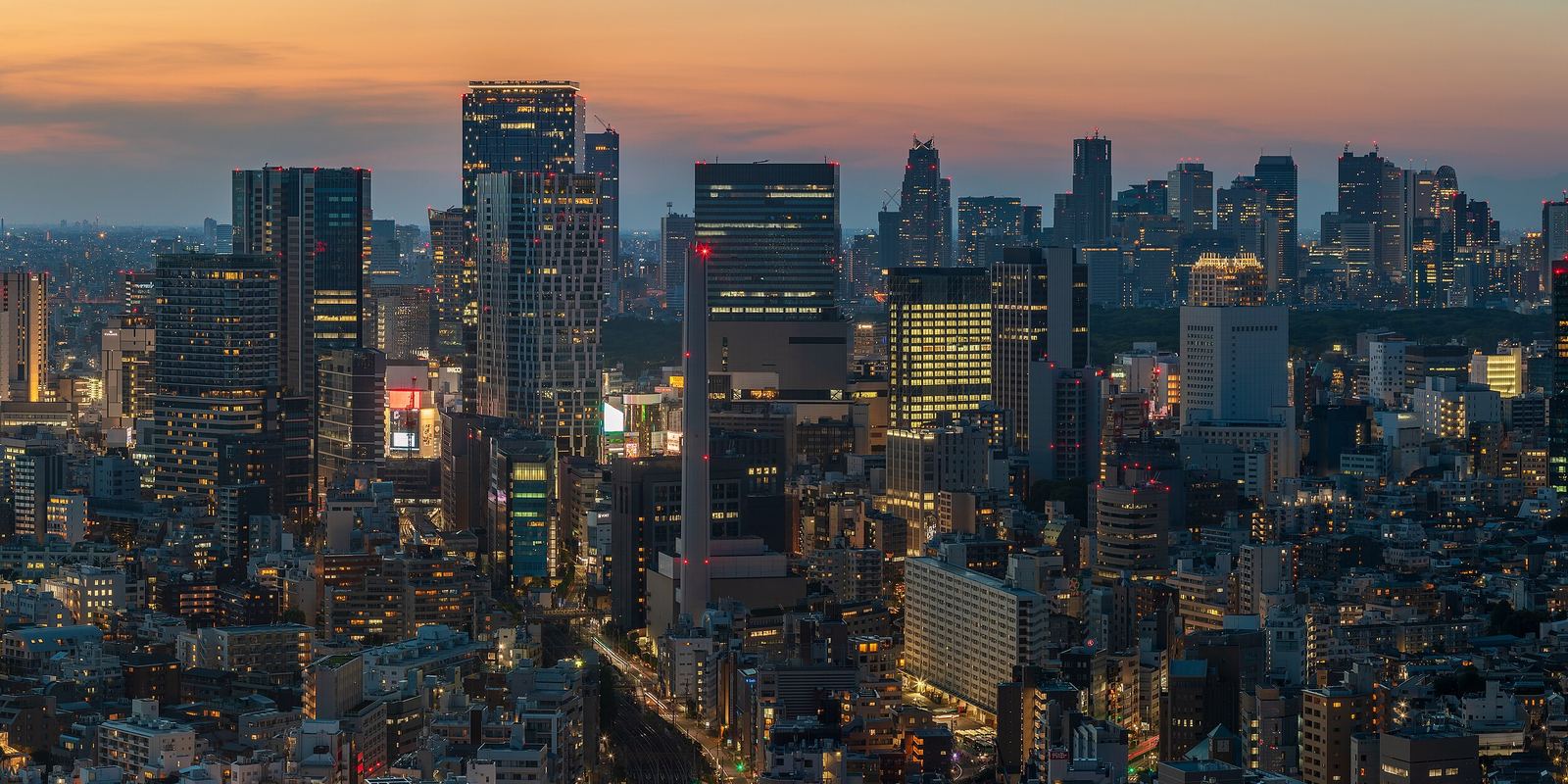
Tokyo is too big to see in four days, and most plans try anyway, crossing the city twice a day and spending the best hours underground. The better way is to pick four neighborhoods, give each one a whole day, and walk. The trains are superb, but the city is at its best at street level, where a 1934 beer hall sits across the street from a glass shopping complex and a ramen counter hides upstairs in an alley of bars.
This 4-day Tokyo itinerary does exactly that. Day 1 is the old low city, from breakfast in a rescued wooden apartment in Yanaka to oden in Asakusa, with the national museum and Senso-ji in between. Day 2 is Shinjuku, from sardine ramen in Golden Gai at 8 in the morning to a nightcap in the same lanes at 8 at night. Day 3 walks from Yoyogi Park through Harajuku to the roof of SHIBUYA SKY, and Day 4 runs from an 18-dish temple breakfast in Tsukiji to a single act of kabuki in Ginza.
We planned the twelve meals first, then checked every stop against its own website for mid-October 2026, and a few things had changed. Tsunahachi, Shinjuku’s tempura house since 1923, is cooking in a temporary annex while its building is rebuilt. The Nezu Museum is closed between exhibitions for most of those dates. The Tsukiji Outer Market shuts on most October Wednesdays, which is why Tsukiji comes last. And the city government’s 45th-floor observatory is still free, while a sunset slot at SHIBUYA SKY now costs ¥3,400.
We ran the plan through Bilbo, the trip planner we make, to put each day in route order and check every stop against its closing days. The maps below come straight from the app.
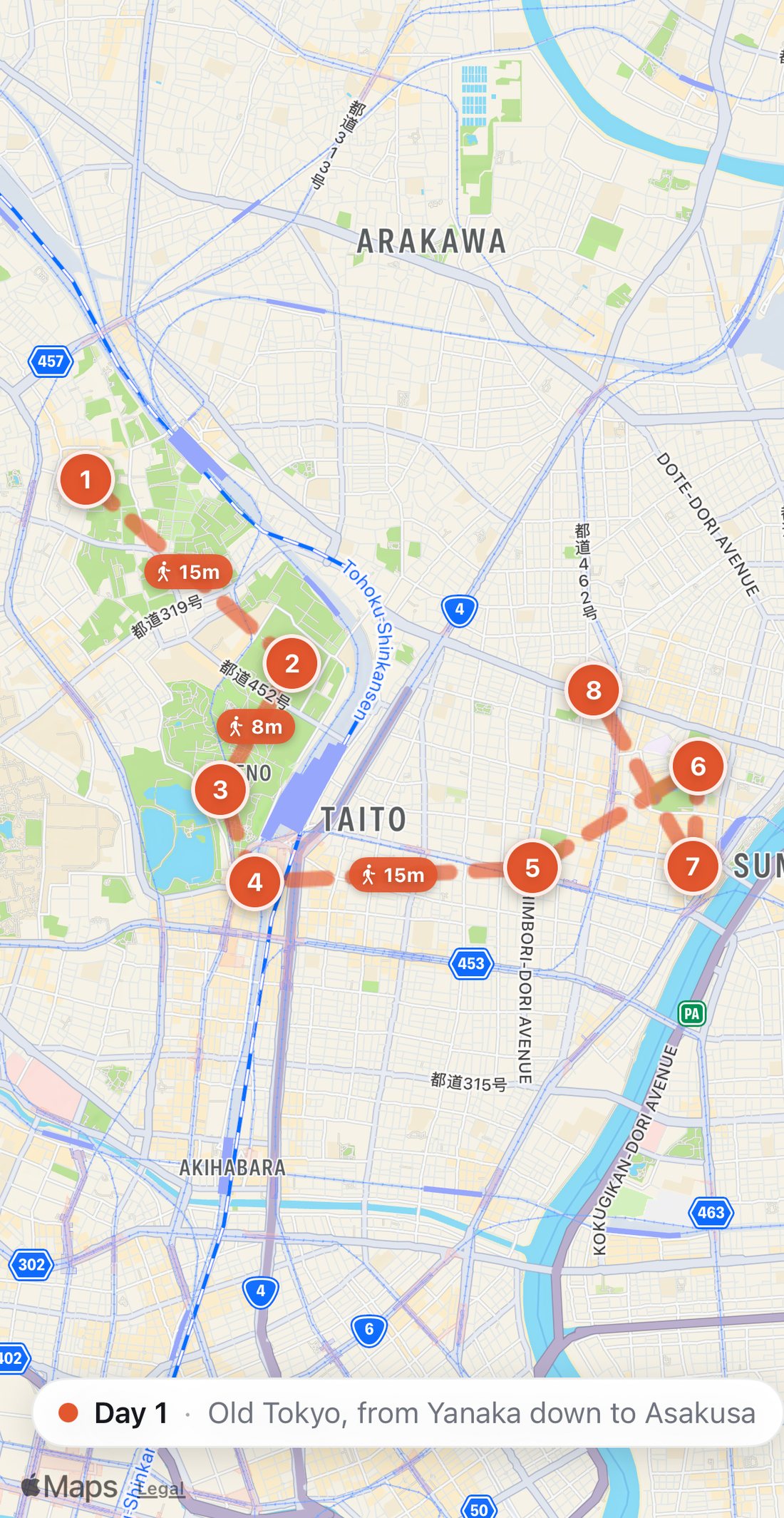
How to use it. Each day stays in one part of the city. Measured stop to stop in a straight line from our pins, Day 1 is about 6 km of walking (4.6 km if you take the Ginza Line two stops to Kappabashi), Day 2 about 3.5 km, Day 3 about 3.7 km and Day 4 about 4 km; the paths inside the gardens and museums, and the rides to each morning’s start, add more. It’s written for a Wednesday to Saturday (14 to 17 October 2026), when everything on it is open, and the practical section at the end says what to swap on other days.
Four days, four walkable areas
Each day stays in one part of the city, so you walk it instead of crossing Tokyo twice: Yanaka and Asakusa, then Shinjuku, then Harajuku and Shibuya, then Tsukiji and Ginza.
- Day 1 · Wednesday Old Tokyo, from Yanaka down to Asakusa Yanaka · Ueno · Kappabashi · Asakusa · 8 stops
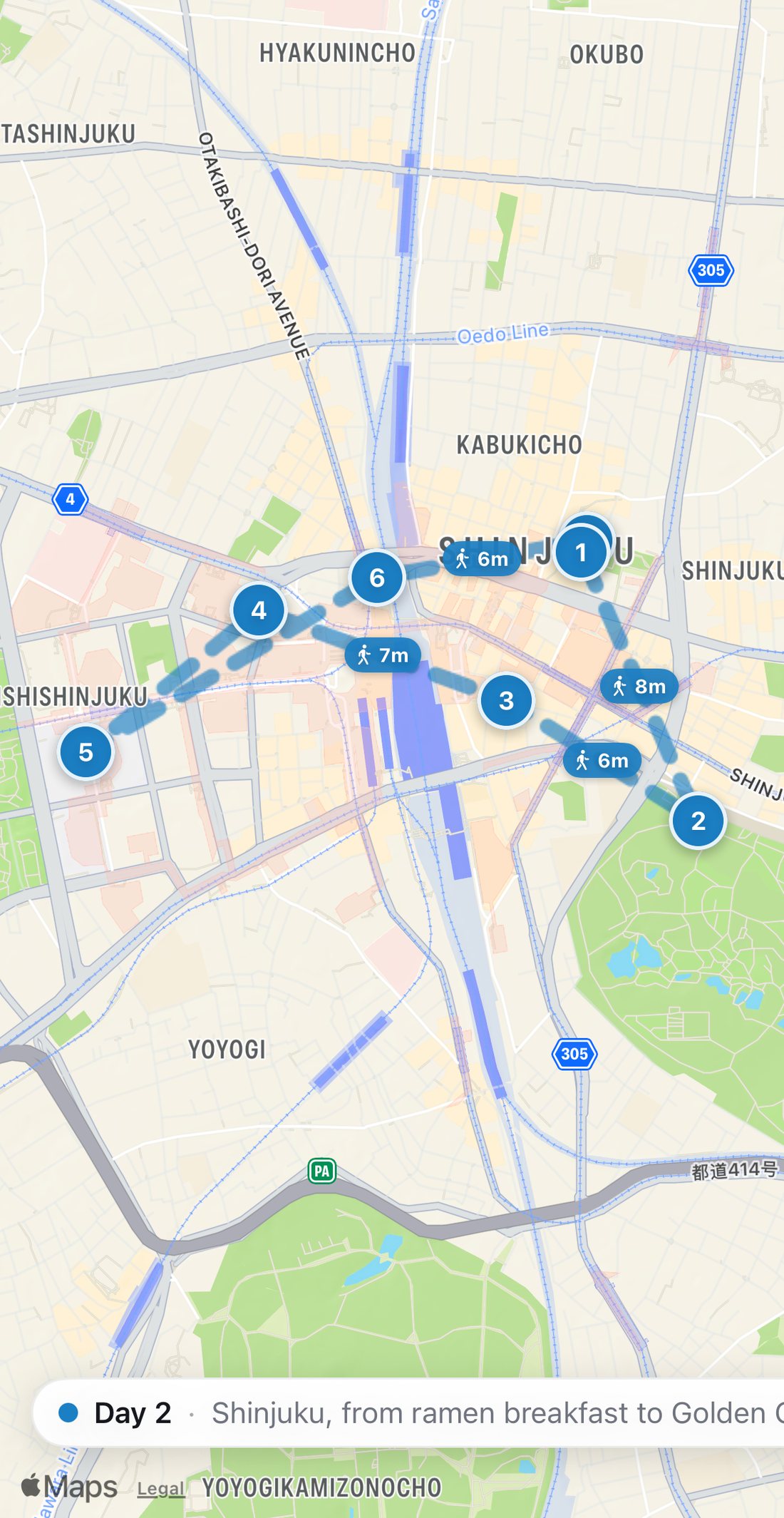
- Day 2 · Thursday Shinjuku, from ramen breakfast to Golden Gai Kabukicho · Shinjuku Gyoen · Nishi-Shinjuku · 7 stops
- Day 3 · Friday Harajuku to Shibuya, on foot Tomigaya · Harajuku · Omotesando · Shibuya · 8 stops
- Day 4 · Saturday Tsukiji, a tidal garden and Ginza Tsukiji · Hama-rikyu · Ginza · 8 stops
Best days: Wednesday to Saturday as written. Avoid starting on a Sunday or a Monday; the practical bits below say what to swap.
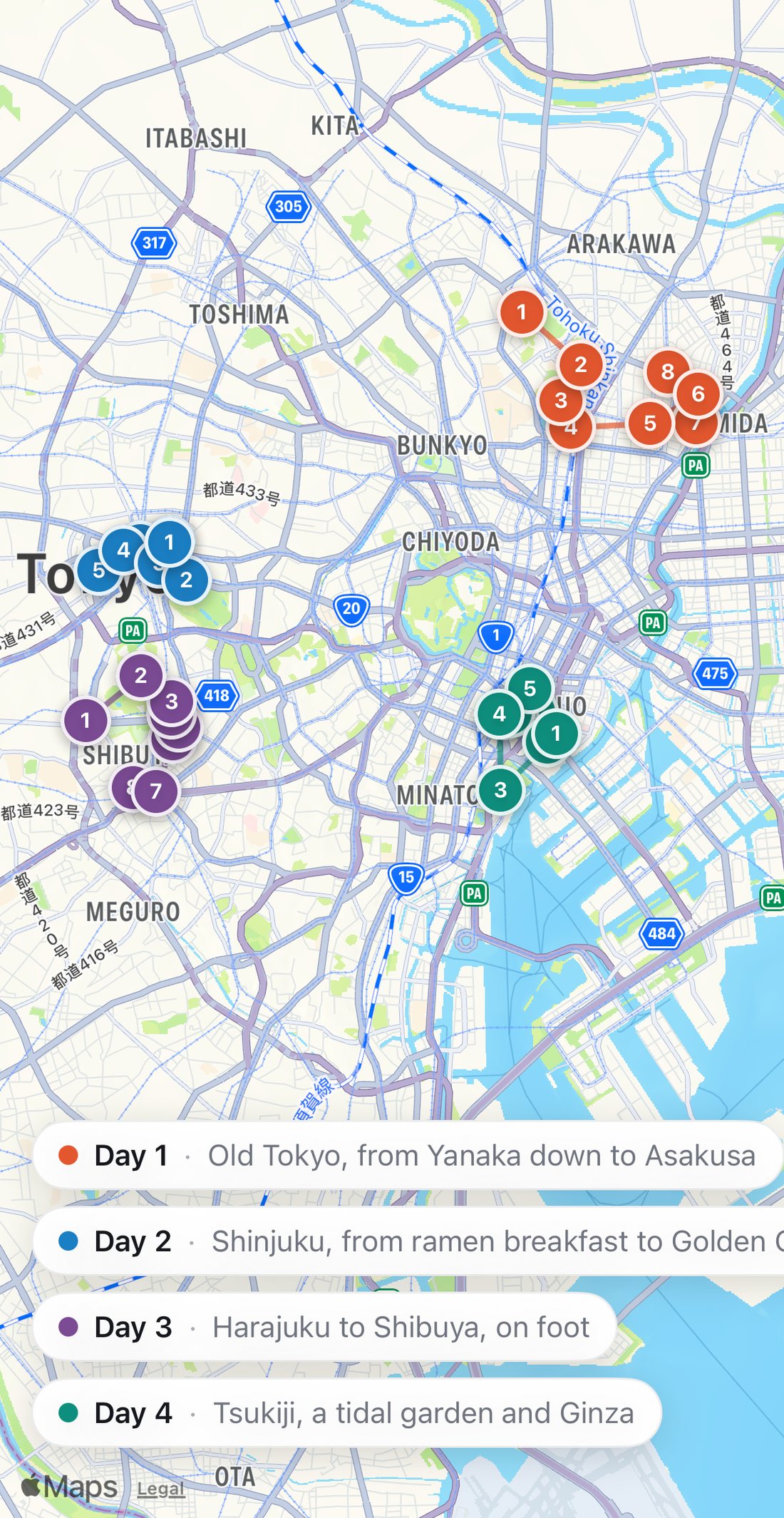
Old Tokyo, from Yanaka down to Asakusa
Breakfast in a rescued wooden apartment in Yanaka, then downhill through the old low city: the national museum at opening time, lunch in the woods of Ueno Park, the Ameyoko market street and the kitchen-supply shops of Kappabashi. Senso-ji comes before its hall closes, the sunset from a free rooftop across the street, and dinner is oden at a counter with roots in 1915.
-
· Breakfast · Yanaka
Breakfast at HAGISO
HAGISO is an old wooden apartment building in Yanaka that was saved from demolition and turned into what it calls the smallest cultural complex: a café and a gallery downstairs, and upstairs the front desk of hanare, a hotel whose rooms are spread through the neighborhood. The café, HAGI CAFE, serves breakfast from 8 every day. The hotel’s guests eat its seasonal Japanese breakfast here, built around one region of Japan at a time.
Local tip The walk from here to the museum takes about 20 minutes through Yanaka, past Kayaba Coffee, a Yanaka corner coffee house since 1938, the old Himalayan cedar the neighbors saved, and the restored wooden houses of Ueno Sakuragi Atari, home to a bakery and the Yanaka Beer Hall.
- Cost
- Café prices; the walk-in breakfast price isn't published online
- Hours
- Breakfast 8:00–10:30 every day; the café's afternoon hours skip Mondays and the second Tuesday of the month
On TikTok: @svadore Checked: HAGISO (official), hanare hotel (official), Taito Historic City Research Society, Ueno Sakuragi Atari (official)
-
· Icon · Ueno Park
Tokyo National Museum
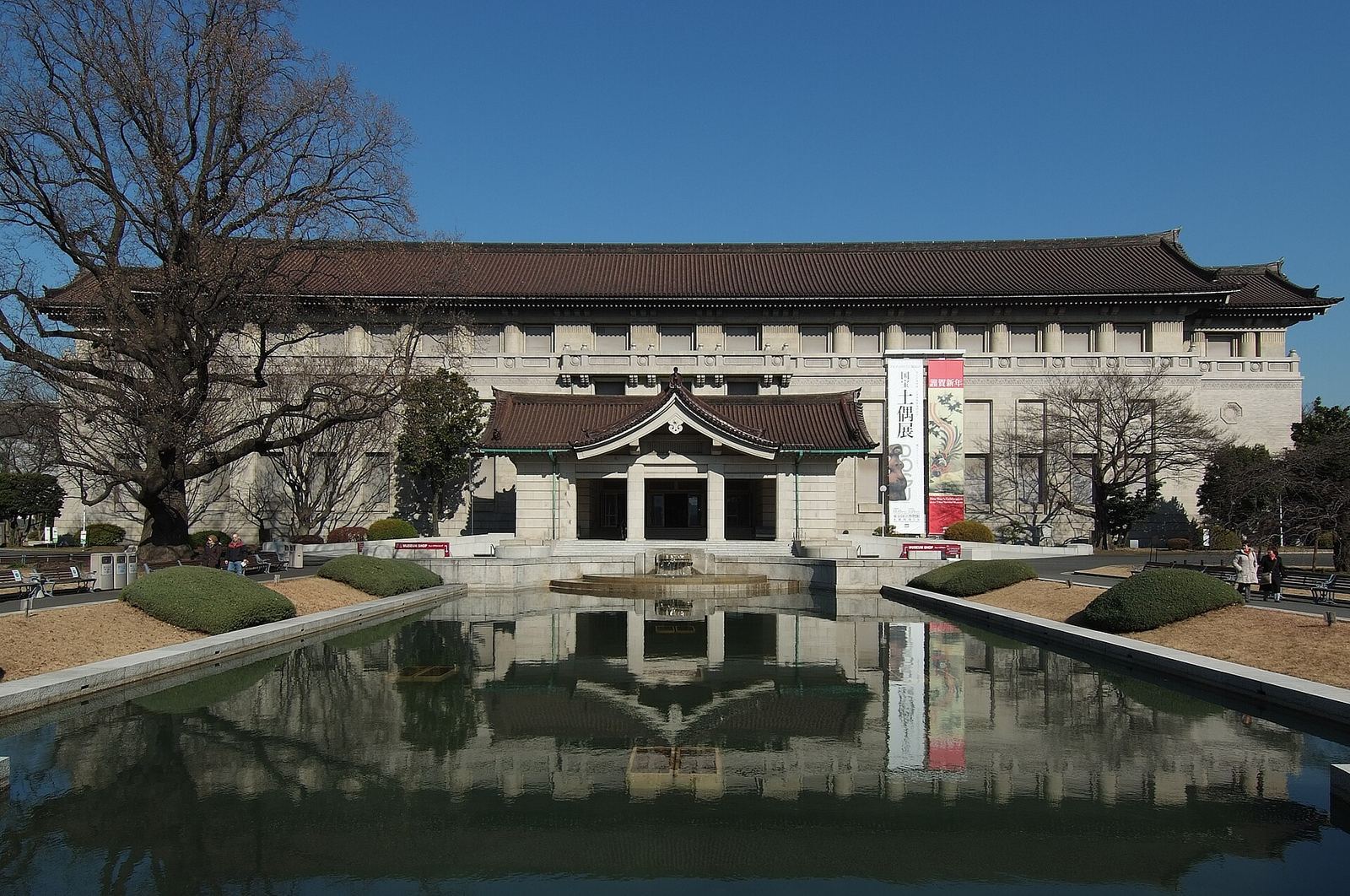
Photo: Wiiii, CC BY-SA 3.0 If you have two hours, spend them in the Honkan, the main building, whose Japanese Gallery is the heart of the national collection. The museum opens at 9:30, so be at the gate when it does. Collection tickets are ¥1,000 and can be bought on your phone, so there’s no ticket line to join.
Local tip Buy the ticket on the walk over from Yanaka. On Fridays and Saturdays the museum stays open until 8 pm, a handy swap if the morning goes wrong.
- Cost
- ¥1,000 (university students ¥500)
- Hours
- 9:30–17:00, Fridays and Saturdays until 20:00; closed Mondays (open on a holiday Monday, closed the day after)
- Booking
- Not needed; tickets can also be bought online
-
· Lunch · Ueno Park
Lunch at Innsyoutei
A traditional Japanese restaurant tucked into the trees of Ueno Park, where lunch is a basket of small dishes built around tofu and yuba. The Hanakago-zen ‘Tsuki’ (¥3,000) brings the basket with chawanmushi, a seasonal grilled dish, rice with beans and a sweet; the three-tier Chatsubo bento is ¥2,000, and the fuller Hanakago Honzen ¥4,400.
Local tip Book if you can: weekday reservations start from the ¥3,000 set (weekends from the ¥4,400 one), and without a booking the multi-course sets stop at 2 pm and the restaurant itself warns of waits.
- Cost
- Lunch ¥2,000–4,400
- Hours
- Lunch 11:00 to 15:00 last order; dinner 17:00–22:00; open every day
- Booking
- By phone; weekday bookings from the ¥3,000 set
Checked: Innsyoutei: lunch menu (official), Innsyoutei: access and hours (official)
-
· Market street · Ueno
Ameyoko
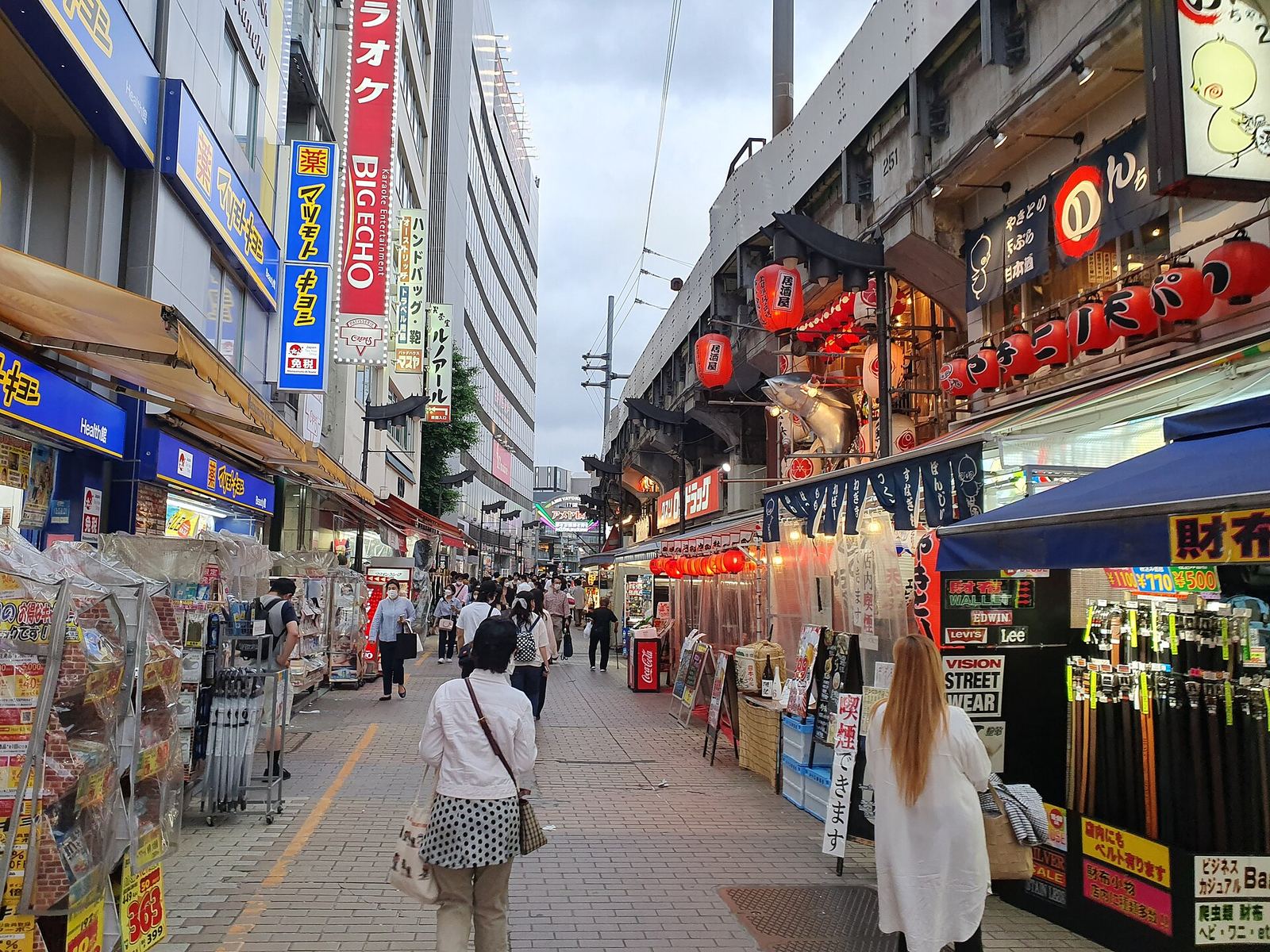
Photo: Syced, CC0 Walk down out of the park to Ameyoko, the market street between Ueno and Okachimachi stations where more than 400 shops squeeze into about 500 metres. It’s a place for snacking as you walk and browsing the stalls, and it’s famously packed in the last days of the year.
Local tip From the southern end, take the Ginza Line two stops from Ueno to Tawaramachi for Kappabashi, or walk it in about 25 minutes.
- Cost
- Free to browse
- Hours
- Each shop keeps its own hours
- Where
- Ueno 4 and 6, Taito
Checked: Ameyoko shopping street (official)
-
· Shop · Kappabashi
Kappabashi Dougu Street
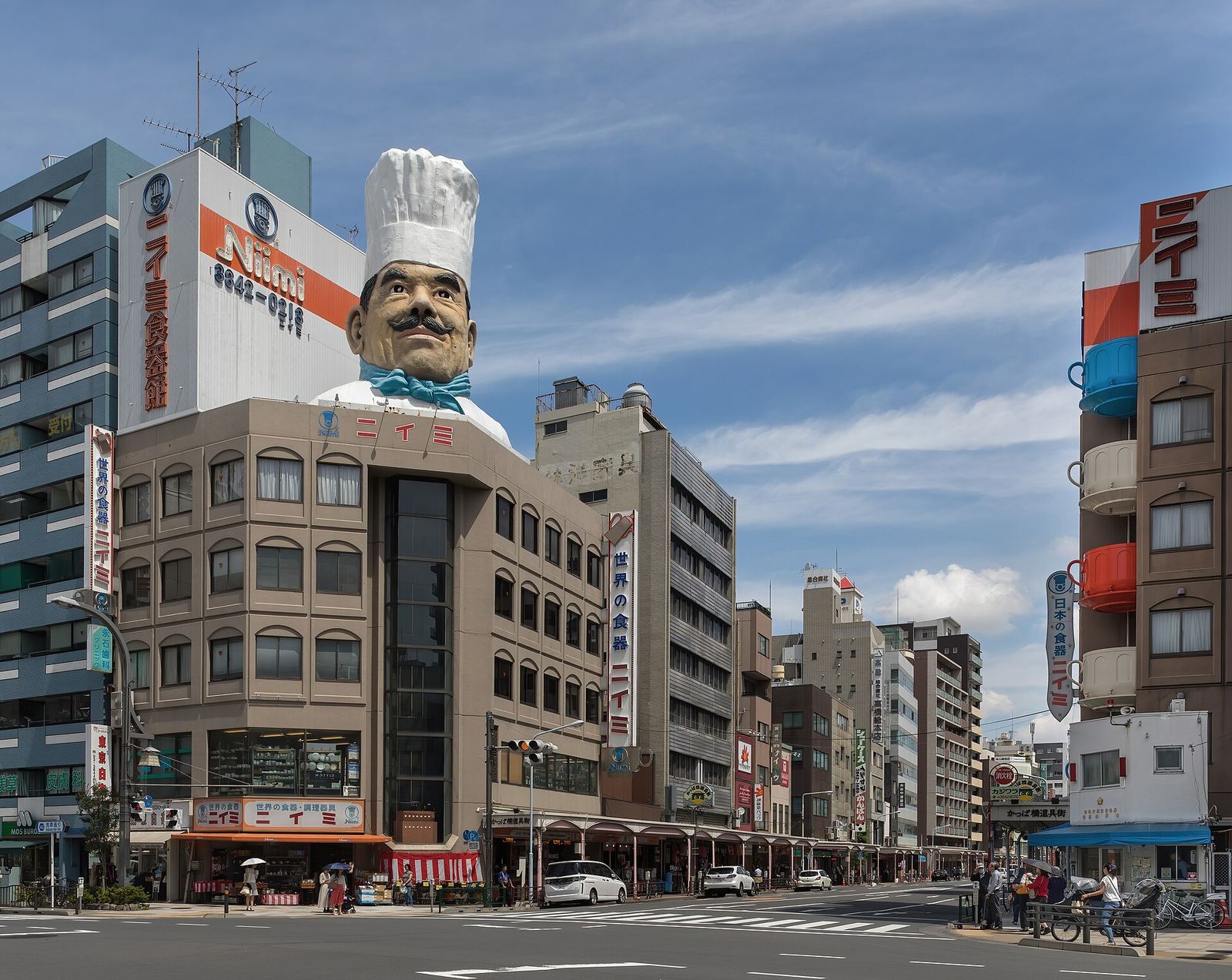
Photo: Basile Morin, CC BY-SA 4.0 Kappabashi is where Tokyo’s cooks shop: a street of specialty stores for the restaurant trade, and almost every one of them sells to ordinary visitors too. Start at the southern end, under the giant chef’s head on the roof of the Niimi tableware building, and work north.
Local tip Shops set their own days off. Most open on Saturdays but only about 30 percent on Sundays, so this is a weekday or Saturday stop.
- Cost
- Free to browse
- Hours
- Each shop sets its own hours and holidays; most open on Saturdays, about 30% on Sundays
-
· Icon · Asakusa
Senso-ji
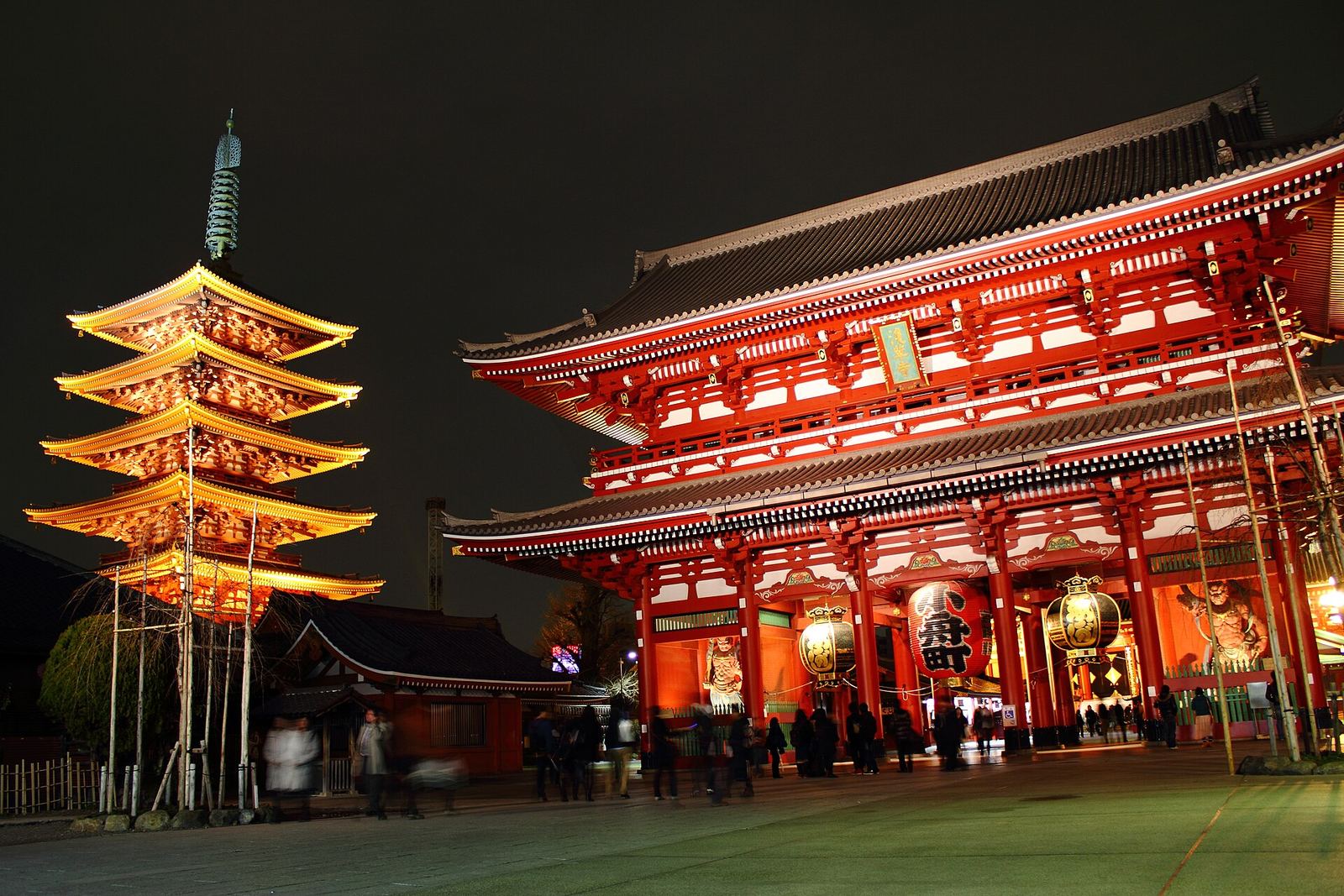
Photo: Kakidai, CC BY-SA 3.0 Go in under the Kaminarimon gate, up the Nakamise shopping street and through the Hozomon to the main hall, which is open until 5 pm (from 6:30 am between October and March). After it closes you can still walk the grounds, and the gates and the five-storied pagoda are lit up after dark, which is how you’ll see them again on the way to dinner.
Local tip Rinse your hands at the water pavilion before you go up to the hall, then pray with your palms together and no clapping; clapping belongs at Shinto shrines, not Buddhist temples.
- Cost
- Free
- Hours
- Main hall 6:30–17:00 from October to March (6:00–17:00 April to September); grounds open after the hall closes
- Where
- 2-3-1 Asakusa, Taito
On TikTok: @travel.japan_together Checked: Senso-ji (official)
-
· Sunset · Asakusa
The free terrace at the Asakusa Culture Tourist Information Center
The city’s tourist center opposite the Kaminarimon has a free observation terrace on the 8th floor, with Asakusa’s rooftops and the temple on one side and the Tokyo Skytree on the other. Sunset is at 5:08 pm on October 14, so arrive a few minutes before and stay for the lights.
Local tip There’s a café on the same floor, open until 8 pm, if you want to sit down with the view.
- Cost
- Free
- Hours
- 8th-floor terrace 9:00–22:00; information counter 9:00–20:00
Checked: Taito City: Asakusa Culture Tourist Information Center, National Astronomical Observatory of Japan
-
· Dinner · Asakusa
Dinner at Otafuku
Oden is Tokyo’s slow-simmered pot of daikon, eggs, tofu and fish cakes, the food of cooling evenings, and Otafuku traces its oden back to 1915, first in Osaka and then here, through the 1923 earthquake and the war. There are English menus, and the restaurant puts the average spend at ¥5,000 to ¥8,000.
Local tip Walk here through Senso-ji’s lit-up grounds, and book online: the restaurant says its phone is easiest to reach between noon and 2 pm, and often can’t be answered once service starts.
- Cost
- About ¥5,000–8,000 a person, plus a ¥500 seat charge
- Hours
- 17:00–23:00 (last order 22:00); closed Sundays (no closing day in winter)
- Booking
- Online on its website, or by phone 12:00–14:00
- Where
- 1-6-2 Senzoku, Taito
Shinjuku, from ramen breakfast to Golden Gai
Shinjuku by daylight and after dark: sardine ramen in Golden Gai while the bars sleep, the city’s great garden at opening time, tempura from a 1923 institution, and Van Gogh’s Sunflowers. The sunset is free from the 45th floor of the city government’s tower, dinner is skewers in the postwar alleys by the station, and the night ends back in Golden Gai.
-
· Breakfast · Kabukicho
Ramen breakfast at Nagi, Golden Gai
Golden Gai is asleep in the morning, the best time to see its lanes. On the second floor of one of its old wooden houses, Nagi serves niboshi ramen, a bold broth made by boiling dried sardines for 12 hours; Time Out lists the signature bowl at ¥1,300. It’s open around the clock, so breakfast is no problem.
Local tip From here it’s a 15-minute walk to Shinjuku Gyoen’s Shinjuku Gate, which opens at 9.
- Cost
- Niboshi ramen about ¥1,300
- Hours
- Open 24 hours
Checked: Ramen Nagi: store list (official), Time Out Tokyo: best restaurants in Shinjuku
-
· Garden · Shinjuku
Shinjuku Gyoen
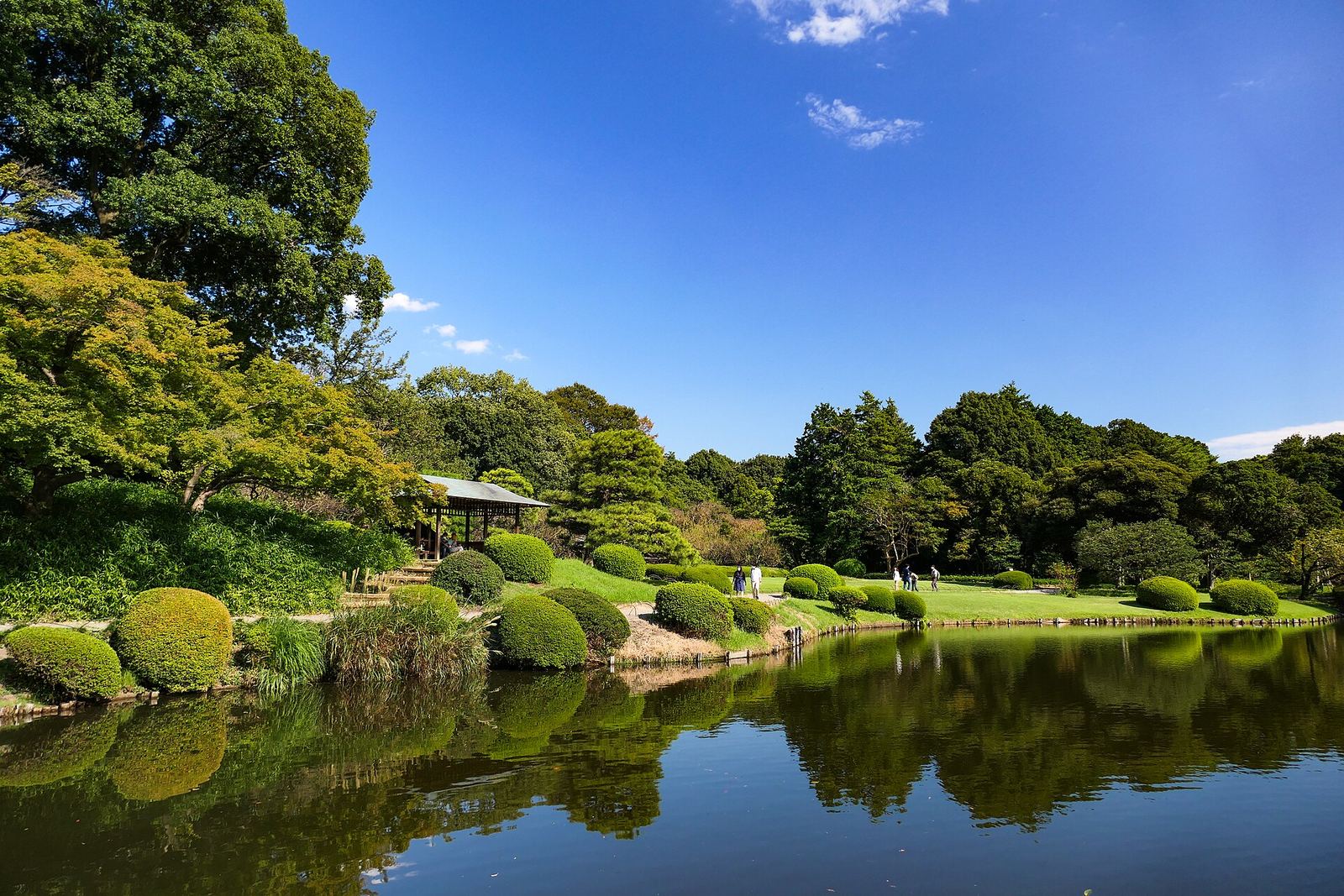
Photo: MaedaAkihiko, CC BY-SA 4.0 A national garden of lawns, ponds and huge old trees on the edge of Shinjuku. Be at the Shinjuku Gate when it opens at 9 and head for the Japanese landscape garden and its ponds while the paths are still quiet.
Local tip Entry is ¥500 and you can pay by tapping a transit IC card at the gate. From October 1 the garden closes at 4:30 pm, with last entry at 4.
- Cost
- ¥500 (65 and over, and students, ¥250)
- Hours
- 9:00–16:30 from October 1 to March 14 (last entry 16:00); closed Mondays (the next weekday if Monday is a holiday)
Checked: Shinjuku Gyoen: visitor information (Ministry of the Environment)
-
· Lunch · Shinjuku 3-chome
Tempura lunch at Tsunahachi
Tsunahachi has been frying tempura in Shinjuku since 1923, and Time Out still counts it among the district’s best restaurants. In 2026 the main restaurant closed for rebuilding: since June 23 the same manager and staff have been cooking at an annex on the 6th floor and basement of TRES SHINJUKU, a short walk away, until the original reopens around autumn 2028. The lunch sets of prawns, fish, vegetables and a kakiage fritter arrive piece by piece, straight from the oil.
Local tip Ask for one of the 17 counter seats on the 6th floor, and come before 3 pm, when the lunch menu ends.
- Cost
- Lunch about ¥2,500, dinner about ¥5,000 (the restaurant's own averages)
- Hours
- 11:00–22:00 (last order 21:00); lunch menu until 15:00; open daily except over New Year
Checked: Tsunahachi Sohonten Bekkan (official), Tsunahachi Sohonten (official), Time Out Tokyo: best restaurants in Shinjuku
-
· Art · Nishi-Shinjuku
SOMPO Museum of Art
One of the seven Sunflowers that Van Gogh painted in Arles has been in this museum’s collection since 1987, and it’s on permanent display. This autumn it comes with the museum’s 50th-year exhibition, a retrospective of Albert Marquet, the Bordeaux-born painter who was Matisse’s close friend, running from September 22 to December 13, 2026.
Local tip On Fridays the museum stays open until 8 pm, and last entry is always 30 minutes before closing.
- Cost
- ¥2,000 (ages 18 to 25 ¥1,200; 17 and under free)
- Hours
- 10:00–18:00, Fridays until 20:00 (last entry 30 minutes before); closed Mondays, and on October 13
Checked: SOMPO Museum of Art: visit (official), SOMPO Museum of Art: exhibition schedule (official)
-
· Sunset · Nishi-Shinjuku
The Metropolitan Government Building observatory
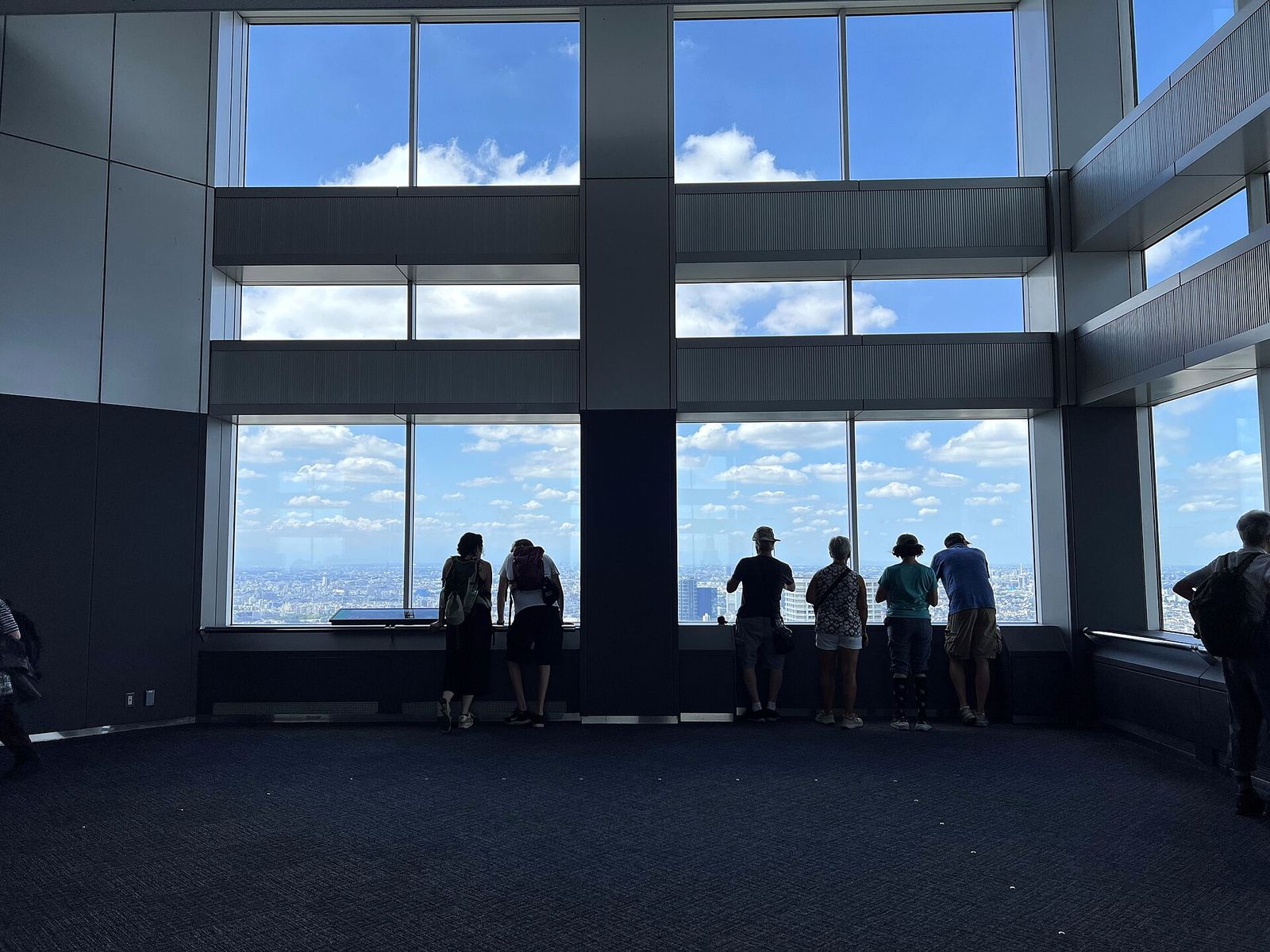
Photo: Asanagi, CC0 The city government’s twin-towered headquarters has free observatories on the 45th floor, and you just walk in; there’s no booking. Come up before sunset (5:06 pm on October 15) and stay as the city lights up. On clear days you can see Mount Fuji.
Local tip Use the South Observatory, which lets visitors in until 9:30 pm; the North stops at 5. The South closes on the first and third Tuesday of the month, when the North stays open late instead.
- Cost
- Free
- Hours
- South Observatory entry 9:30–21:30 (closed 1st and 3rd Tuesdays); North Observatory entry 9:30–17:00 (closed 2nd and 4th Mondays)
On TikTok: @luxuwell.japan Checked: Tokyo Metropolitan Government: observatories
-
· Dinner · Nishi-Shinjuku
Dinner in Omoide Yokocho
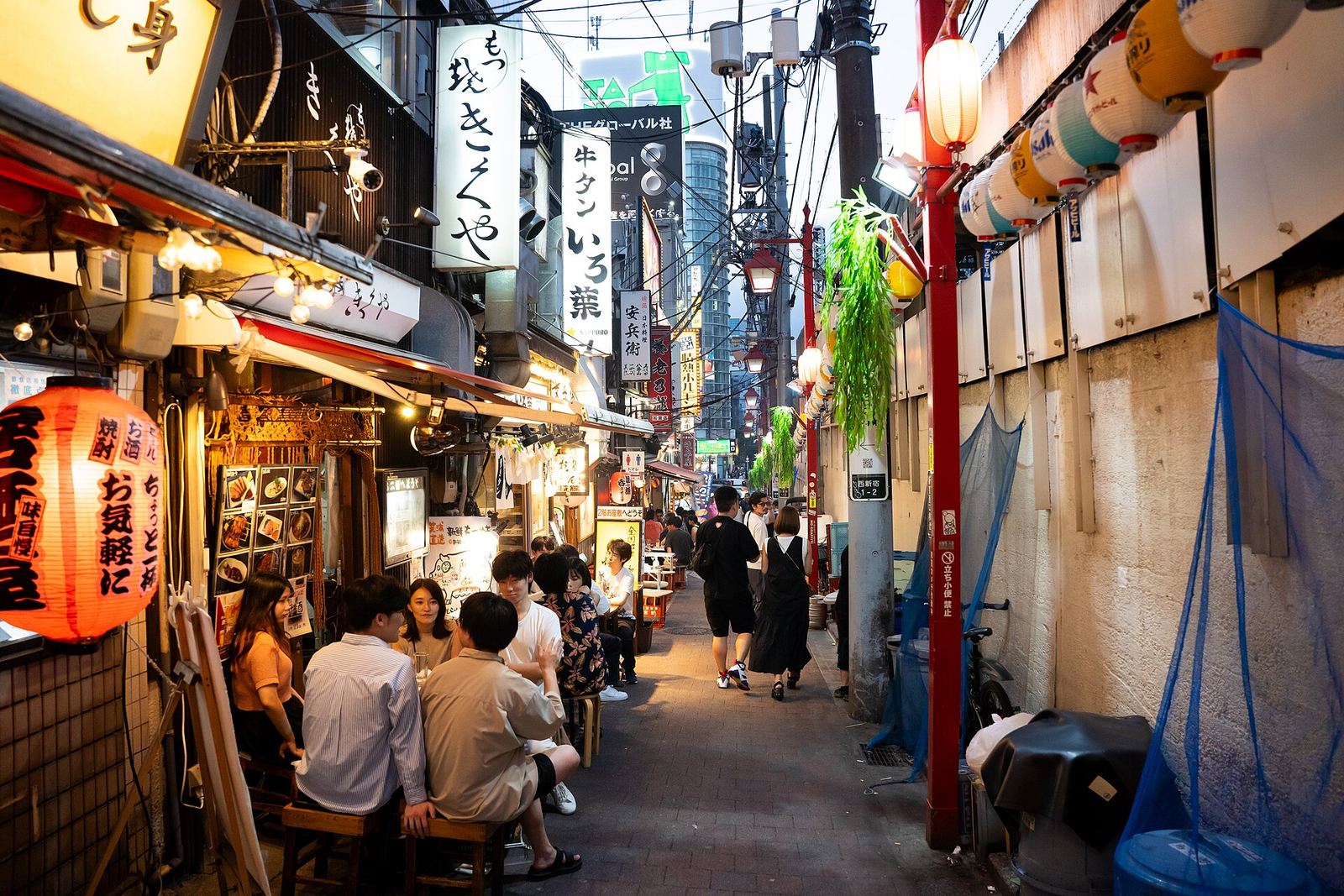
Photo: Dick Thomas Johnson, CC BY 2.0 Omoide Yokocho grew out of a black market on the burned-out ground by Shinjuku Station after the war. About 60 of its 80 or so tiny shops are places to eat and drink, most of them grilling motsu-yaki (offal skewers) and yakitori, some run by the second or third generation with sauces topped up for decades. Walk the lanes first, then take the free stools at a counter that looks busy.
Local tip Bring cash: in the alley association’s own count, about 60 percent of shops took cash only. Some counters charge a seat fee, ask for one dish and one drink each or set a 90-minute limit, and the shops on Naka-dori share one toilet.
- Cost
- Varies by counter; some add a seat charge
- Hours
- Each shop sets its own hours; the shop list is on the alley's website
On TikTok: @lisaswayinjapan Checked: Omoide Yokocho (official), Omoide Yokocho: for first-time visitors (official)
-
· Nightcap · Kabukicho
Drinks in Golden Gai
Back where the day began, the lanes are lit now, and nearly every doorway opens onto a bar with a handful of stools. Each has its own character, and many now welcome first-timers. Many also add a seat charge on top of your drinks, so check the door or ask before you sit.
Local tip Touts wait at the entrances. Do what locals advise: keep walking, don’t engage, and pick a bar yourself.
- Cost
- Drinks, plus a seat charge at many bars
- Hours
- Each bar sets its own hours and days off
On TikTok: @5am3amworld, @lisaswayinjapan Checked: Shinjuku Golden Gai shopping association
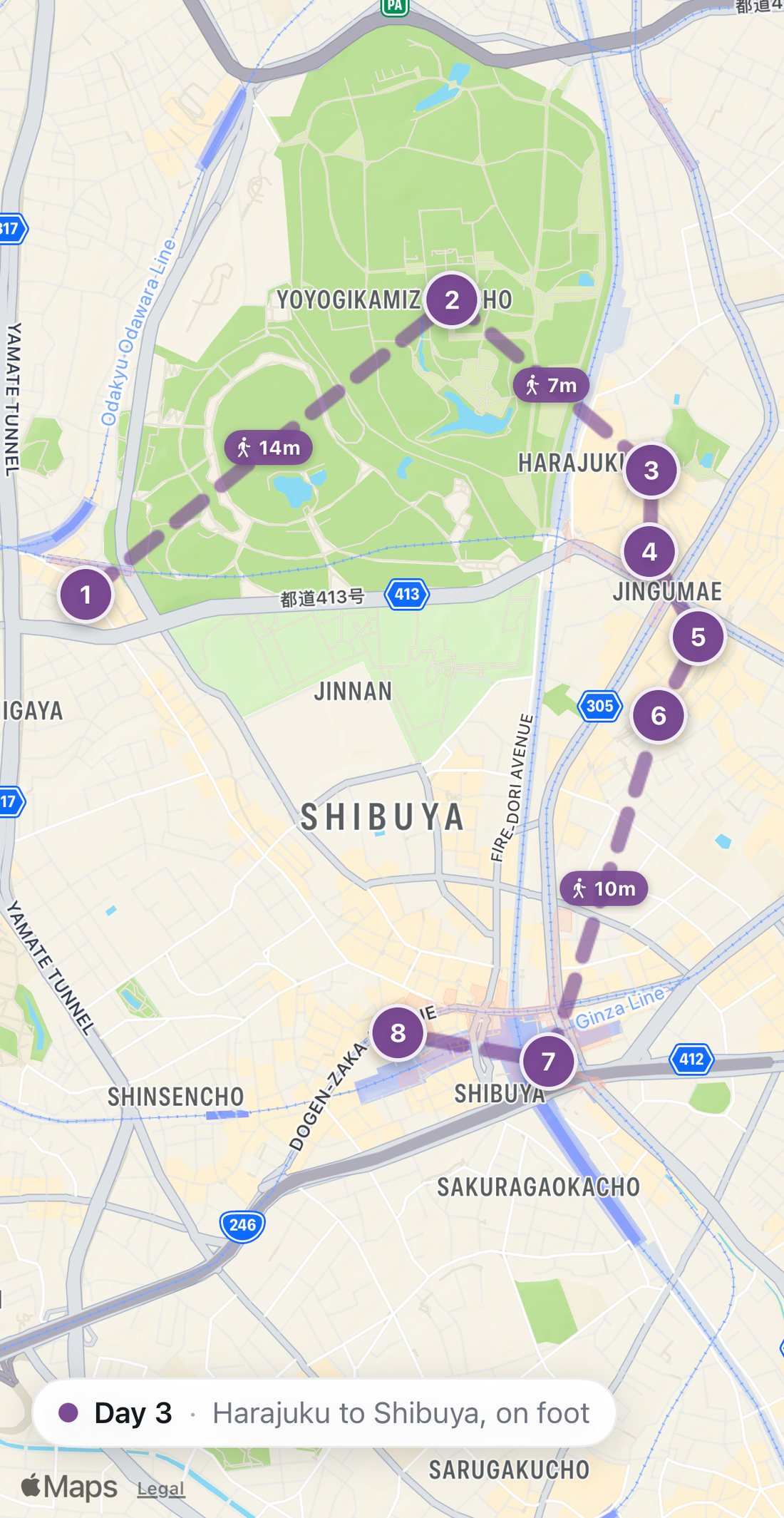
Harajuku to Shibuya, on foot
A Dutch pancake by Yoyogi Park, Meiji Jingu’s forest, ten minutes of Takeshita Street and a rare masterpiece by Hokusai’s daughter at Harajuku’s woodblock-print museum. Lunch is gyoza, the afternoon drifts down Cat Street to the Scramble Crossing, and the sun sets from the roof of SHIBUYA SKY before standing sushi.
-
· Breakfast · Tomigaya
Breakfast at PATH
A bistro opened in 2015 by a chef who trained in French three-star kitchens and a pâtissier, and the breakfast people queue for in Tomigaya. The Dutch pancake takes about 30 minutes to bake and arrives hot, topped with cold burrata, prosciutto and maple syrup (¥1,960); the house ham and camembert sandwich is ¥1,300.
Local tip Breakfast is Wednesday to Sunday only, card only, and weekend lines form before the 8 am opening, so a Friday is the easy day. Afterwards, walk through Yoyogi Park to Meiji Jingu.
- Cost
- About ¥3,000 for a pancake and a drink
- Hours
- Breakfast Wed–Sun from 8:00 (Wed–Sat until 14:00, last order 13:00); closed Mondays; Tuesdays dinner only
- Booking
- No bookings; if there's a wait, leave your details for a call-back
Checked: Gourmet999 (Tokyo food blog, July 2026 visit, updated Sep 2026)
-
· Shrine · Yoyogi
Meiji Jingu
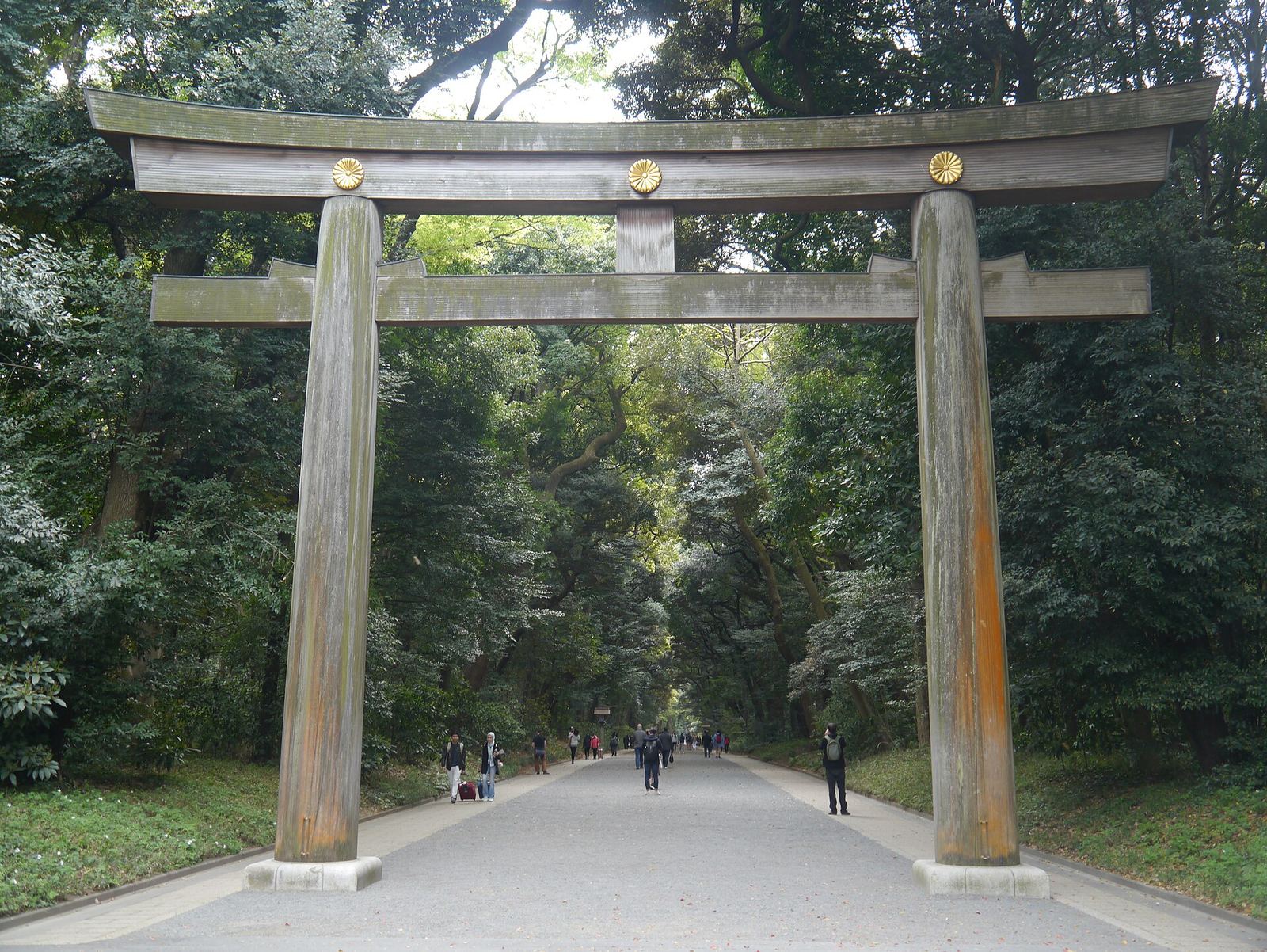
Photo: Zairon, CC BY-SA 4.0 The shrine dedicated to Emperor Meiji sits in a forest between Harajuku and Yoyogi, reached along wide gravel paths under enormous wooden torii. It opens with the sunrise and closes with the sunset, which in October means 5:40 am to 4:40 pm. The shrine itself is free; the inner garden and the museum are ¥500 each.
Local tip Leave by the Harajuku entrance, next to the station: Takeshita Street starts just across the road.
- Cost
- Free (inner garden and museum ¥500 each)
- Hours
- Open every day; October 5:40–16:40 (sunrise to sunset, so hours change monthly)
Checked: Meiji Jingu: opening hours and admission (official)
-
· Wander · Harajuku
Takeshita Street
Harajuku’s famous pedestrian street, a few steps from the station, is packed most days with small shops selling inexpensive clothes, accessories and sweets. Walk it once for the spectacle, then do as Tokyo’s own tourism board suggests and duck into the side streets, which are quieter and just as full of odd little shops.
Local tip At the far end, turn right on Meiji-dori: the woodblock-print museum is a few minutes away, just off the Omotesando crossing.
- Cost
- Free
- Hours
- Public street; shop hours vary
- Where
- Jingumae 1, Shibuya
-
· Ukiyo-e · Harajuku
Ota Memorial Museum of Art
A small museum of Japanese woodblock prints and paintings in the middle of Harajuku. From October 6 to December 6, 2026, it’s showing Katsushika Ōi’s painting of the Yoshiwara pleasure quarter at night, Yoshiwara Kōshisaki no Zu, for the first time in three years. Ōi was Hokusai’s daughter and an accomplished painter too, and the show sets the picture among other night scenes in ukiyo-e.
Local tip Bring cash: the museum takes no cards or QR payments, and there’s no booking, you just turn up. Ōi’s painting stays up all through the show; everything else changes on November 7.
- Cost
- ¥1,200 (high school and university students ¥800; 15 and under free), cash only
- Hours
- 10:30–17:30 (last entry 17:00); closed Mondays and on October 13, 19 and 26
- Booking
- No reservations
Checked: Ota Memorial Museum of Art: Katsushika Ōi exhibition (official), Ota Memorial Museum of Art: visitor information (official)
-
· Lunch · Harajuku
Lunch at Harajuku Gyoza-ro
A gyoza specialist with a very short menu: pan-fried or boiled dumplings at ¥395 for six, with or without garlic and chives, plus shiso gyoza, cucumber, bean sprouts, cabbage and rice. A Tokyo-based food creator’s verdict is fair: crispy, cheap and good, if not the juiciest in the city, and the staff speak English.
Local tip Share a plate of pan-fried and a plate of boiled, and add the cucumber with miso (¥340).
- Cost
- Six gyoza ¥395; lunch for one about ¥1,000–1,500
- Hours
- 11:30–22:00 (last order 21:30); open every day
On TikTok: @hommathefoodie Checked: Harajuku Gyoza-ro: main store (official)
-
· Wander · Harajuku to Shibuya
Cat Street to Shibuya
Cat Street runs from Harajuku down to Shibuya, lined with small boutiques, vintage shops and big-brand stores; Tokyo’s tourism board calls it the more grown-up version of Takeshita Street, and admits there are no cats. Take it slowly, and let it deliver you to Shibuya a few minutes from the Scramble Crossing.
Local tip Cross the Scramble at street level before you go up to the roof: the lights change about every two minutes, so there’s no need to rush for the photo.
- Cost
- Free
- Hours
- Public street; shop hours vary
Checked: GO TOKYO (official tourism site): Harajuku, GO TOKYO (official tourism site): Shibuya
-
· Sunset · Shibuya
SHIBUYA SKY at sunset
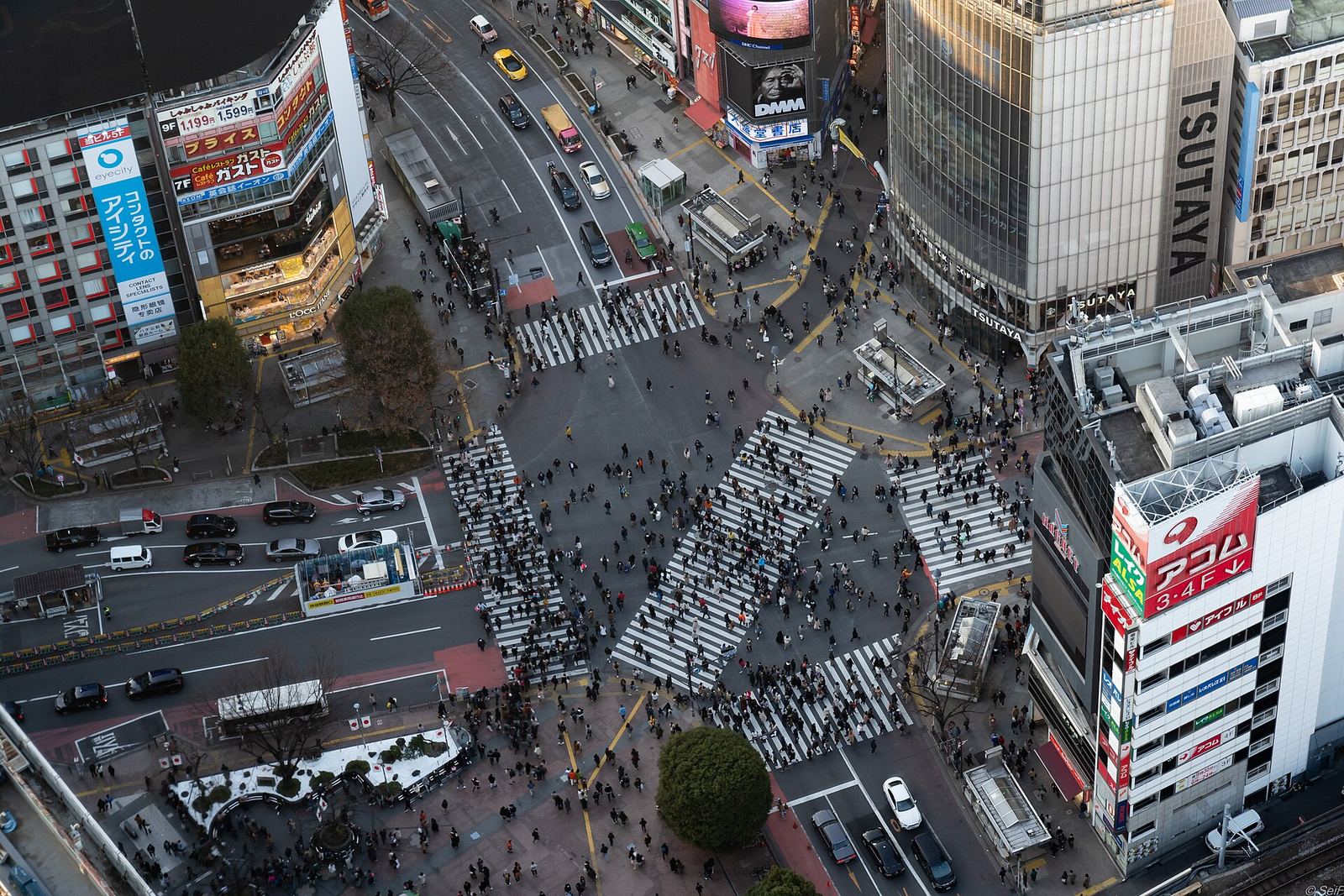
Photo: Sei F, CC BY-SA 2.0 The open-air roof on top of Shibuya Scramble Square, about 230 metres up, looks straight down on the Scramble Crossing and out across the whole city. Sunset on October 16 is at 5:05 pm, so an entry slot around 4:15 gets you daylight, the sunset and the lights coming on.
Local tip Buy on the official site as soon as your dates are set: tickets go on sale two weeks ahead, sunset slots sell out, and when the website sells out so does the counter. Bags aren’t allowed on the roof, so use the lockers.
- Cost
- Web tickets ¥2,700 for entry before 3 pm, ¥3,400 from 3 pm (¥3,000 and ¥3,700 at the counter); children ¥1,200, counter only
- Hours
- 10:00–22:30 (last entry 21:20)
- Booking
- Timed tickets on the official SHIBUYA SKY website, up to two weeks ahead
Checked: SHIBUYA SKY: tickets (official), SHIBUYA SKY (official), GO TOKYO (official tourism site): Shibuya
-
· Dinner · Shibuya
Standing sushi at Uogashi Nihon-ichi
A standing sushi bar from a chain that calls itself the original of the style, modeled on the street stalls where Edo-style sushi began about 200 years ago. You order a piece or two at a time across the counter and eat each one as it’s made, so dinner can be quick and very good without a booking; they don’t take them anyway.
Local tip Order a couple of pieces at a time and pace yourself. If you’d rather eat at the hotel, the takeaway sets on its website start at ¥1,400.
- Cost
- Priced by the piece; takeaway sets ¥1,400–3,000
- Hours
- Mon–Fri 11:00–23:00, Sat 11:00–22:00, Sun 11:00–21:30
- Booking
- No reservations (standing counter)
Checked: Uogashi Nihon-ichi Shibuya Dogenzaka (official store page)
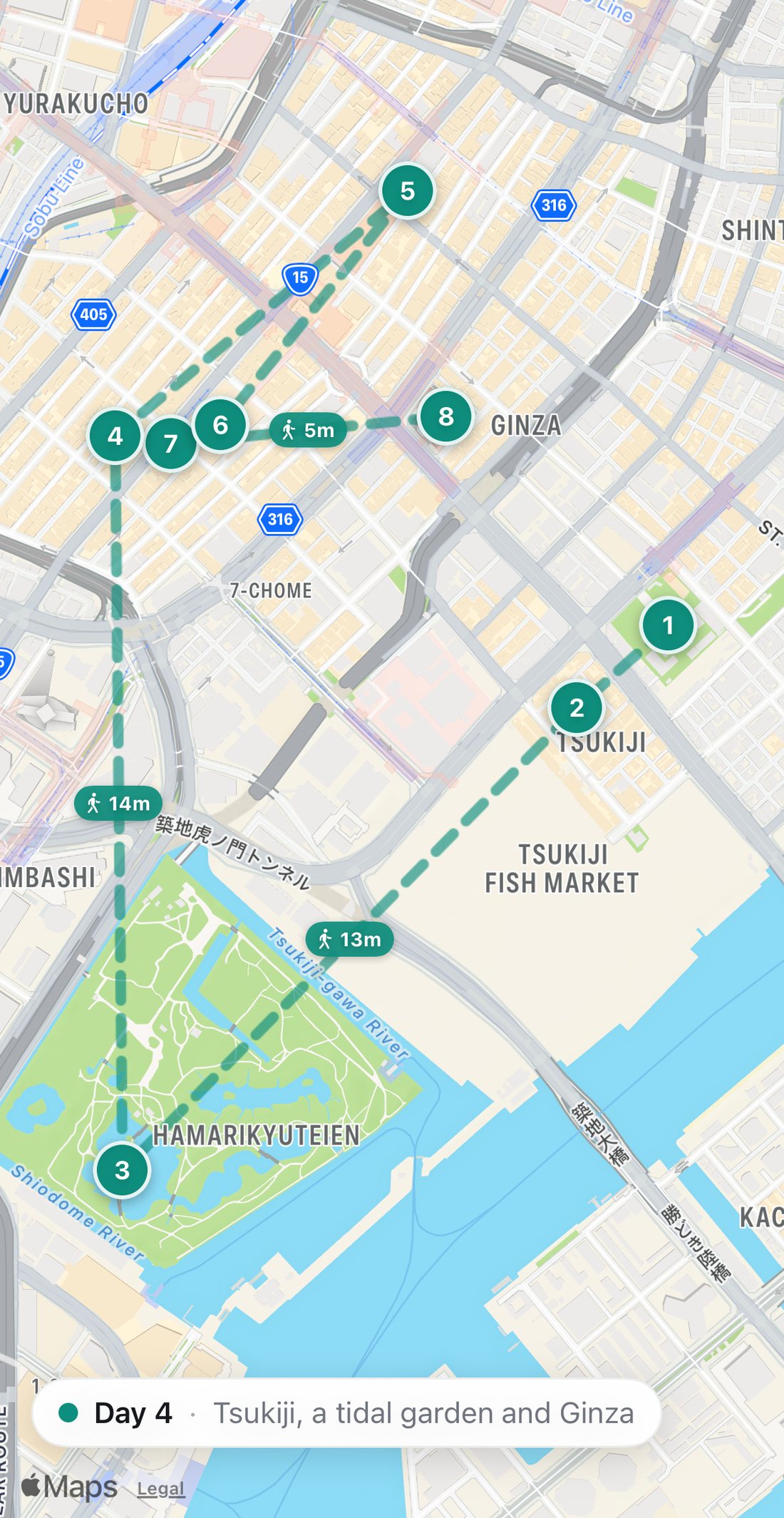
Tsukiji, a tidal garden and Ginza
An 18-dish temple breakfast, the Tsukiji Outer Market in full swing and a walk around a shogun’s tidal garden. Then tonkatsu in Ginza, the main street closed to cars on a Saturday afternoon, the sunset from a rooftop garden, dinner in Japan’s oldest surviving beer hall and one act of kabuki to end the trip.
-
· Breakfast · Tsukiji
The 18-dish breakfast at Tsukiji Hongwanji
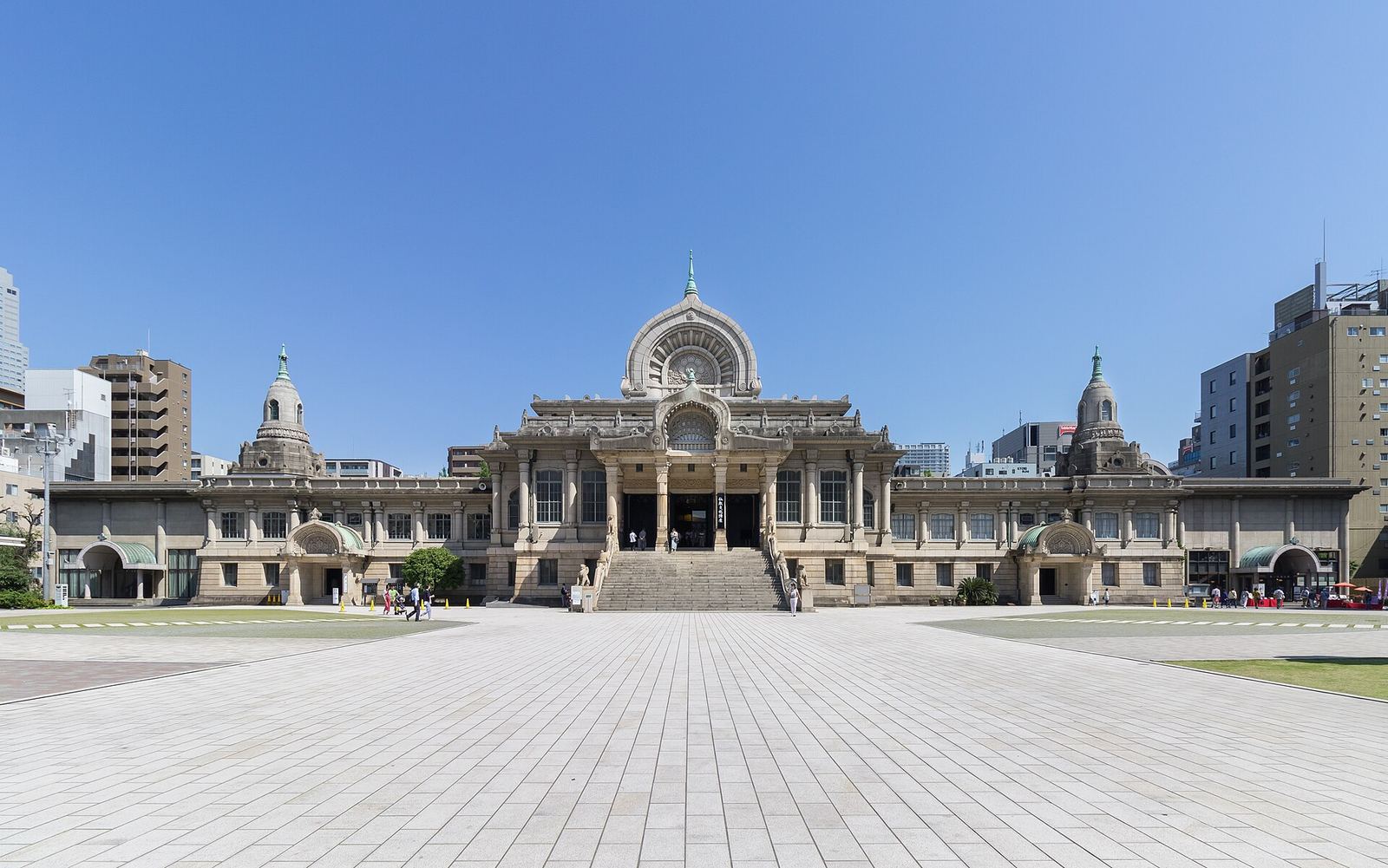
Photo: Kakidai, CC BY-SA 4.0 Café Tsumugi sits in the information center of Tsukiji Hongwanji, facing the temple’s domed main hall. Its famous breakfast is 18 small dishes, served with green tea; it went up to ¥2,640 in January 2026, and only a limited number are made each day, so they can run out before breakfast ends at 10:30.
Local tip Book a table on the café’s reservation page, have a look at the main hall, then walk two minutes to the market.
- Cost
- ¥2,640
- Hours
- Café 8:00–18:00 every day; breakfast 8:00–10:30, while the 18-dish sets last
- Booking
- Online through the café's booking page, linked from the temple's website
- Where
- 3-15-1 Tsukiji, Chuo
On TikTok: @timeouttokyo Checked: Tsukiji Hongwanji: café Tsumugi (official), Tsukiji Hongwanji: price change notice (official)
-
· Graze · Tsukiji
Tsukiji Outer Market
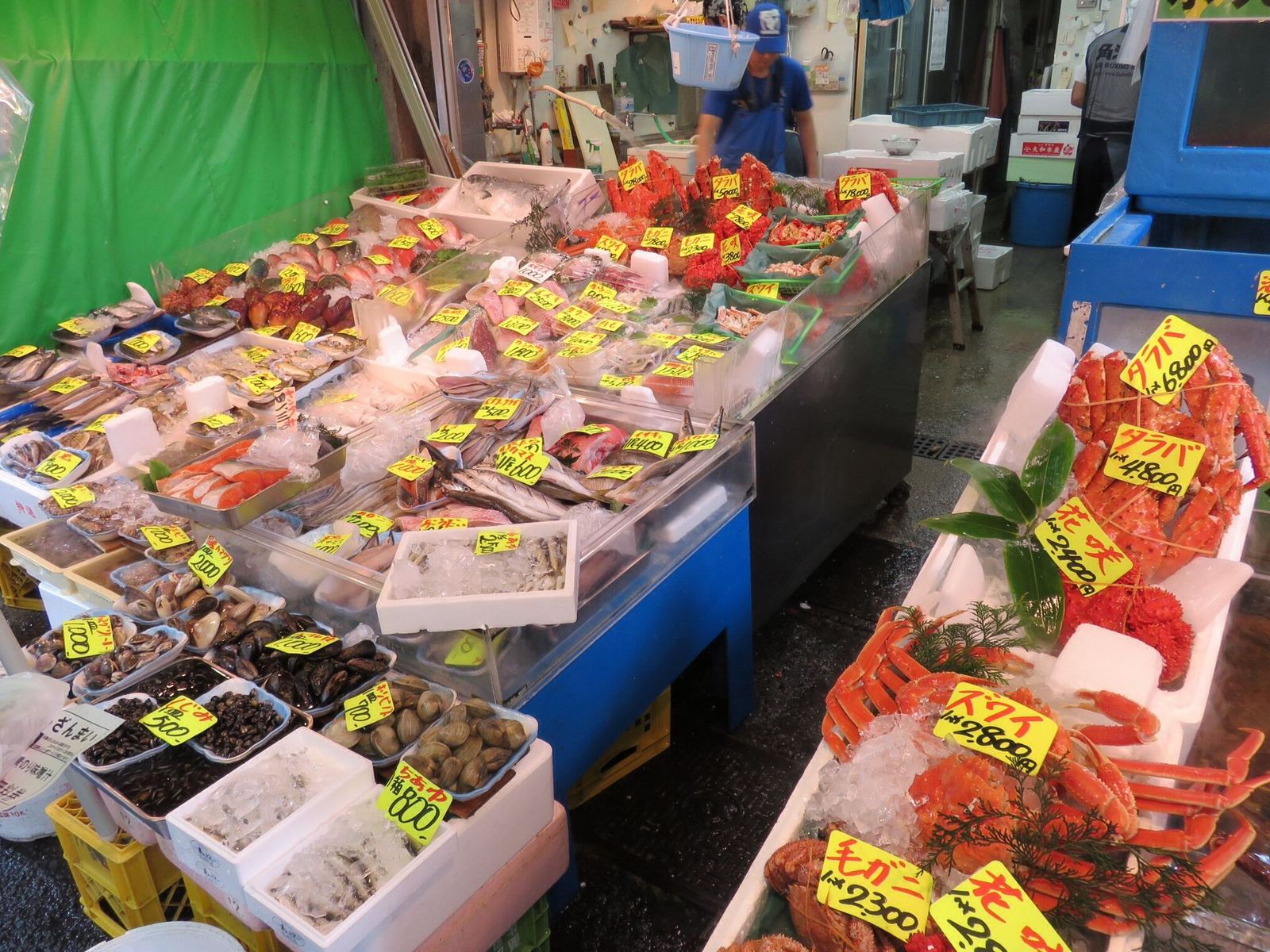
Photo: Aw1805, CC BY-SA 3.0 The wholesale market itself has moved out to Toyosu, but the maze of shops and counters around it stayed, many of them in buildings more than 80 years old, and they still sell to chefs first. Graze as you go (a slice of tamagoyaki, the sweet rolled omelet, is sold in bite-size portions) and look in on the shops selling knives, tableware and cooking tools.
Local tip Don’t haggle: the market asks visitors not to, since prices are set for professionals. Most shops close on Sundays, holidays and market holidays, which in October 2026 include Wednesday the 7th, 21st and 28th.
- Cost
- Pay as you go at each stall
- Hours
- Shops open early; the market recommends visiting 9:00–14:00. Many close on Sundays, holidays and market holidays (usually Wednesdays)
Checked: Tsukiji Outer Market: Q&A (official), Tsukiji Outer Market (official, English), Tokyo Metropolitan Central Wholesale Market: 2026 calendar
-
· Garden · Shiodome
Hama-rikyu Gardens
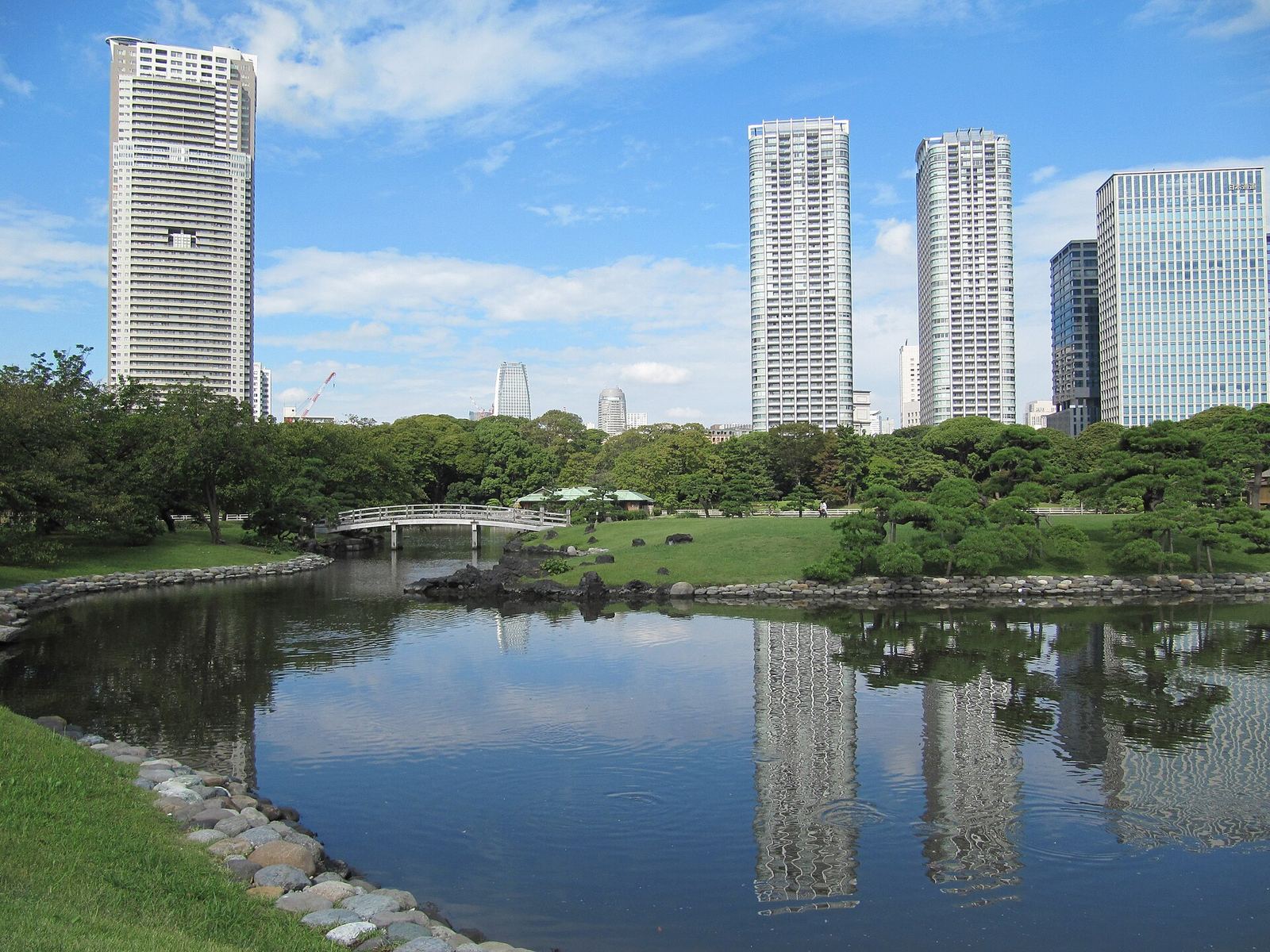
Photo: Ulf Klingström, CC0 The garden goes back to 1654, when the shogun’s younger brother had the shallows of Edo Bay filled in here for a residence. Its pond was built to take in seawater from the bay, there were two duck-hunting grounds, and now the Shiodome towers rise straight behind the pines. The Nakajima teahouse sits on an island in the pond, reached by long wooden bridges.
Local tip It’s a 10-minute walk from the market; the nearest station is Tsukiji-shijo. Entry is ¥300.
- Cost
- ¥300 (65 and over ¥150)
- Hours
- 9:00–17:00 (last entry 16:30); open daily except December 29 to January 1
Checked: Hama-rikyu Gardens: outline (Tokyo Metropolitan Park Association), Hama-rikyu Gardens: access
-
· Lunch · Ginza
Tonkatsu at Ginza Bairin
A long-running tonkatsu restaurant on a side street in Ginza 7-chome. The cutlets are fried in fresh breadcrumbs of its own recipe and served with rice (refills are free), miso soup and pickles: the Gin-katsu set is ¥2,500, the fillet ¥3,400 and the loin ¥3,600. It opens at 11:30 with no afternoon break and no closing day.
Local tip They don’t take bookings, so just join the line; they’ll pack a bento to take away if you phone ahead.
- Cost
- Sets ¥2,500–3,600
- Hours
- 11:30–21:00 (last order 20:00), no afternoon break, no closing day
- Booking
- No reservations
- Where
- 7-8-1 Ginza, Chuo
Checked: Ginza Bairin (official), Ginza Bairin: menu (official)
-
· Shop · Ginza
Chuo-dori and G.Itoya
On Saturdays, Sundays and holidays, Ginza’s main street, Chuo-dori, closes to cars from the noon chime of the Wako clock tower until 5 pm (6 pm from April to September). Walk it north to G.Itoya, the stationer’s tall flagship, and work your way up the floors to the café on the 12th, which cooks with vegetables grown on the 11th-floor farm.
Local tip K.Itoya, the second building, has more. Both take transit IC cards and most cards.
- Cost
- Free to browse
- Hours
- 10:00–20:00 (Sundays and holidays until 19:00); café 11:30–21:00. Chuo-dori is car-free on weekends and holidays from noon to 17:00, October to March
- Where
- 2-7-15 Ginza, Chuo
Checked: Ginza Itoya main store (official), GINZA OFFICIAL: pedestrian street Q&A
-
· Sunset · Ginza
GINZA SIX rooftop garden
The roof of GINZA SIX is a public garden, free and open from 7 in the morning to 11 at night. It’s a calm spot to watch the light go over Ginza’s rooftops (sunset is at 5:04 pm on October 17) before dinner just across the street.
Local tip It can close without notice in bad weather or for private events, so glance at the sky before you ride up.
- Cost
- Free
- Hours
- 7:00–23:00, weather permitting
- Where
- 6-10-1 Ginza, Chuo
Checked: GINZA SIX: hours (official)
-
· Dinner · Ginza
Dinner at Beer Hall Lion Ginza 7-chome
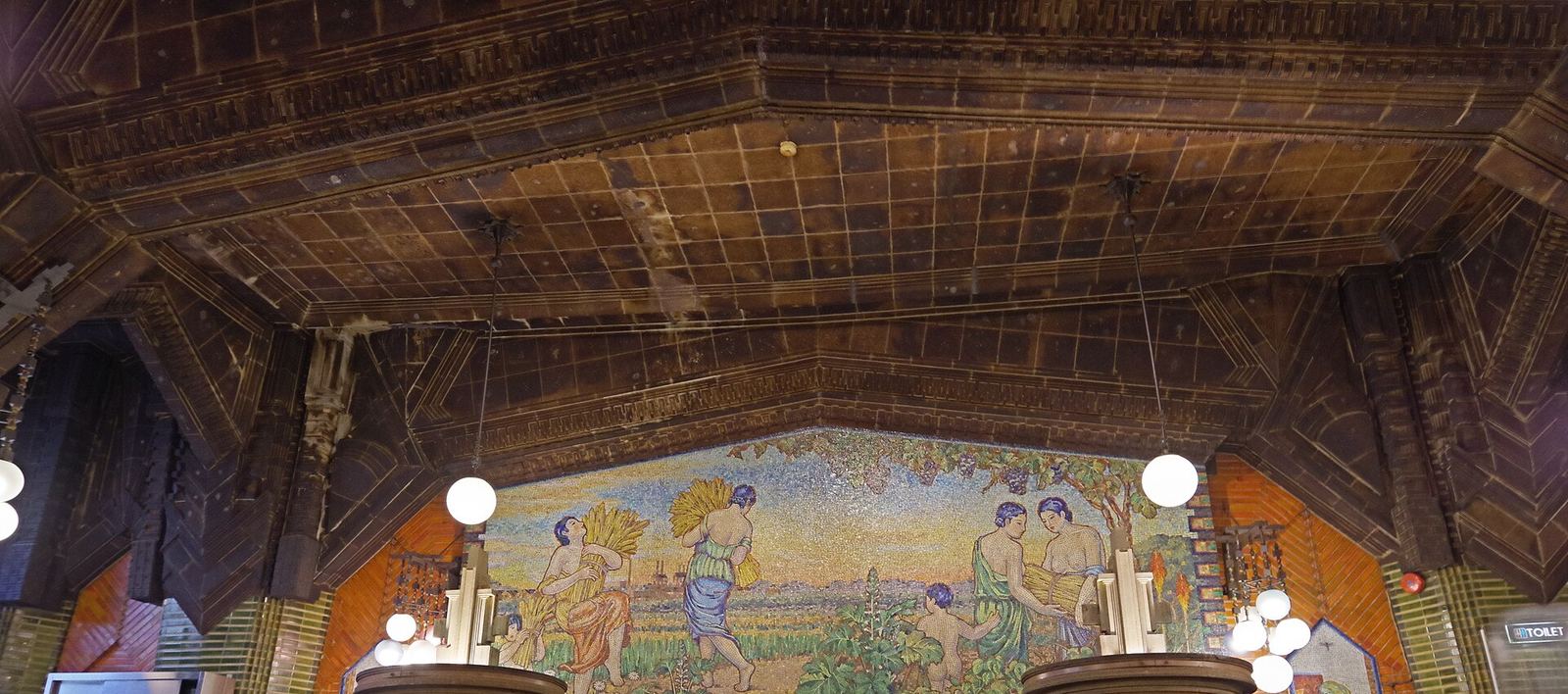
Photo: 名古屋太郎, CC BY-SA 4.0 (cropped) Built in 1934 and still in its original hall, this is Japan’s oldest surviving beer hall: a high, dark room with a glass mosaic in 250 colours above the bar and chandeliers meant to look like bunches of grapes. The beer is poured in a single pour, and the food is beer-hall tradition: roast beef, a sausage platter, a two-sauce omelette and stew.
Local tip It seats 280, takes phone bookings, and on Fridays and Saturdays stays open until 10:30 pm.
- Cost
- Beer-hall prices; the menu is on its website
- Hours
- Sun–Thu 11:30–22:00 (last order 21:30); Fri, Sat and days before holidays 11:30–22:30 (last order 22:00); no closing day
- Booking
- By phone
-
· Finale · Higashi-Ginza
One act at the Kabuki-za
Tokyo’s great kabuki theater sells single-act seats on its top floor, so you can see one play or dance instead of a whole program. The October 2026 run lasts from the 2nd to the 20th (no shows on the 9th), and the evening part, starting at 6 pm, ends around 9:10 with a pair of dances, Yashiki Musume and Omi no Okane: the easiest way in for a first visit.
Local tip Reserved single-act seats go on sale online at noon the day before, on the theater’s official single-act ticket page, where each act’s start time is posted; unreserved 4th-floor seats are sold at the single-act box office on the day. An English captioning device for one act is ¥1,000, cash only.
- Cost
- Single acts cost ¥600–2,800 in September 2026, depending on length, plus a ¥110 online fee
- Hours
- October 2–20, 2026 (no shows on the 9th): parts at 11:00, 14:30 and 18:00; the 18:00 part ends about 21:10
- Booking
- Single-act seats online from noon the day before (official e-tix page), or at the box office on the day
- Where
- 4-12-15 Ginza, Chuo
Checked: Kabuki-za: October 2026 program (kabuki-bito, official), Kabuki-za single-act tickets (official), Kabuki Web: tickets (official, English)
The practical bits
Which days this works on
It’s written for a Wednesday to Saturday. Day 1 needs Tuesday to Saturday: the Tokyo National Museum closes on Mondays, and Otafuku and most of Kappabashi’s shops on Sundays. Day 2 works any day but Monday, when Shinjuku Gyoen and the SOMPO Museum are shut. Day 3 needs Wednesday to Sunday: PATH serves breakfast only on those days, and the Ota Memorial Museum closes on Mondays (and on October 13, 19 and 26). Day 4 needs a Thursday, Friday or Saturday: the Tsukiji Outer Market mostly closes on Sundays, holidays and the wholesale market’s closing days, which in October 2026 fall on Wednesday the 7th, 21st and 28th, and only a weekend gives you the car-free Chuo-dori. Starting on a Tuesday? Do Day 1, then Day 3 on Wednesday, Day 4 on Thursday and Day 2 on Friday.
Getting around
Each day is built to be walked; the one optional ride is the Ginza Line from Ueno to Tawaramachi (two stops) on Day 1. The rides you will take are to each morning’s start and home at night, so get a transit IC card. Welcome Suica (also an app, Welcome Suica Mobile, which you can set up before you fly) and the new TOURIST PASMO, sold at the Keikyu stations at Haneda and the Keisei stations at Narita, need no deposit and last 28 days; a regular Suica or PASMO has a ¥500 deposit. Many train and subway lines also take a tap of a contactless credit card, but not JR lines. If you’ll ride the subway a lot, the Tokyo Subway Ticket covers every Tokyo Metro and Toei line for 24, 48 or 72 hours (¥1,000, ¥1,500 or ¥2,000). Details from GO TOKYO and PASMO, checked in September 2026.
Book these ahead
SHIBUYA SKY (tickets go on sale two weeks ahead; take an entry slot around 4:15 for the sunset), the 18-dish breakfast at Tsukiji Hongwanji, Innsyoutei for lunch (weekday bookings start from the ¥3,000 set) and Otafuku (online). Kabuki-za single-act seats go on sale online at noon the day before. Buy only on the venues’ own websites. Everything else is walk-in, and PATH, Uogashi Nihon-ichi, Ginza Bairin and the Ota Memorial Museum don’t take bookings at all.
Money and tipping
Tipping isn’t done in Japan and can cause confusion, so don’t (JNTO). Cards and IC cards work in most places on this plan, but carry cash: the Ota Memorial Museum is cash only, many Omoide Yokocho counters are too, and some bars and restaurants add a seat charge (Otafuku’s is ¥500). Japan’s departure tax went up to ¥3,000 a person on July 1, 2026; airlines collect it with the fare (National Tax Agency).
Tax-free shopping changes on November 1
Shops showing a Tax-free sign still take the consumption tax off at the till for visitors in mid-October. For purchases made from November 1, 2026, Japan switches to a refund method: you pay the tax, and it’s refunded after Customs confirms, as you leave, that the goods are going with you. Since April 2025, items you post home yourself no longer qualify. Details on JNTO’s tax-exemption page.
Touts, temples and alley manners
Around Golden Gai and Kabukicho, touts will try to steer you into bars: keep walking and choose your own. At Buddhist temples like Senso-ji, rinse your hands at the water pavilion and pray with your palms together, without the clap you’d give at a Shinto shrine. In Omoide Yokocho some counters ask for one dish and one drink each or set a 90-minute limit, and smoking in the alleys is banned. At Tsukiji, don’t haggle.
Tokyo in mid-October
The sun sets just after 5 (5:08 pm on October 14, 5:04 pm on the 17th), which is why every sunset stop starts around 4:15 to 4:55. October also brings shorter hours: Shinjuku Gyoen now closes at 4:30 pm and Meiji Jingu at 4:40. Two shows make these dates worth it: Katsushika Ōi’s night scene at the Ota Memorial Museum (from October 6) and Albert Marquet at the SOMPO (until December 13). One to skip: the Nezu Museum in Aoyama is closed between exhibitions from October 13 to 23.
Three videos worth watching first
How we made this
We started with a small sample of about 45 Tokyo TikToks, reading their captions and, where TikTok has them, their transcripts, and kept only the useful few: a creator who grew up in Tokyo walking through Yanaka, a Japanese creator's free viewpoints, Tokyo-based voices on Harajuku gyoza, Omoide Yokocho and Golden Gai, a Japanese travel agency on temple manners, and Time Out Tokyo's own video of the temple breakfast. Seven of them are cited next to the stops they informed. Everything else comes from the venues' own websites, Tokyo's official tourism site GO TOKYO, JNTO, Time Out Tokyo and the Tokyo Metropolitan Government.
In late September 2026 we checked every stop's opening days, hours and prices for October 14 to 17, 2026, on its own website wherever it has one, along with the wholesale market's 2026 calendar, the Kabuki-za's October program and the National Astronomical Observatory's sunset table. A few things had changed: Tsunahachi has moved to a temporary annex while its building is rebuilt, the Nezu Museum is closed between shows for most of these dates, and Kayaba Coffee's old web address now belongs to an unrelated site, so we couldn't confirm its hours and made it a walk-past rather than a meal. Where a price isn't published online, as with HAGISO's walk-in breakfast, we say so. Hours change, so check before you go. Photos come from Wikimedia Commons and are credited below.
Then we ran the plan through Bilbo, the trip planner we make. It put each day's 7 or so stops in route order and checked every one against its closing days, with nothing clashing and nothing scheduled on a day it's shut. The maps are screenshots of that plan in Bilbo.
Photos come from Wikimedia Commons and are credited below. Bilbo is made by Haplo, which also publishes this blog.
Photo credits
- Shibuya and Shinjuku at dusk from Yebisu Garden Place Tower · Photo: Ximonic (Simo Räsänen), CC BY-SA 4.0 (cropped)
- The Honkan of the Tokyo National Museum, Ueno Park · Photo: Wiiii, CC BY-SA 3.0
- Ameyoko market street, Ueno · Photo: Syced, CC0
- The southern end of Kappabashi-dori with the Niimi building's chef · Photo: Basile Morin, CC BY-SA 4.0
- Sensō-ji's Hōzōmon gate and five-storied pagoda lit up at night · Photo: Kakidai, CC BY-SA 3.0
- The wooden torii on the approach to Meiji Jingu · Photo: Zairon, CC BY-SA 4.0
- Shibuya Crossing from the SHIBUYA SKY rooftop · Photo: Sei F, CC BY-SA 2.0
- The Japanese landscape garden in Shinjuku Gyoen · Photo: MaedaAkihiko, CC BY-SA 4.0
- Inside the Tokyo Metropolitan Government Building's observatory · Photo: Asanagi, CC0
- Lanterns and counters in Omoide Yokocho, Shinjuku · Photo: Dick Thomas Johnson, CC BY 2.0
- Tsukiji Hongwanji's main hall · Photo: Kakidai, CC BY-SA 4.0
- Seafood stall in the Tsukiji Outer Market · Photo: Aw1805, CC BY-SA 3.0
- Nakajima-no-ochaya teahouse and its bridge, Hama-rikyu Gardens · Photo: Ulf Klingström, CC0
- The 1934 hall of Beer Hall Lion Ginza 7-chome · Photo: 名古屋太郎, CC BY-SA 4.0 (cropped)