 Haplo
Haplo
2 Days in Kyoto: An Early-Start Itinerary
Two early starts, one short train ride a day and no city buses: Fushimi Inari and the Arashiyama bamboo grove before the crowds, Kiyomizu-dera in its last hours, and 16 stops checked against their 2026 hours and prices.
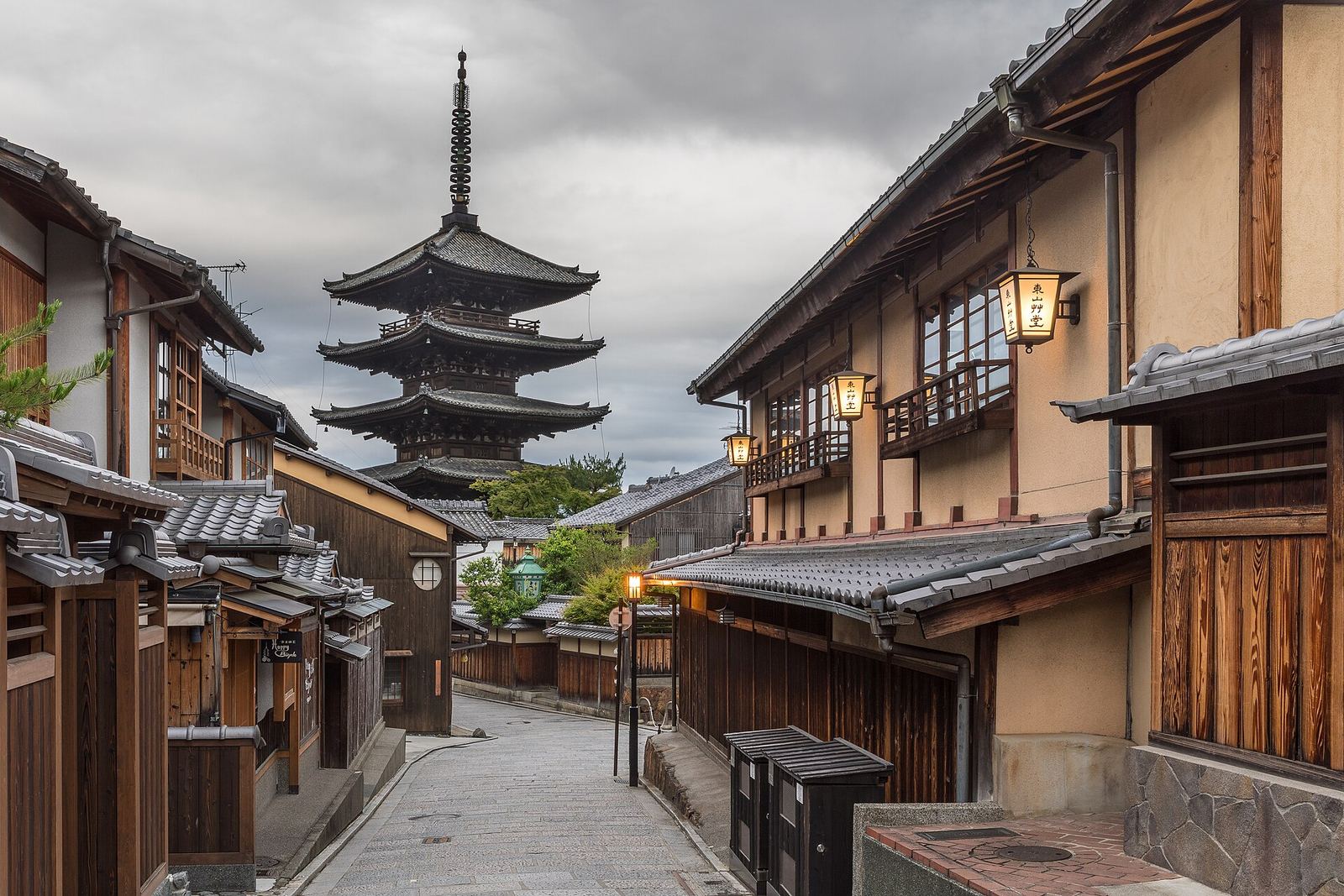
Kyoto’s problem isn’t a shortage of things to see. It’s that the dozen or so famous sights are packed from mid-morning to late afternoon, and so are the buses between them. The advice from people who live there is simple: go to the famous places at the edges of the day, walk everything you can, and eat a street or two away from the crowds.
This 2-day Kyoto itinerary is built on that. Day 1 starts on the torii paths of Fushimi Inari at 6:30 AM and saves Kiyomizu-dera for its last hours, when the stage looks out over the sunset. Day 2 starts in the Arashiyama bamboo grove at 7:15 and leaves by train as the day-trippers arrive. In between come a Zen garden, a canal in Gion, a famous bowl of oyakodon, Nishiki Market, a tea merchant’s tearoom and dinner in Pontocho.
We read a small sample of Kyoto TikToks for crowd tips, then checked every stop against its own website, the Kyoto City official guide and Inside Kyoto, a guide by a long-time Kyoto resident, for 2026 hours and prices. A few things have changed this year, from a higher hotel tax to a temple fee rise, and we note them where they matter. Heading on to Tokyo? Our 4-day Tokyo itinerary picks up from there.
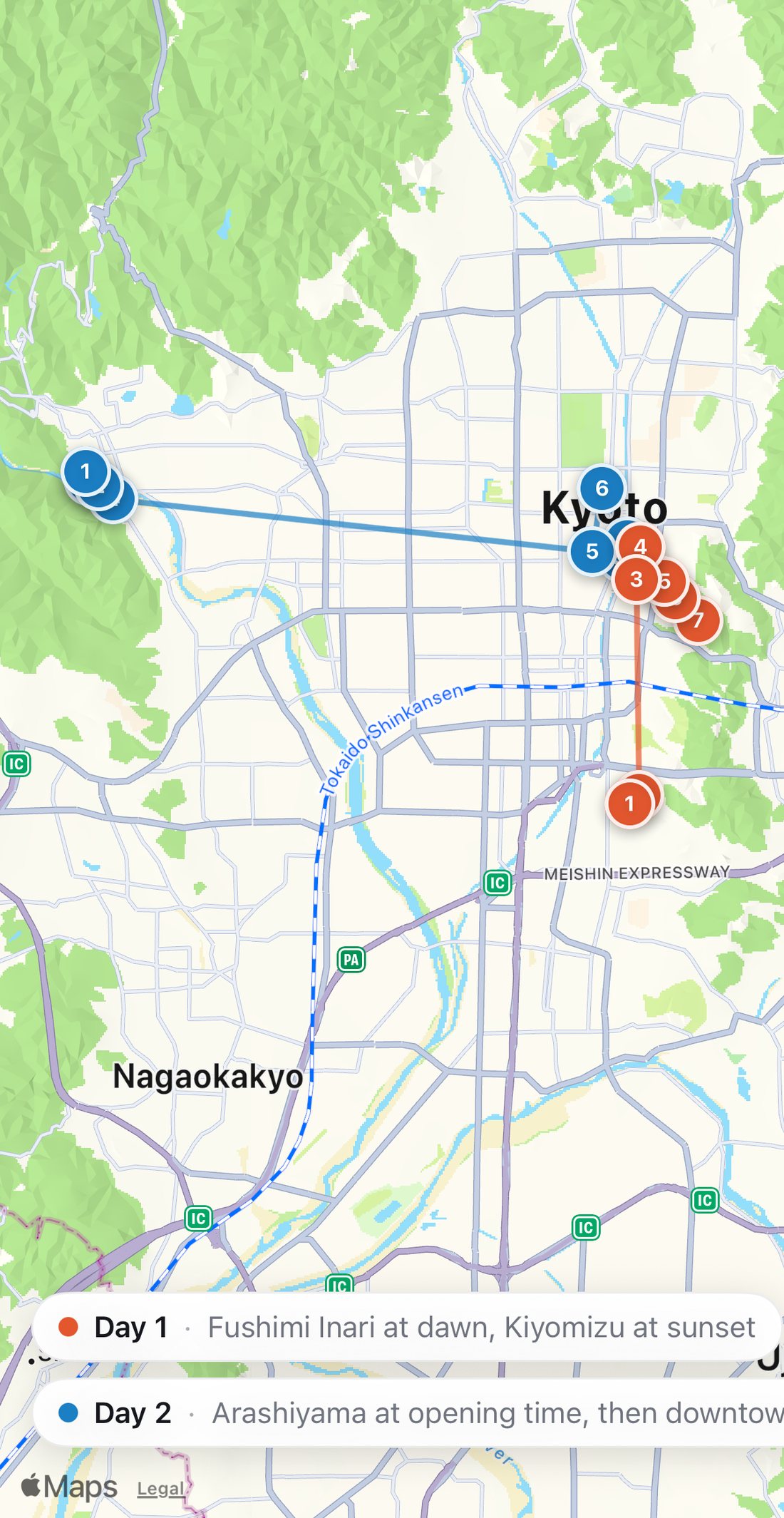
We ran the plan through Bilbo, the trip planner we make, to put each day in route order and check every stop against its closing days. The maps below come straight from the app.
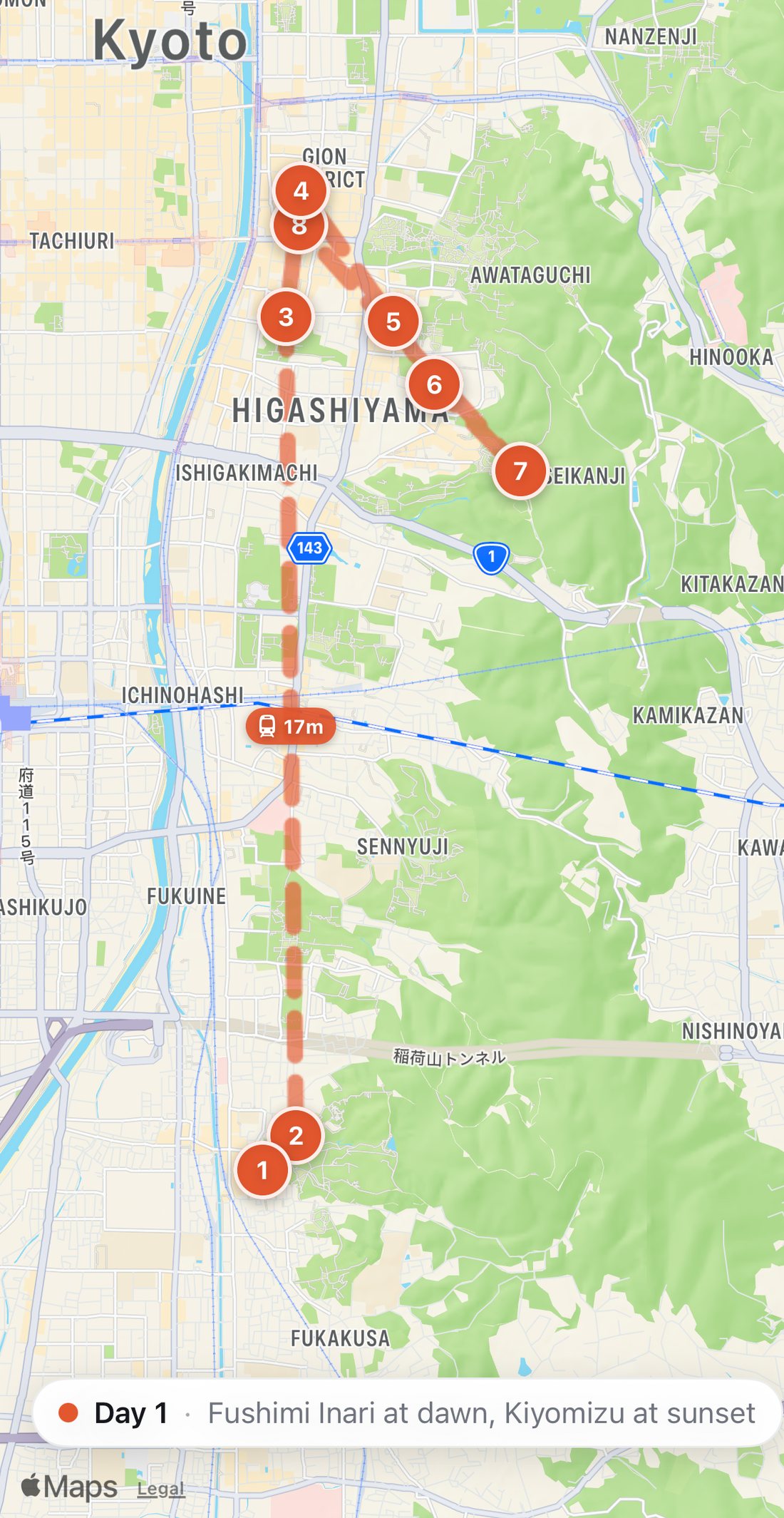
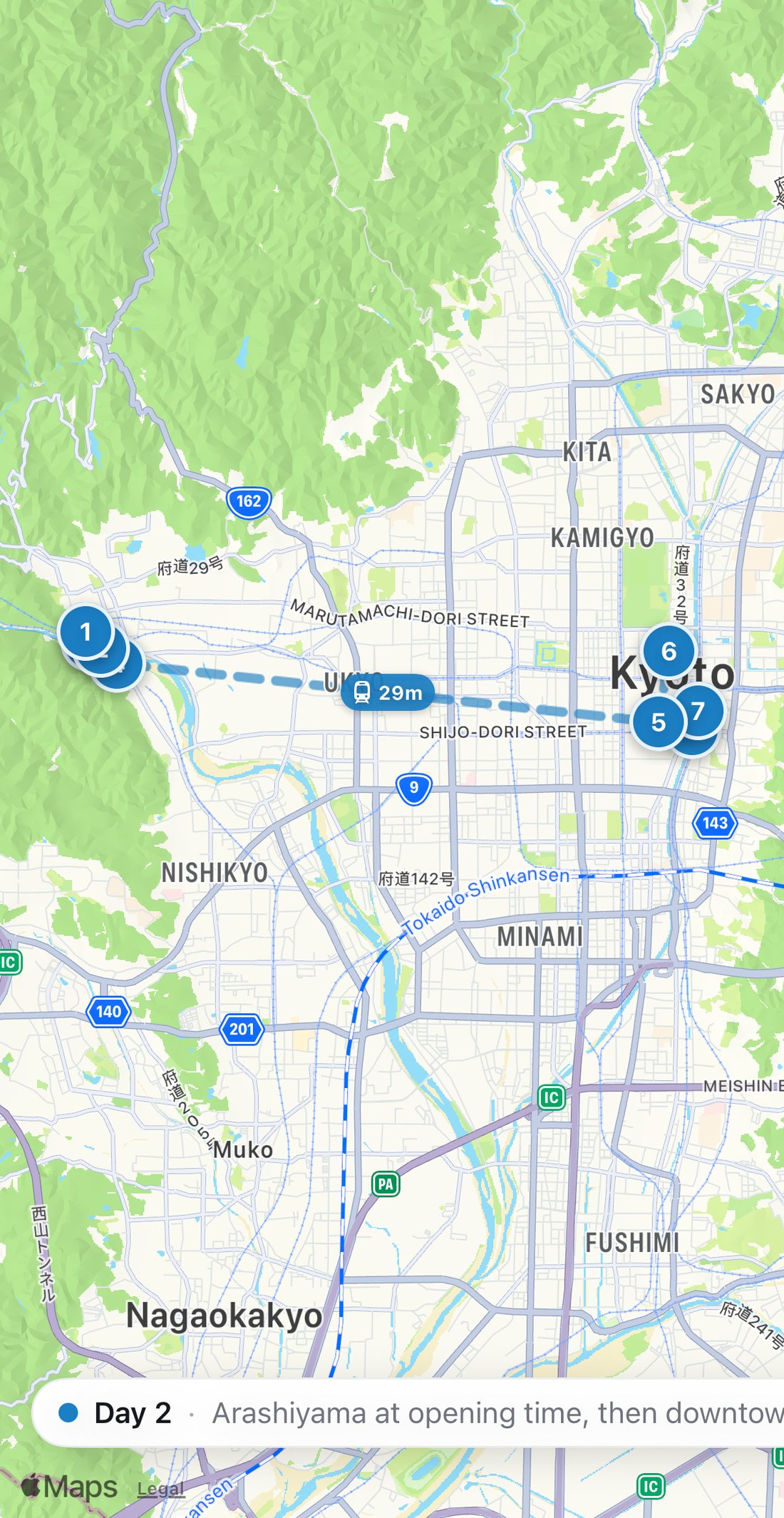
How to use it. Each day stays in one area, with one short train ride between its two halves (the Keihan Line on Day 1, Hankyu on Day 2) and no city buses, which get packed on the tourist routes. Measured pin to pin, Day 1 is about 4 km of walking plus the climb at Fushimi Inari, and Day 2 is about 3.5 km, so allow a little more for real streets and the walks to and from stations. It’s written for a Thursday and Friday and works as written from Wednesday to Friday; the practical section at the end says what to swap on other days.
Two days, two early starts
Each day starts at a famous sight before the crowds arrive, then stays in one walkable part of the city, with a single short train ride and no city buses.
- Day 1 · Thursday Fushimi Inari at dawn, Kiyomizu at sunset Fushimi Inari · Gion · Southern Higashiyama · 8 stops
- Day 2 · Friday Arashiyama at opening time, then downtown Arashiyama · Nishiki · Kamo River · Pontocho · 8 stops
Best days: Thursday and Friday as written, or any Wednesday to Friday. Other days need a small swap, covered under The practical bits.
Fushimi Inari at dawn, Kiyomizu at sunset
Climb Fushimi Inari’s torii paths before the tour groups, then take the Keihan Line north to Gion for a Zen garden, the Shirakawa canal and a cheap, much-loved lunch. Save Kiyomizu-dera for its last hours, when the stage looks out over the sunset, and finish with curry udon in Gion.
-
· Early start · Fushimi
Fushimi Inari Taisha
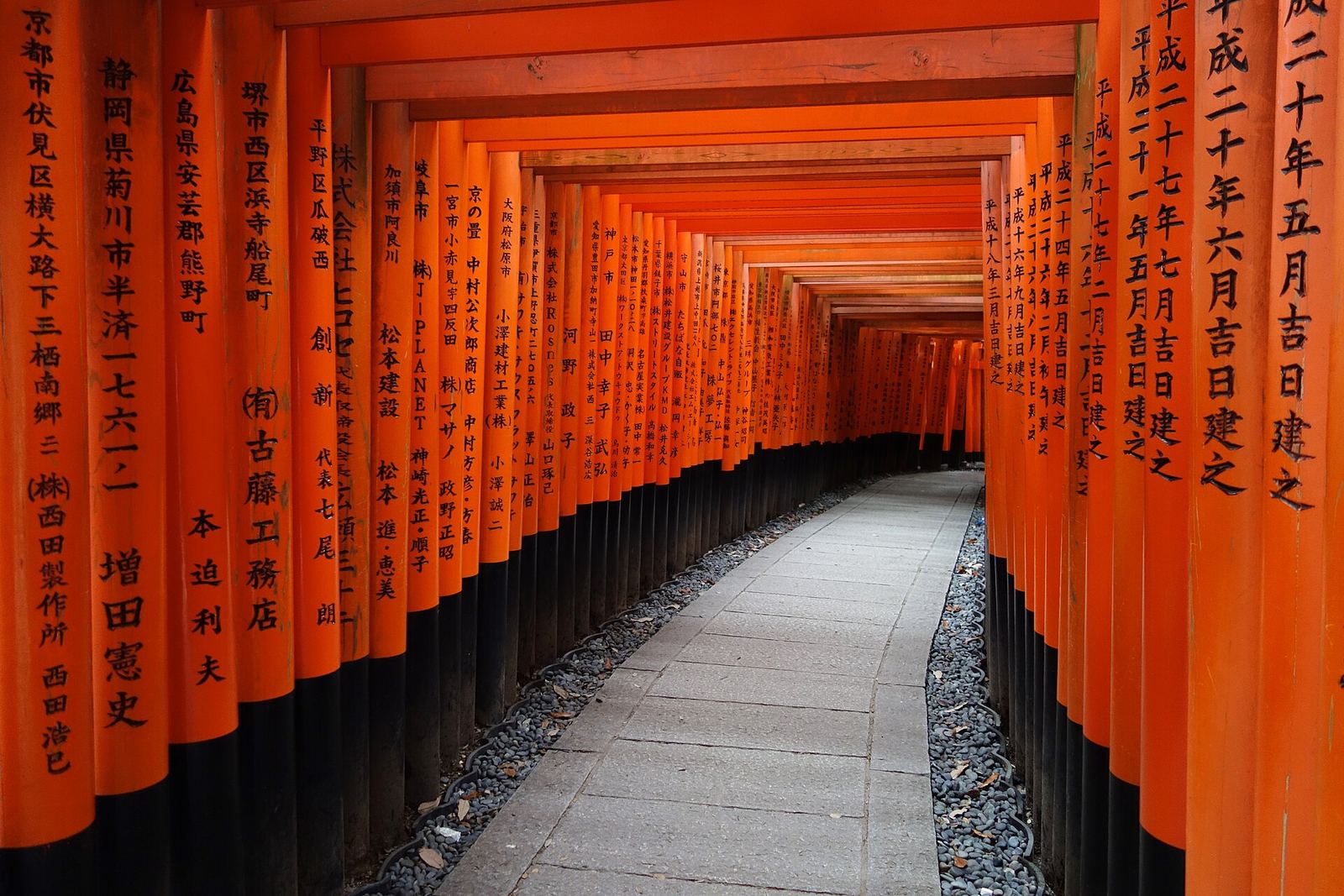
Photo: Luka Peternel, CC BY-SA 4.0 The head shrine of Inari has no gate and no ticket office, so the only way to beat the crowds is the clock. One pair of creators arrived at 7:30 AM thinking that was early and still found the famous tunnels busy; the fix, in their video and in Inside Kyoto’s hiking guide, is to keep climbing, because the crowds thin out as the path goes up. At the Yotsutsuji junction you get teahouses and a view across southern Kyoto toward Osaka.
Local tip Take the JR Nara Line to Inari or the Keihan Line to Fushimi-Inari; the shrine is right by both. Turn back at Yotsutsuji unless you want the whole summit loop, which Inside Kyoto puts at about 3 hours and 5 km, and never carve or write on the bamboo along the paths: the city says it is seeing damage here.
- Cost
- Free
- Hours
- No gates or tickets; the paths are walkable from dawn
On TikTok: @oskaranddan, @rob_shead Checked: Fushimi Inari Taisha (official), Inside Kyoto: the Fushimi Inari hike, Kyoto City: protect the bamboo
-
· Breakfast · Fushimi
Vermillion
A small, modern café steps from the shrine’s main gate, with a full English menu of espresso, hot matcha, pastries and light meals. After two hours of stairs it is the obvious place to sit down, and the back deck is pleasant on a mild October morning.
Local tip It opens at 9, after your climb, so bring a snack from a convenience store for the way up. Afterwards, take the Keihan Line from Fushimi-Inari station a few stops north to Gion-Shijo.
- Cost
- Cheap
- Hours
- 9:00–17:00 per Inside Kyoto; the café's own site doesn't list hours, so check its Instagram
Checked: Inside Kyoto: Vermillion, Inside Kyoto: eating near Fushimi Inari, Vermillion (official)
-
· Zen garden · Gion
Kennin-ji
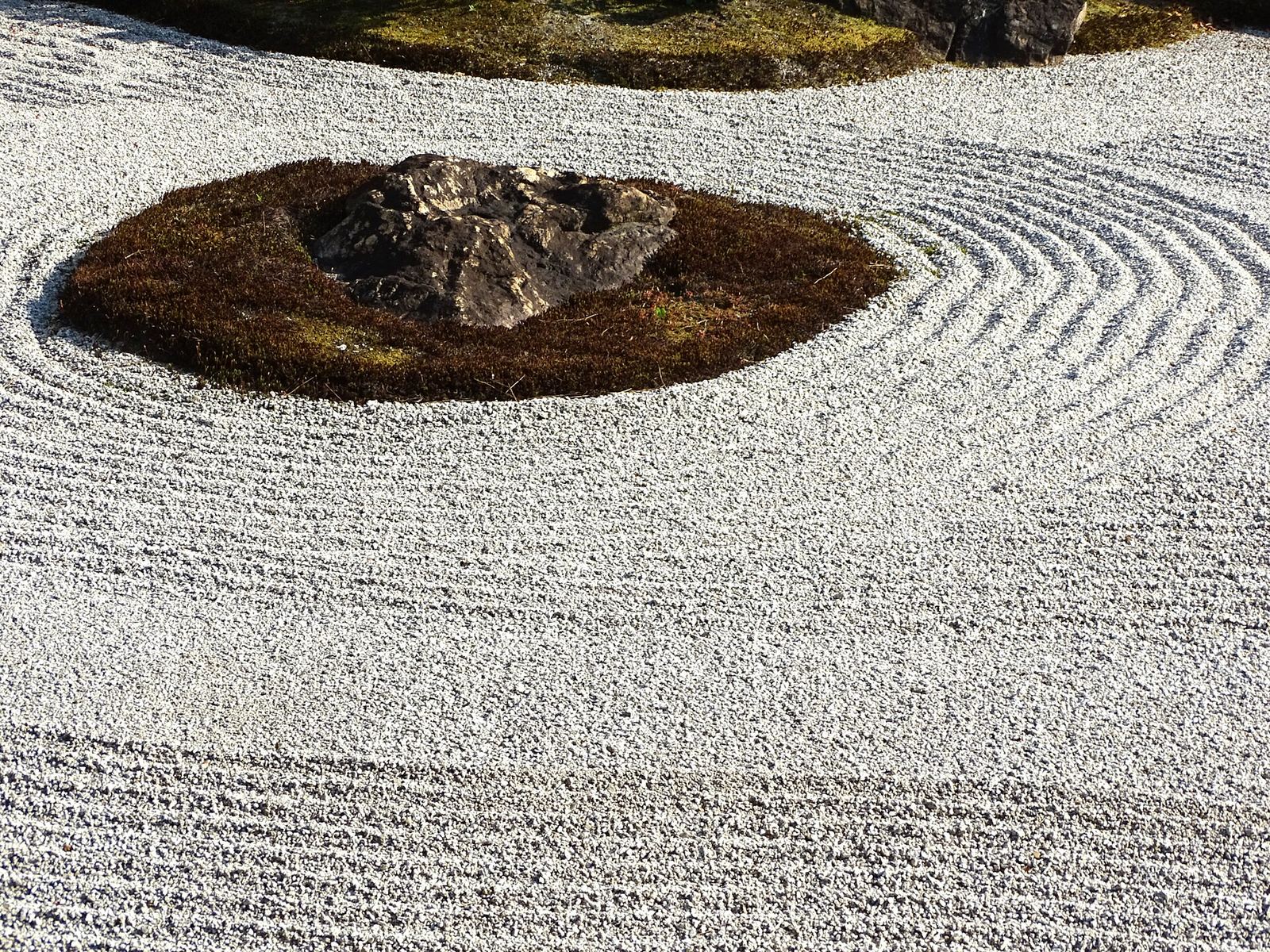
Photo: Adam Jones from Kelowna, BC, Canada, CC BY-SA 2.0 Kyoto’s oldest Zen temple sits at the southern end of Hanamikoji, and on a weekday morning it is a calm counterweight to the big names. Walk the halls in your socks past the white gravel garden, then find the Dharma Hall, where two dragons are painted across the ceiling.
Local tip Entry is ¥800 until the end of 2026: in September the temple announced a rise to ¥1,000 from January 1, 2027. On a wet day, dry off first, because the temple may turn away visitors whose clothes or socks are soaked.
- Cost
- ¥800 (students ¥500)
- Hours
- 10:00–17:00, last entry 16:30 (March to October); closed December 28–31
Checked: Kennin-ji: hours and fees (official), Kennin-ji: 2027 fee change (official), Inside Kyoto: Kennin-ji
-
· Wander · Gion
Hanamikoji and the Shirakawa
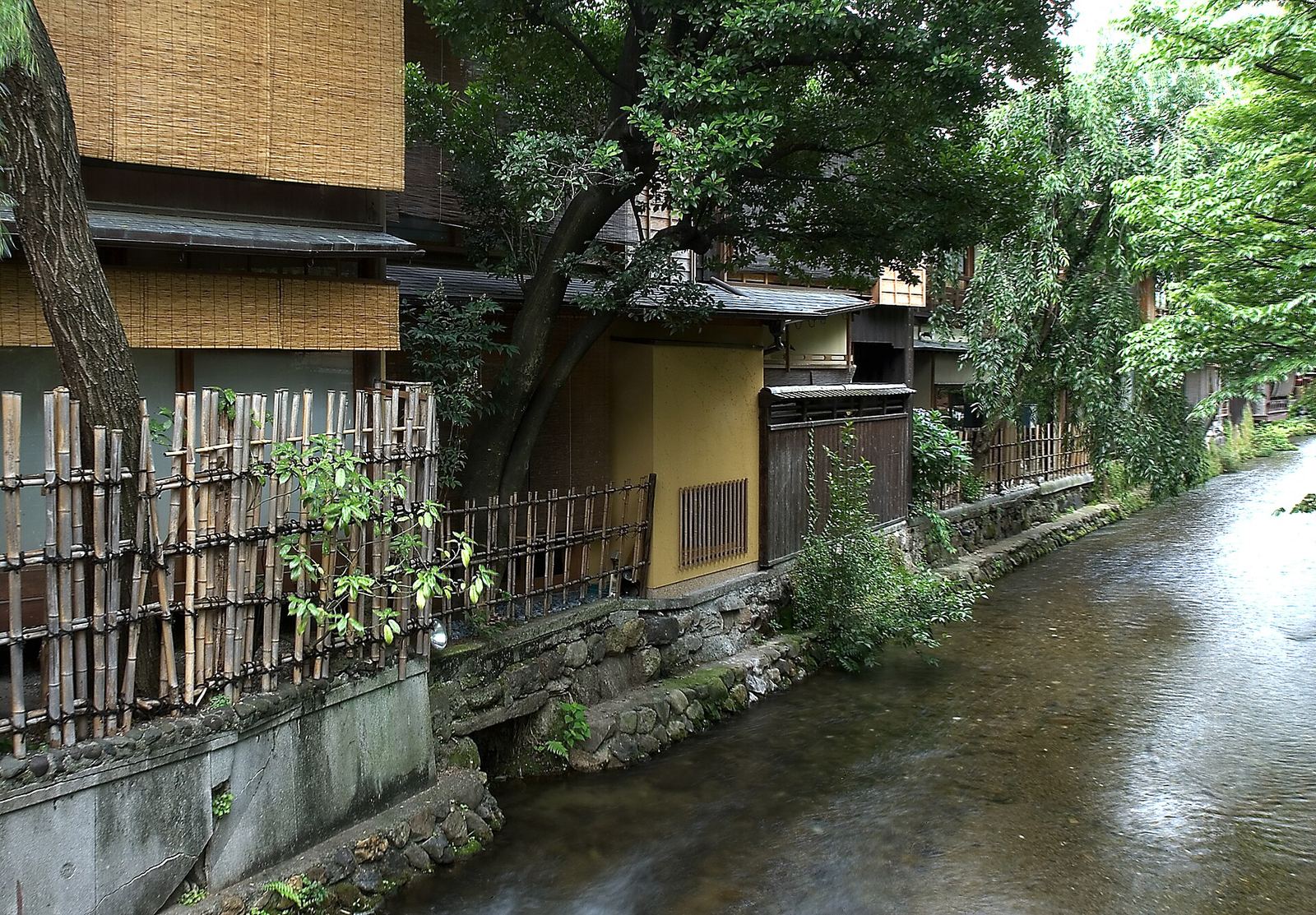
Photo: MichaelMaggs, CC BY-SA 2.5 From Kennin-ji, walk north up Hanamikoji, the main street of the Gion geisha district, lined with restaurants and teahouses behind wooden lattices. Cross Shijo-dori and cut across to the Shirakawa, a shallow canal running past the back rooms of teahouses; the tiny Tatsumi shrine by the bridge is the classic stop.
Local tip Stay on the main streets and follow the signs: Kyoto’s official guide says photography is banned in many parts of Gion and some lanes are private. If a geiko or maiko passes, let them go by without stopping, following or filming them.
- Cost
- Free
- Hours
- Public streets, open at all hours
Checked: Kyoto City: manners and photo rules, Inside Kyoto: Gion, Inside Kyoto: walking in Gion
-
· Lunch · Southern Higashiyama
Hisago
The streets below Kiyomizu are full of forgettable restaurants, which is why this plain, always-busy noodle and rice shop gets recommended so often. Order the oyakodon, chicken simmered with egg over rice, from the English menu.
Local tip It’s busiest around noon; if the line is long, do the next stop first and come back after 1:30. Walk there and onward along Nene-no-michi, a lane that is mostly free of cars.
- Cost
- Cheap
- Hours
- 11:30–19:30; closed Monday
Checked: Inside Kyoto: Hisago, Inside Kyoto: eating near Kiyomizu-dera
-
· Wander · Southern Higashiyama
Ninenzaka and Sannenzaka
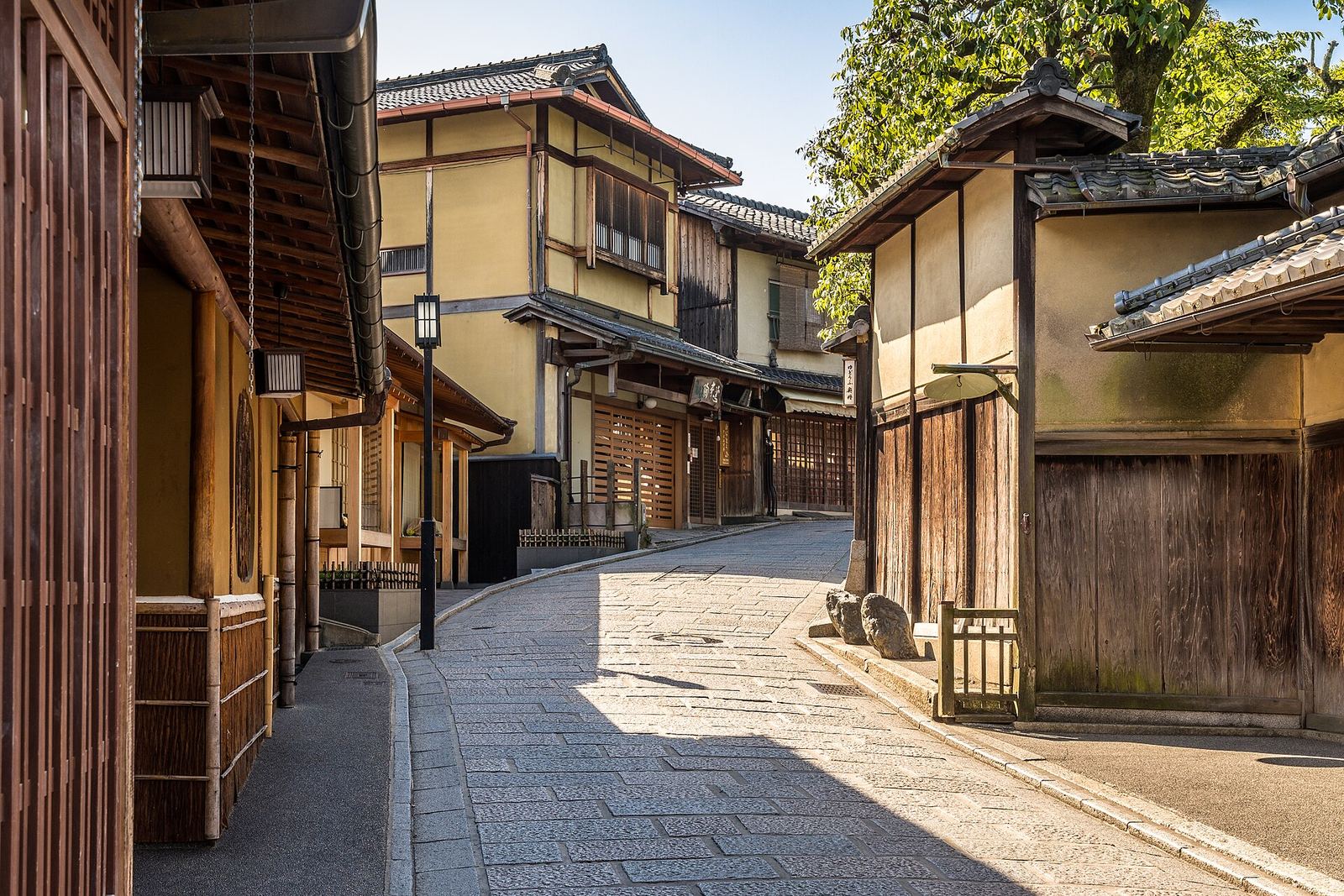
Photo: Domenico Convertini from Zurich, Schweiz, CC BY-SA 2.0 Two preserved lanes of wooden shopfronts climb toward Kiyomizu-dera: Ninenzaka first, then the stone steps of Sannenzaka. Near the top of Ninenzaka, Kasagiya is a tiny sweet shop with a weathered front and a Japanese-only sign that is easy to walk past; stop for thick matcha and a traditional sweet.
Local tip Kasagiya opens at 11 and closes on Tuesdays. If the lanes feel packed, Kodai-ji, a few minutes north (9:00–17:30, ¥600), has a small bamboo grove that a Japan travel agency on TikTok suggests as a calmer alternative to Arashiyama’s.
- Cost
- Free to walk; Kasagiya is cheap
- Hours
- Lanes open at all hours; Kasagiya 11:00–18:00, closed Tuesday
On TikTok: @travel.japan_together Checked: Inside Kyoto: Kasagiya, Inside Kyoto: the route through the lanes, Inside Kyoto: Kodai-ji
-
· Sunset · Southern Higashiyama
Kiyomizu-dera
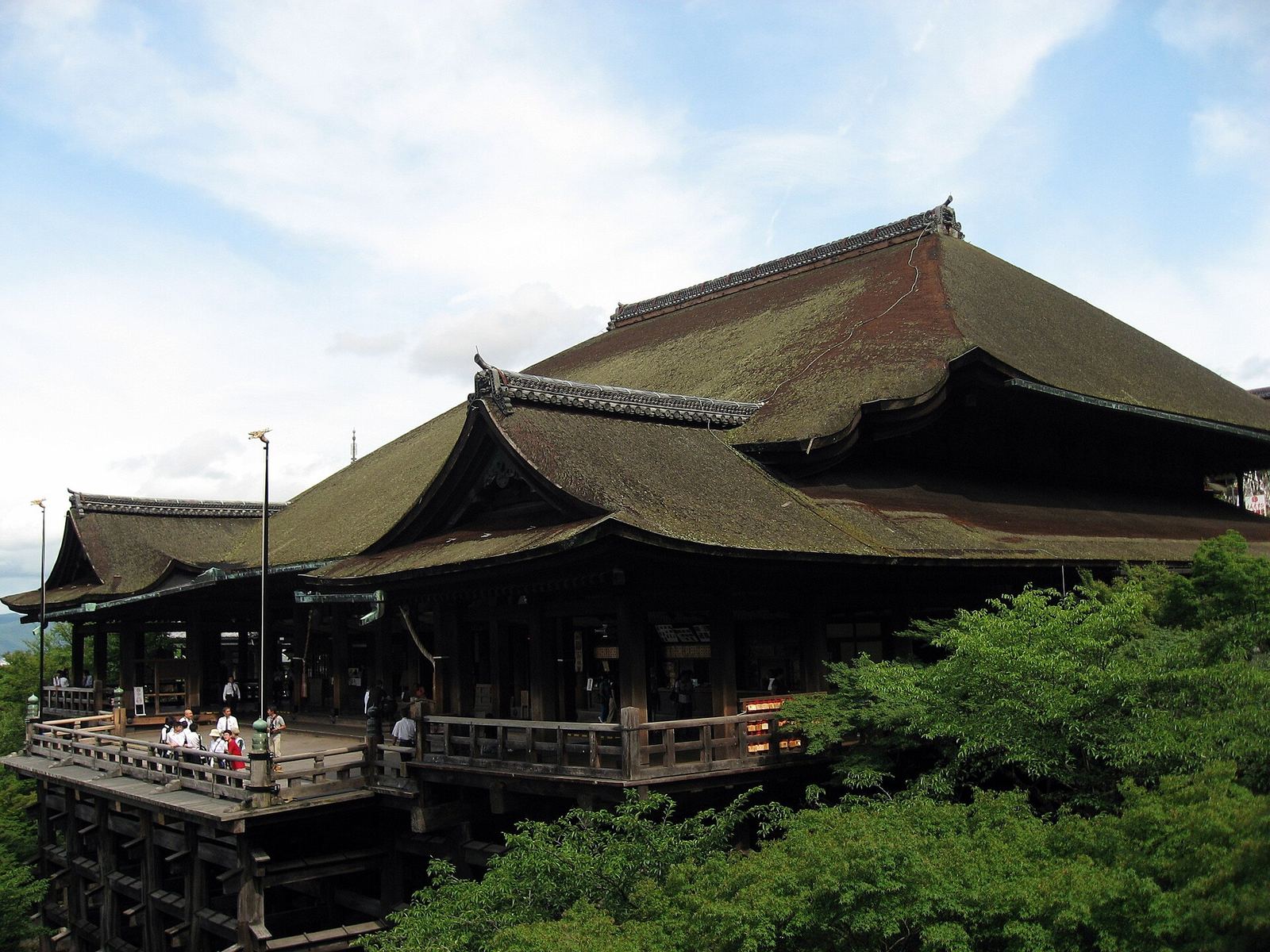
Photo: Vinodmp, CC BY-SA 3.0 Kyoto’s busiest sight, and Inside Kyoto’s advice for every big name applies: come just after opening or just before closing. Until November 20 the gates shut at 6 PM, and on October 15 the sun sets over the city at about 5:20. Walk the full loop past the great wooden stage and the Otowa waterfall to Okuno-in, whose own stage gives the classic view back to the main hall.
Local tip Want it nearly empty? The gate opens at 6 AM, and a Sydney-based couple’s video shows the temple and the Yasaka pagoda almost deserted at that hour. When you leave at 6 PM, head back down Sannenzaka toward Gion rather than Matsubara-dori, which Inside Kyoto lists among the city’s most crowded streets.
- Cost
- ¥500 (children ¥200)
- Hours
- 6:00–18:00 from September 1 to November 20, 2026; night viewing to 21:30 from November 21 to 30
On TikTok: @nickandhelmi Checked: Kiyomizu-dera: 2026 hours (official), Inside Kyoto: Kiyomizu-dera, Inside Kyoto: escaping the crowds
-
· Dinner · Gion
Okaru
Okaru’s specialty is curry udon: thick wheat noodles in a kelp-and-fish broth under a sweetish Japanese curry, stirred together, with melted cheese on top if you do it the house way. Inside Kyoto’s reviewer found it busier at lunch and pleasantly relaxed in the evening, which is what you want at the end of a long day.
Local tip There are no reservations, so just walk in. Order beef curry udon with cheese, or choose fried tofu, chicken, pork cutlet or prawn tempura if you skip beef.
- Cost
- Menu prices shown clearly, tax included
- Hours
- 11:00–15:00 and 17:00–2:30 (to 3:00 Friday and Saturday, 21:00 Sunday)
Checked: Inside Kyoto: Okaru
Arashiyama at opening time, then downtown
Be in the bamboo grove by 7:15, have breakfast when the bakery café opens and see Tenryu-ji’s garden ahead of the groups. Then take the train downtown as Arashiyama fills up, graze Nishiki Market, drink tea at Ippodo and end on the Kamo River at sunset, with dinner in Pontocho.
-
· Early start · Arashiyama
Arashiyama bamboo grove
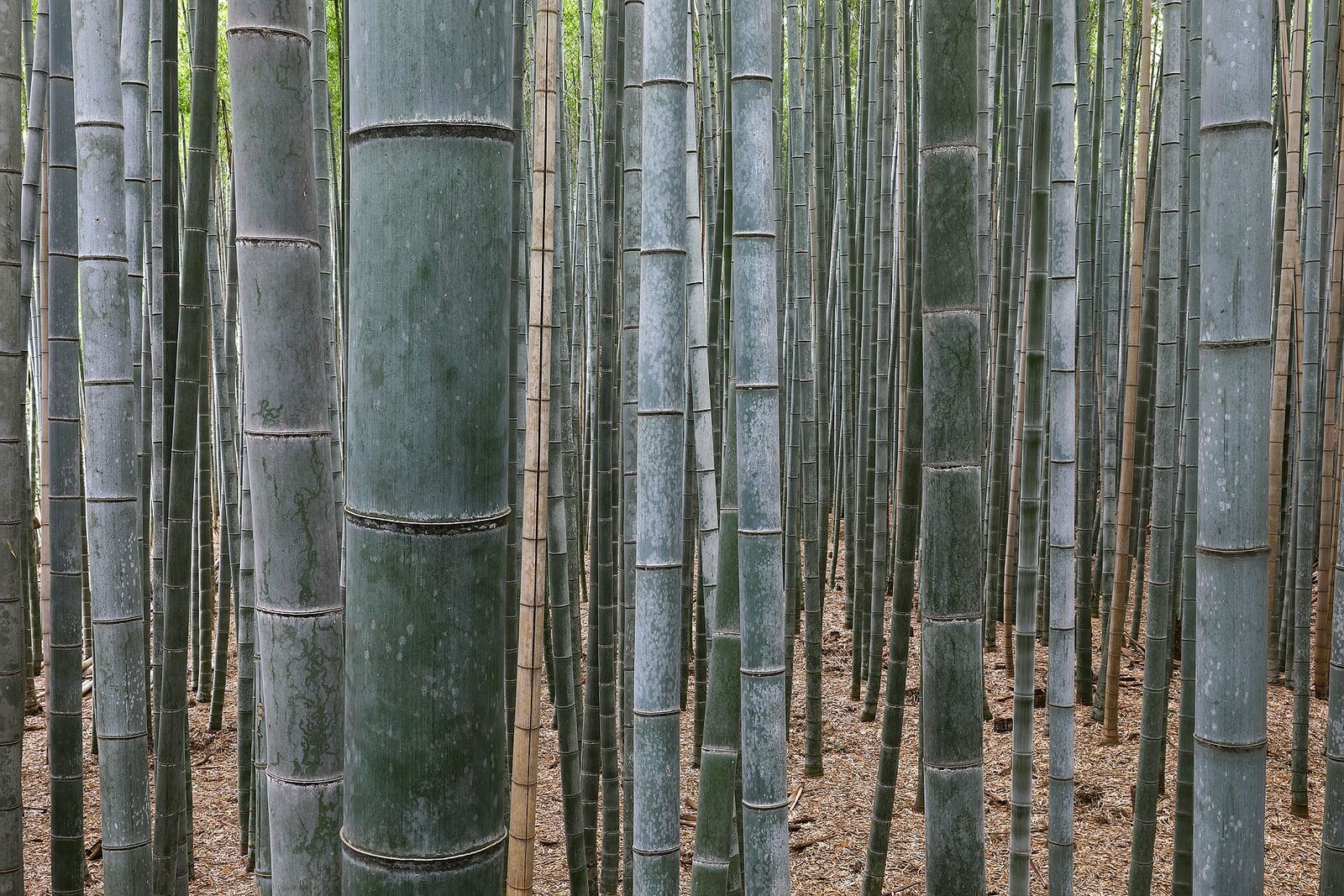
Photo: Basile Morin, CC BY-SA 4.0 The grove is free, open around the clock and smaller than the photos suggest: one main path climbing gently between walls of bamboo toward Okochi Sanso. It fills up fast once the tour groups arrive. A San Francisco creator’s tip lines up with Inside Kyoto’s advice for every big sight: go as early as you can, and walk to the far end, where there are the fewest people.
Local tip Take the JR Sagano Line from Kyoto Station to Saga-Arashiyama, about 10 minutes’ walk away. Don’t touch or carve the bamboo: the city says carved stems decay, and it is seeing damage here.
- Cost
- Free
- Hours
- Open 24 hours
- Where
- Arashiyama, Ukyo-ku
On TikTok: @fashionbyally Checked: Inside Kyoto: Arashiyama bamboo grove, Kyoto City: protect the bamboo groves
-
· Breakfast · Arashiyama
Bread, Espresso & Arashiyama Garden
An outpost of the Bread, Espresso & bakery group a few minutes from Tenryu-ji, split into two shops on one site: a café that opens at 8 and a bakery counter that opens at 9 and closes when the bread sells out. It is the natural sit-down breakfast after an early walk in the grove.
Local tip Both shops close on irregular days, so check before you set out. If it’s shut, % Arabica, by the river just upstream of Togetsukyo, opens at 8 for coffee.
- Cost
- Café menu; bread priced per piece
- Hours
- Café 8:00–18:00; bakery 9:00–18:00 or until sold out; irregular closing days
Checked: Bread, Espresso &: shop list (official), Inside Kyoto: % Arabica Arashiyama
-
· Zen garden · Arashiyama
Tenryu-ji
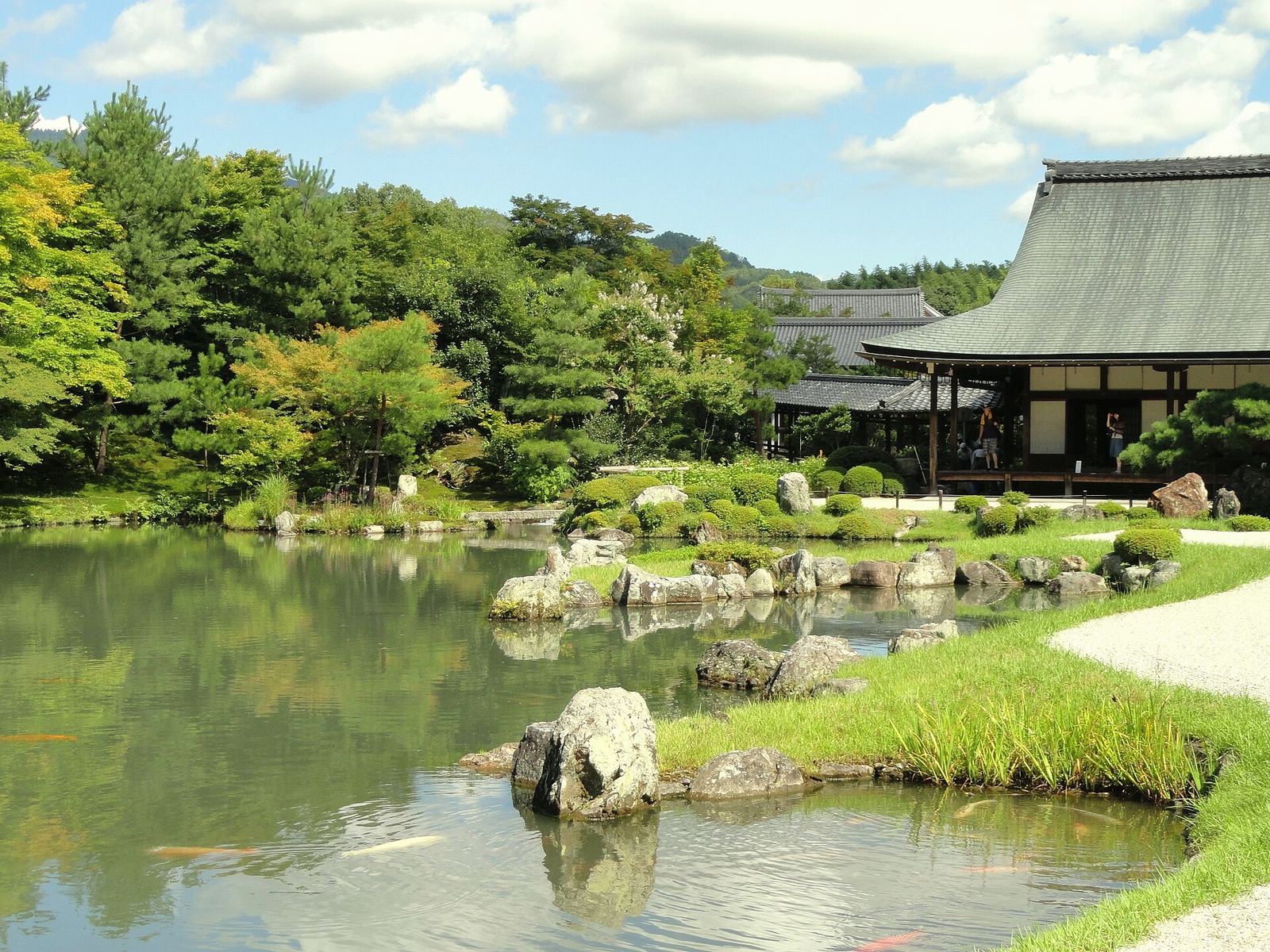
Photo: Daderot, CC0 A UNESCO-listed Zen temple whose Sogenchi pond garden, with Arashiyama’s hills rising behind it, is the reason to come. The garden opens at 8:30, so at 9:15 you are ahead of most groups. This autumn brings a bonus: the Cloud Dragon painted on the Dharma Hall ceiling, usually shown only at weekends, is on view daily from September 19 to December 6.
Local tip The Cloud Dragon is a separate ¥500 ticket, and the Dharma Hall is closed October 28 to 30. Leave by the main gate and walk south to Togetsukyo; if you skipped the grove, the north gate opens straight onto it.
- Cost
- Garden ¥500; halls ¥300 more; Cloud Dragon ¥500
- Hours
- 8:30–17:00, last entry 16:50. Dharma Hall 9:00–16:30 daily until December 6, 2026
Checked: Tenryu-ji: admission (official), Tenryu-ji: 2026 announcements (official), Inside Kyoto: Tenryu-ji
-
· River walk · Arashiyama
Togetsukyo Bridge
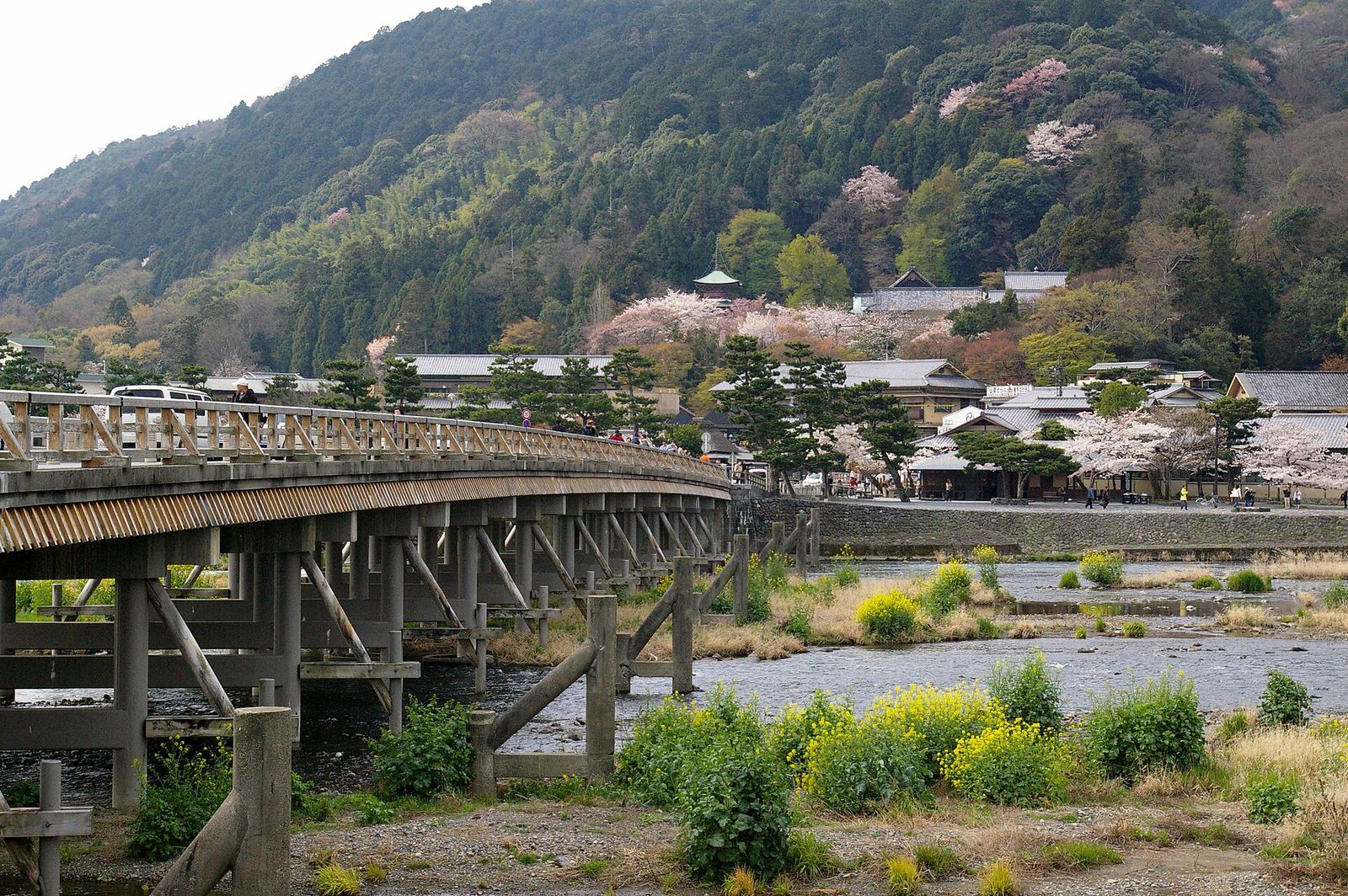
Photo: Tomomarusan, CC BY 2.5 The long, low bridge over the Katsura River, with the wooded slope of Mount Arashiyama behind it, is Arashiyama’s best-known view. Cross it to Hankyu’s Arashiyama station on the south bank. By now the main street behind you is filling up, which is your cue to leave.
Local tip Hankyu gets you to Kyoto-kawaramachi, a few minutes’ walk from Nishiki Market, with one change at Katsura, and its ticket gates take a tapped contactless card.
- Cost
- Free
- Hours
- Public bridge, open at all hours
Checked: Inside Kyoto: Kyoto trains, Inside Kyoto: tap-to-ride in Kansai
-
· Lunch · Downtown
Nishiki Market
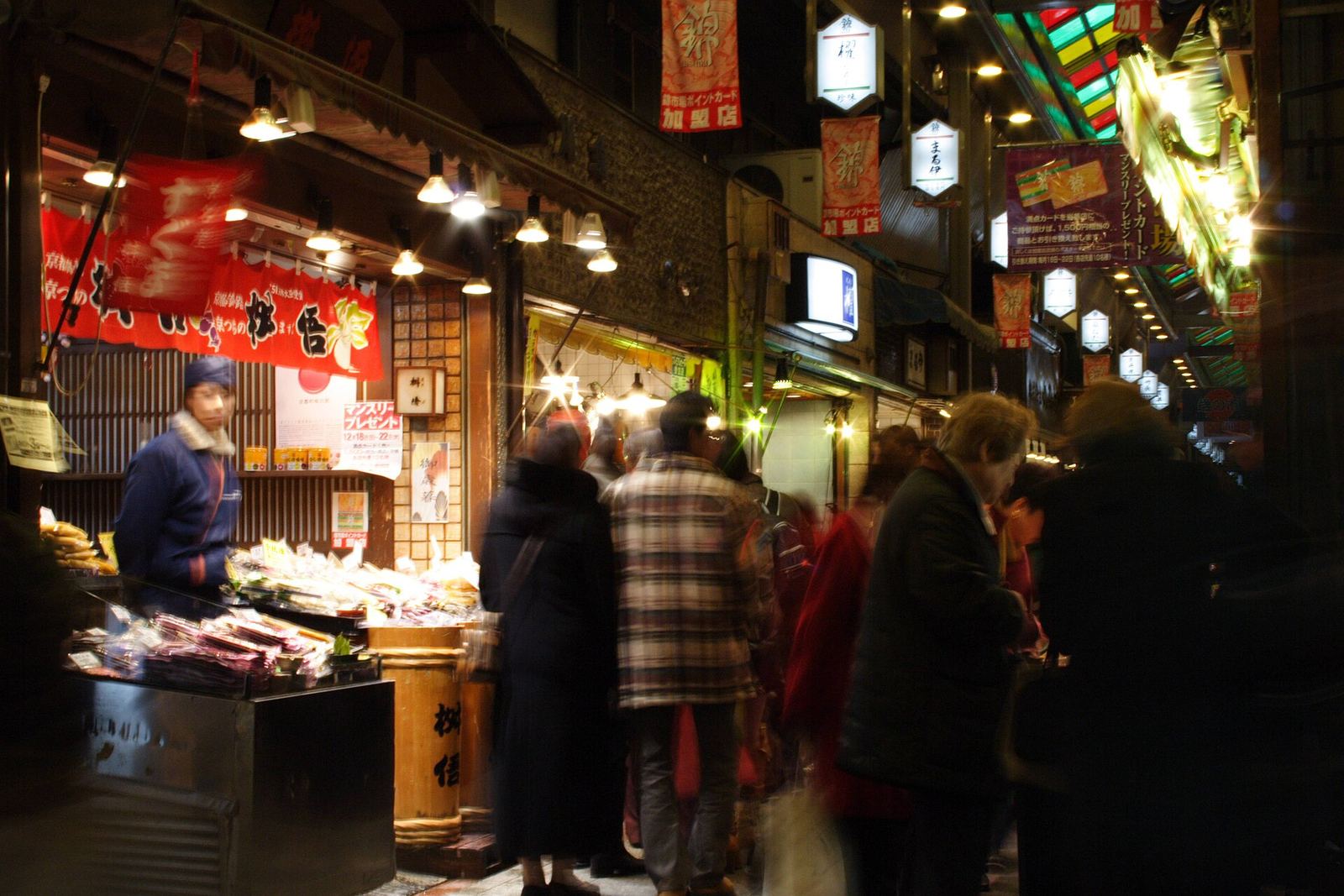
Photo: ignis, CC BY-SA 3.0 Five blocks of food shops under one long roof, from pickles and tofu to grilled skewers and sweets. Creators who ate their way through disagree on value: one rated the Michelin-listed gyoza and a steak skewer highly but found the scallops less than fresh, and another called the market overpriced and touristy, then gave a sesame-crusted curry bread 9.5 out of 10. Graze, and trust your eyes.
Local tip Eat at the stall where you buy rather than walking and eating: the lane is narrow, and the city’s guide names Nishiki as a place not to block the road. Bring cash.
- Cost
- Pay per item: creators paid from ¥100 for a cup of sake to about US$10 for a steak skewer
- Hours
- About 9:00–17:00, varying by stall; some shops close on Wednesdays
On TikTok: @biteswithlily, @kaitlyneats Checked: Inside Kyoto: Nishiki Market, Kyoto City: don't block the road
-
· Tea break · Downtown
Ippodo Tea
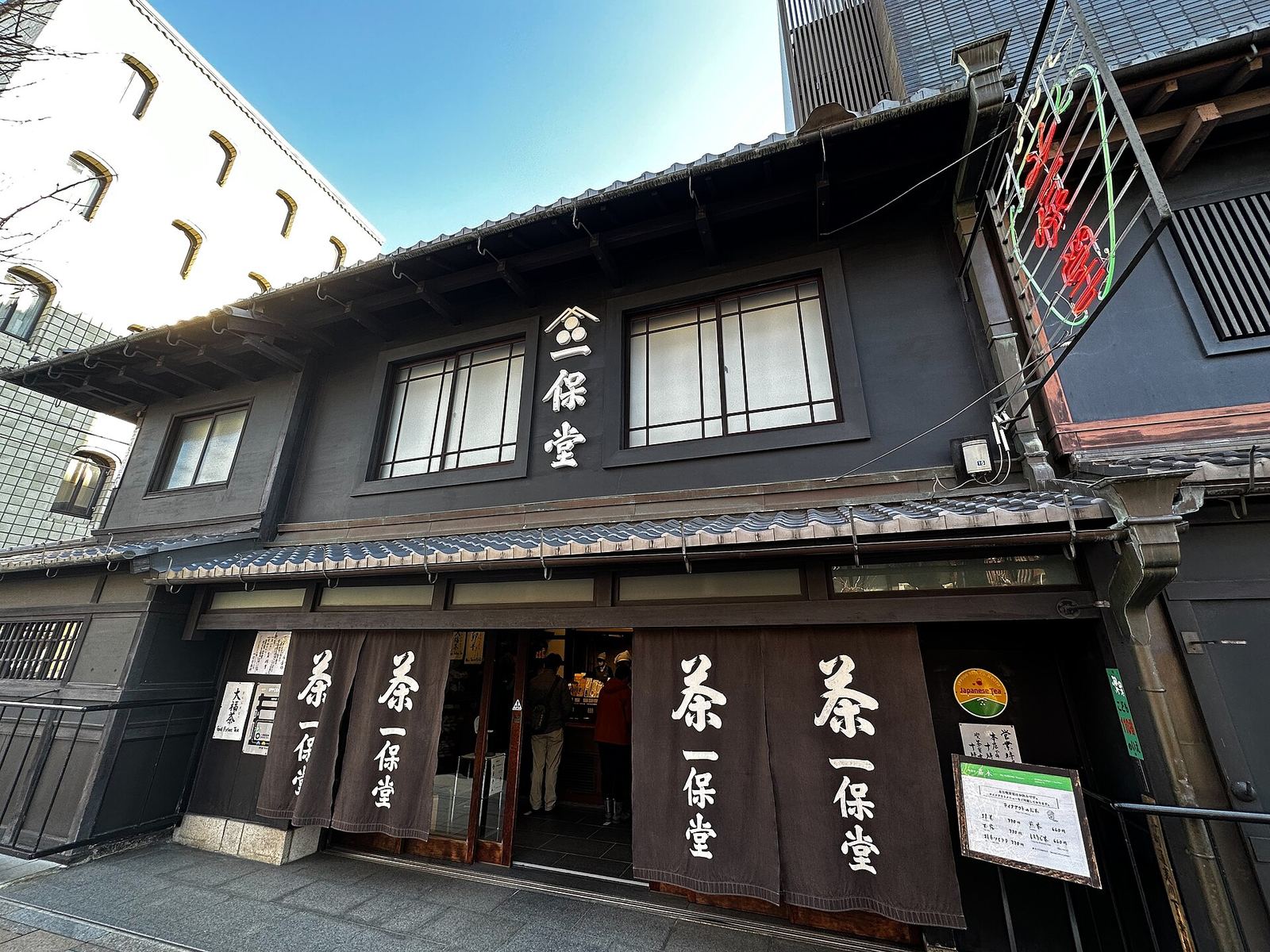
Photo: Nesnad, CC BY 4.0 Walk north along Teramachi-dori to Ippodo’s main shop, a dark wooden tea merchant’s with noren curtains across the front. The Kaboku tearoom beside the counter serves Japanese tea with a sweet, and the staff will either teach you to brew it yourself or bring it ready to drink.
Local tip The tearoom’s last order is 4:30 PM, and the shop closes on the second Wednesday of each month. Buy a bag of sencha or matcha at the counter to take home.
- Cost
- Priced per tea; menu at the tearoom
- Hours
- Shop and tearoom 10:00–17:00 (last order 16:30); closed the second Wednesday of the month
Checked: Ippodo Kyoto main store (official)
-
· Sunset · Downtown
Kamo River at sunset
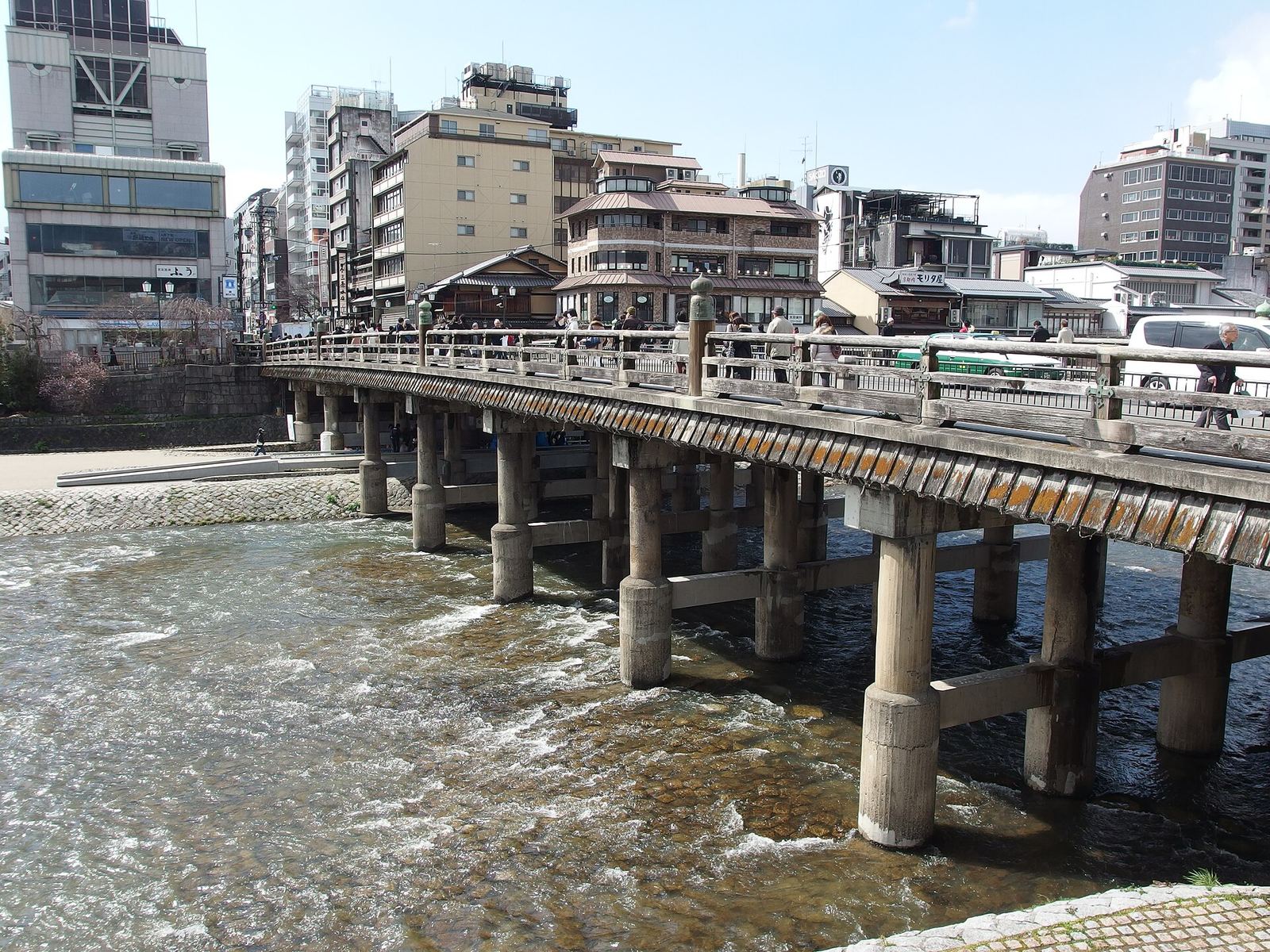
Photo: Guilhem Vellut, CC BY 2.0 The Kamo River runs right past downtown, with a walking path along both banks. On October 16 the sun sets at about 5:20: walk east from Ippodo to the river, follow it south to the stretch between the Sanjo and Shijo bridges, just behind Pontocho, and sit on the bank as the lights come on.
Local tip Pick up a snack at a convenience store on the way, and take your rubbish with you when you leave.
- Cost
- Free
- Hours
- Public riverbank; sunset about 17:22 on October 16
Checked: Inside Kyoto: Kamo-gawa riverside, Inside Kyoto: Pontocho and the river
-
· Dinner · Pontocho
Pontocho Izumoya
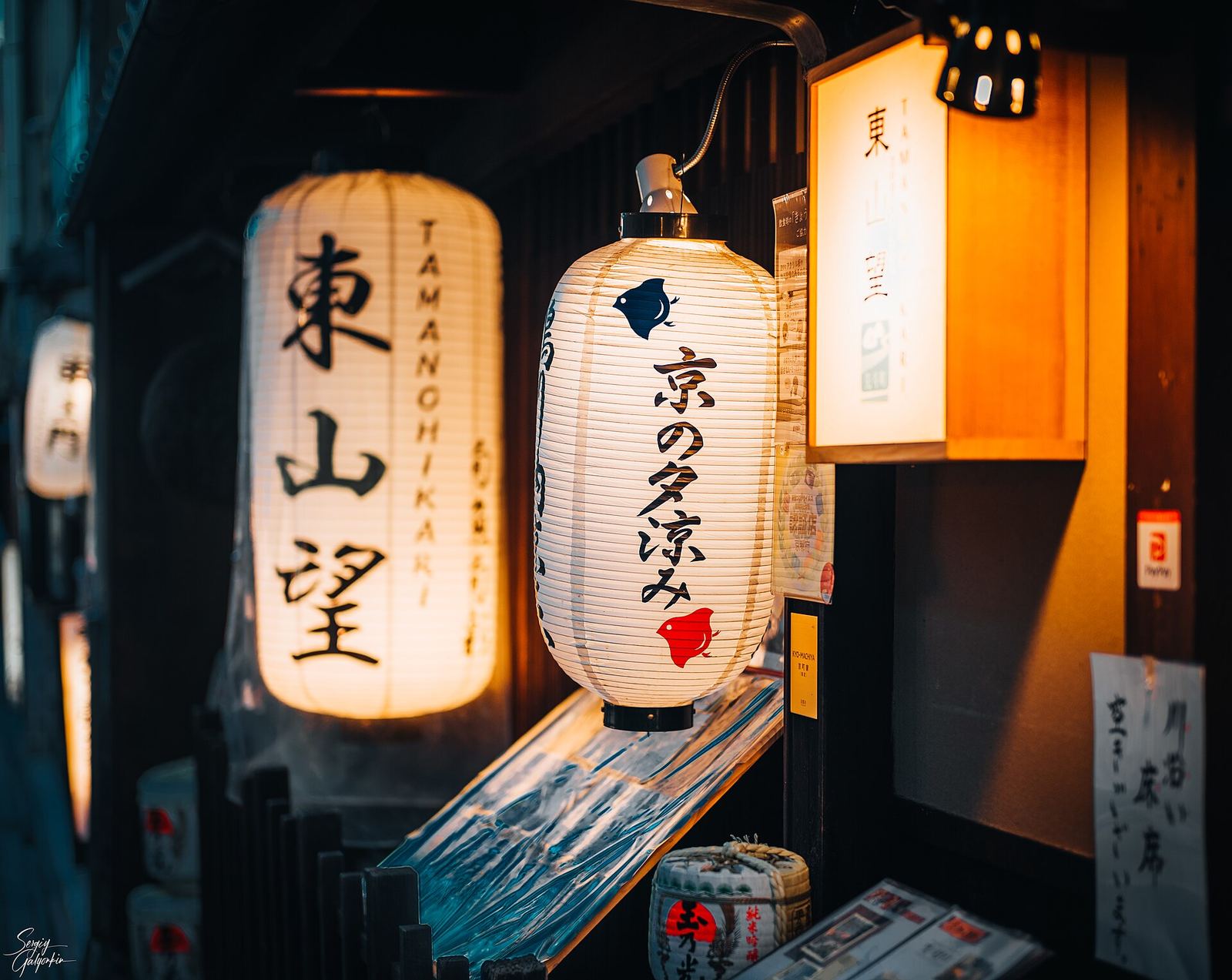
Photo: Sergiy Galyonkin from Raleigh, USA, CC BY-SA 2.0 Pontocho, the lantern-lit lane that runs beside the river between Sanjo and Shijo, is lined with restaurants that can feel closed to outsiders. Izumoya is the easy way in: it has served grilled eel and kaiseki for more than a century across four floors, and the street’s own association has its office inside. The association lists eel dishes from ¥2,090, obanzai (Kyoto home cooking) from ¥2,310 and kaiseki from ¥3,850.
Local tip Book by phone, especially on a Friday; walk-ins may wait. Around dusk on Fridays and Saturdays you may see a maiko or geiko hurrying to an appointment at the lane’s south end: let them pass, and no photos.
- Cost
- Eel from ¥2,090, obanzai from ¥2,310, kaiseki from ¥3,850 (association listing); dinner costs more than lunch
- Hours
- 11:30–22:00 (last order 21:00), open every day
- Booking
- Reserve by phone: 075-211-2501 (+81 75-211-2501 from abroad)
Checked: Pontocho association: Izumoya listing, Inside Kyoto: Pontocho Izumoya, Inside Kyoto: Pontocho Alley
The practical bits
Which days this works on
It’s written for a Thursday and Friday and works as written from Wednesday to Friday. Day 1 can’t fall on a Monday, when Hisago closes, and loses its tea break on a Tuesday, when Kasagiya closes. Day 2 works any day, but the Ippodo tearoom closes on the second Wednesday of the month, some Nishiki stalls close on Wednesdays, and the Arashiyama bakery closes on irregular days. Weekends are much busier at Fushimi Inari and Arashiyama. Starting on a Monday? Do Day 2 first.
Getting around
Both days are walked, with one train ride in the middle: the Keihan Line from Fushimi-Inari to Gion-Shijo on Day 1, and Hankyu from Arashiyama to Kyoto-kawaramachi, changing at Katsura, on Day 2. To reach each first stop, take the JR Nara Line from Kyoto Station to Inari, or the JR Sagano Line to Saga-Arashiyama. Keihan and Hankyu gates take a tapped contactless credit card; JR gates don’t, so carry an IC card such as ICOCA, which works on JR and the private lines. City buses charge a flat ¥230 but get packed on the tourist routes, and this plan never needs one.
Book these ahead
Only dinner at Pontocho Izumoya, by phone (075-211-2501), especially for a Friday. Nothing else needs a booking: the temples on this plan sell tickets at the gate, and Fushimi Inari and the bamboo grove are free.
Money and tipping
Carry cash. The city’s official guide warns that many purchases and temple admission fees can only be paid in cash, so keep notes and coins for temples, market stalls and small restaurants. Tipping isn’t part of the culture in Japan: pay the bill and say thank you.
Gion's rules, and the tourist-trap tell
Kyoto’s official guide asks visitors not to stop, touch, follow or photograph geiko and maiko, says photography is banned in many parts of Gion, and asks you to stay out of private property and keep your voice down in residential lanes. For food, the tell is location: most places on the slopes up to Kiyomizu-dera are forgettable, so eat a street or two away, at places like Hisago.
The 2026 hotel tax
Kyoto raised its accommodation tax on March 1, 2026. Per person per night, it’s ¥200 for rooms under ¥6,000, ¥400 up to ¥19,999, ¥1,000 up to ¥49,999, ¥4,000 up to ¥99,999 and ¥10,000 from ¥100,000, charged on top of the room rate at hotels, ryokan and licensed rentals.
Coming in November instead?
Mid-October comes before the autumn leaves, which is part of why this plan works. The leaf-season rush runs through late November: Kiyomizu-dera stays open to 9:30 PM for night viewing from November 21 to 30, and Tenryu-ji opens its garden at 7:30 from November 14 to 30, so start even earlier. And budget for Kennin-ji’s rise from ¥800 to ¥1,000 on January 1, 2027.
Three videos worth watching first
How we made this
We started with a deliberately small sample of Kyoto TikToks: twelve videos about the crowds at Fushimi Inari, the bamboo grove and Nishiki Market, read through their captions and TikTok's own transcripts. Seven made it into the plan, each on the stop it actually changed. The rest comes from written local sources: Inside Kyoto, the guide by long-time Kyoto resident Chris Rowthorn, the Kyoto City official travel guide, and each temple's and restaurant's own website.
In September 2026 we checked every stop's opening days, hours and prices, using the venue's own site wherever it has one (Kiyomizu-dera's 2026 schedule, Tenryu-ji, Kennin-ji, Ippodo and the Pontocho street association) and Inside Kyoto for the small restaurants. Two things had changed: Kennin-ji announced a rise to ¥1,000 from January 2027, and Honke Owariya, the old soba house that many Kyoto lists still recommend, has closed for good, as Inside Kyoto noted in August 2026. Hours still change, so check before you go. Photos come from Wikimedia Commons and are credited below.
Then we ran the plan through Bilbo, the trip planner we make. It put each day's 8 or so stops in route order and checked every one against its closing days, with nothing clashing and nothing scheduled on a day it's shut. The maps are screenshots of that plan in Bilbo.
Photos come from Wikimedia Commons and are credited below. Bilbo is made by Haplo, which also publishes this blog.
Photo credits
- Yasaka-dori and the Yasaka Pagoda (Hokan-ji) in the early morning · Photo: Basile Morin, CC BY-SA 4.0
- The Senbon Torii tunnel at Fushimi Inari Taisha · Photo: Luka Peternel, CC BY-SA 4.0
- Raked gravel and a moss island in Kennin-ji's dry garden · Photo: Adam Jones from Kelowna, BC, Canada, CC BY-SA 2.0
- The Shirakawa canal behind Gion's teahouses · Photo: MichaelMaggs, CC BY-SA 2.5
- Ninenzaka's stone-paved lane and wooden shopfronts · Photo: Domenico Convertini from Zurich, Schweiz, CC BY-SA 2.0
- The Main Hall and wooden stage of Kiyomizu-dera · Photo: Vinodmp, CC BY-SA 3.0
- Bamboo stems in the Arashiyama bamboo grove · Photo: Basile Morin, CC BY-SA 4.0
- Sogenchi pond garden and the abbot's hall at Tenryu-ji · Photo: Daderot, CC0
- Togetsukyo Bridge and Mount Arashiyama in spring · Photo: Tomomarusan, CC BY 2.5
- A stall in Nishiki Market at the end of the year · Photo: ignis, CC BY-SA 3.0
- Ippodo Tea's main shop on Teramachi-dori · Photo: Nesnad, CC BY 4.0
- Sanjo Ohashi bridge over the Kamo River · Photo: Guilhem Vellut, CC BY 2.0
- Paper lanterns outside restaurants in Pontocho · Photo: Sergiy Galyonkin from Raleigh, USA, CC BY-SA 2.0