 Haplo
Haplo
3 Days in Lisbon: An Itinerary for Hills, Food and Fado
Three walkable days: the castle hill and Alfama, Belém by the river, then Chiado and the Bairro Alto. The big sights at their quietest hour, lunch where Lisbon eats, a sunset every evening, and every stop checked for October 2026.
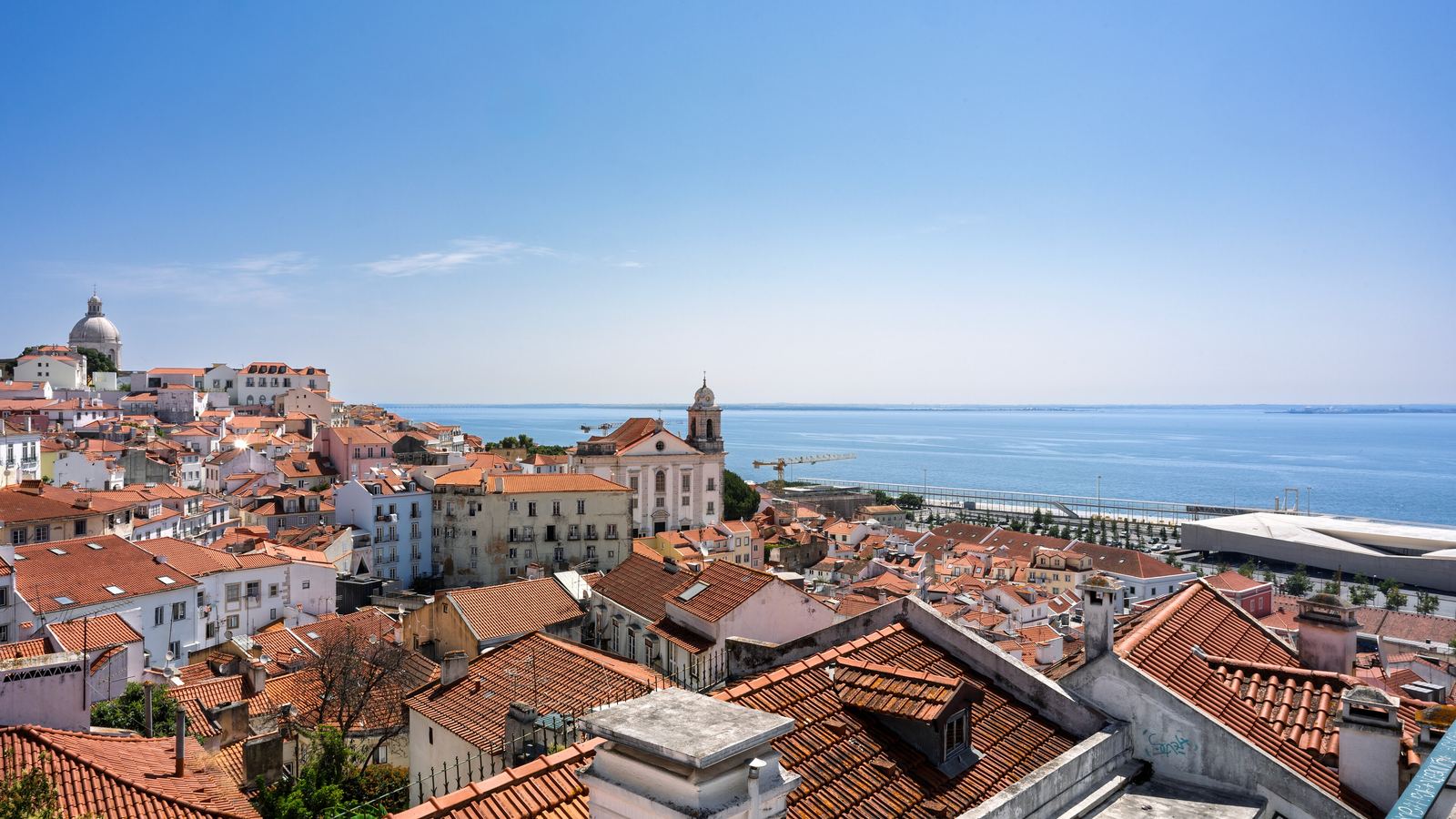
Lisbon is small enough to see in three days and steep enough to wear you out in one. Most of its queues form at the same few places, and they’re easy to beat if you know the hours: the castle at 9:00, the Jerónimos cloister at 9:30, pastéis de nata in Belém at 8:00, and Tram 28 from the end of the line before the crowds get on, or not at all.
This 3-day Lisbon itinerary gives each day one part of the city. Day 1 is the castle hill: Alfama’s lanes, a Mouraria tasca, a funicular up to Graça and the sunset from the Senhora do Monte. Day 2 is Belém, one tram or train ride out along the river. Day 3 is Chiado and the Bairro Alto, ending with fado in a house that has been singing since 1927.
A few things changed in the past year that older guides miss. After the Glória funicular derailed in September 2025, the Santa Justa lift and the Bica and Lavra funiculars stopped too, and a year on they still have no date to reopen. The Torre de Belém reopened in May 2026 after a year of restoration, now with half-hour entry slots. The plan works around both.
The stops come from people who live in Lisbon, from food writers to a handful of local creators, and we checked every one against its own website or official listing for mid-October 2026.
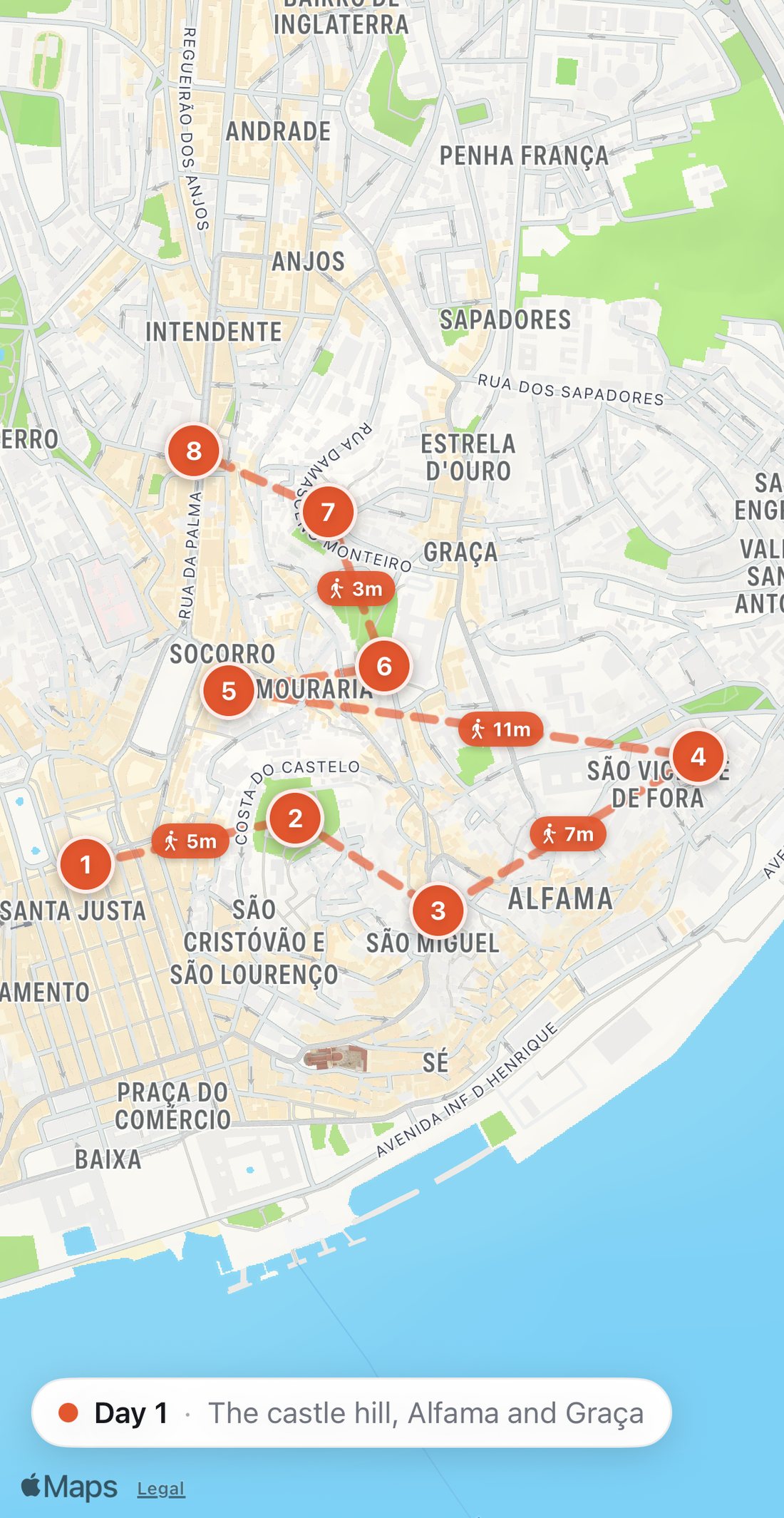
We ran the plan through Bilbo, the trip planner we make, to put each day in route order and check every stop against its closing days. The maps below come straight from the app.
How to use it. Each day stays in one part of town. Measured stop to stop, that’s about 3.3, 4.7 and 3.9 km as the crow flies, but Lisbon’s streets wind and climb, so count on 5 to 6 km a day on foot, much of it on slippery limestone paving: wear shoes with grip. The plan is written for a Wednesday to Friday, when everything on it is open, and the practical section at the end says what to swap on other days.
Three days, one part of Lisbon each
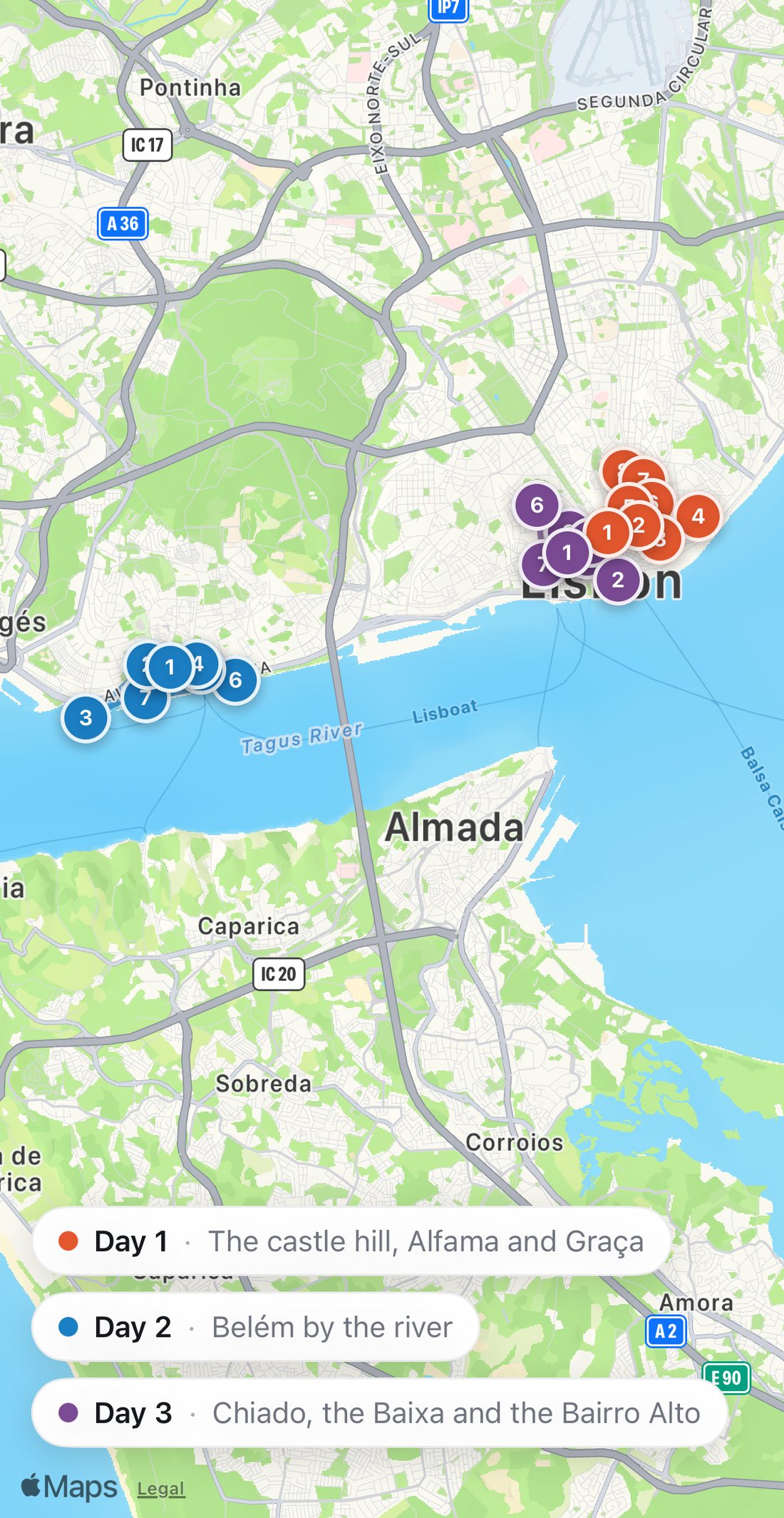
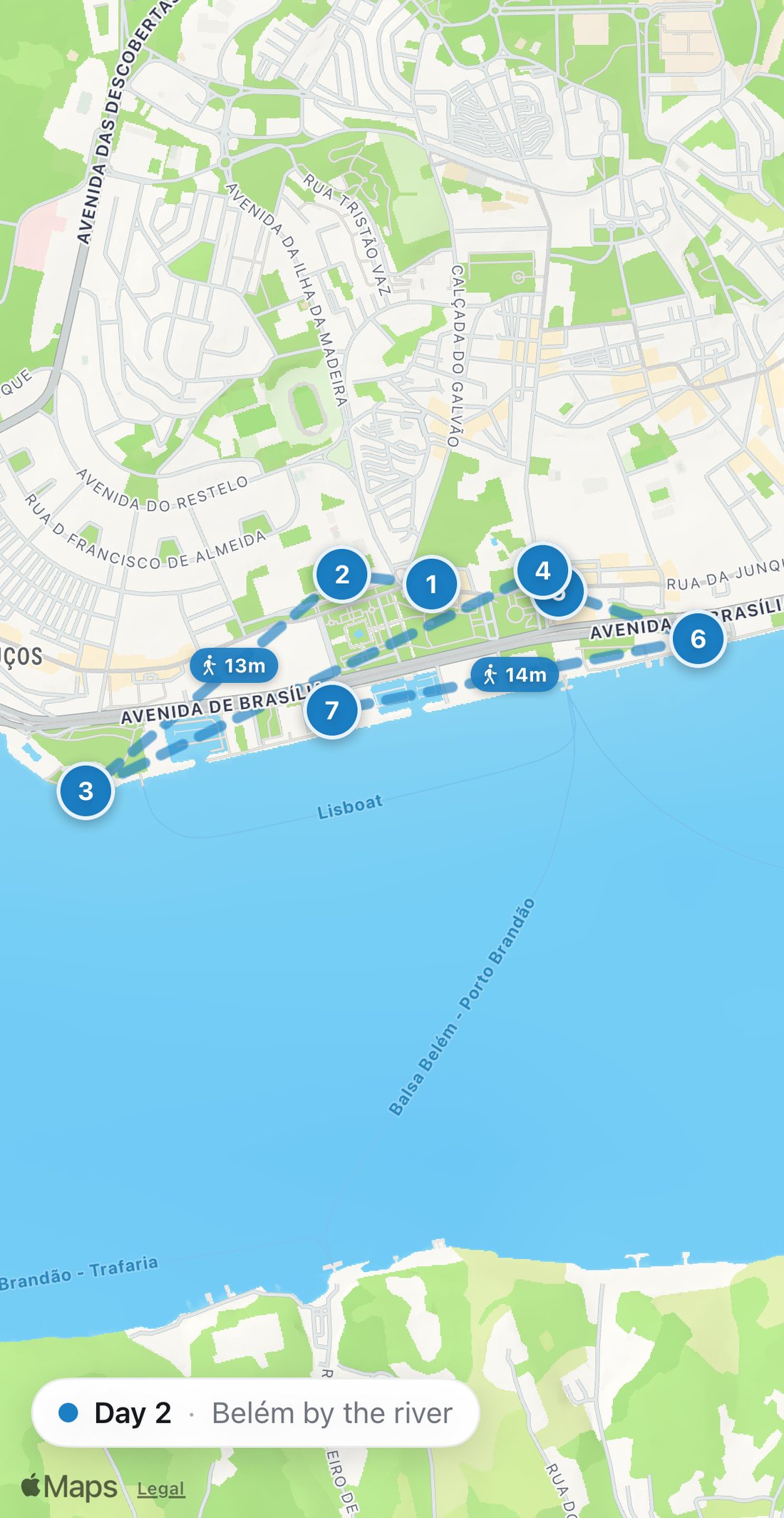
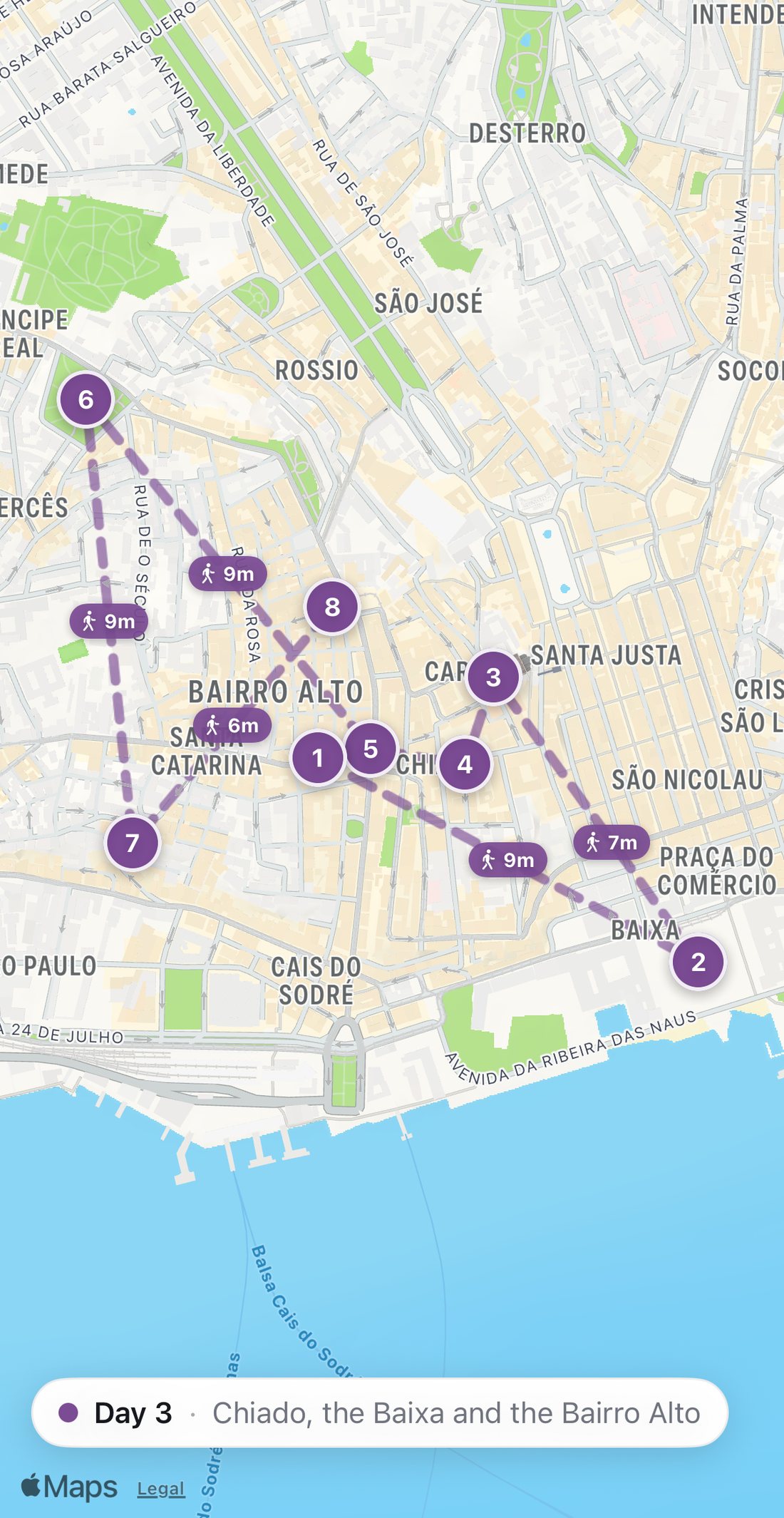
Each day stays in one part of the city: the castle hill and Graça, Belém by the river, then Chiado and the Bairro Alto. The numbered pins on each map match the stops below.
- Day 1 · Wednesday The castle hill, Alfama and Graça Baixa · Castelo · Alfama · Mouraria · Graça · 8 stops
- Day 2 · Thursday Belém by the river Belém · Tagus riverfront · 7 stops
- Day 3 · Friday Chiado, the Baixa and the Bairro Alto Chiado · Baixa · Carmo · Bairro Alto · Príncipe Real · 8 stops
Best days: Wednesday to Friday as written; starting on a Tuesday, Thursday or Saturday works too. Other start days need a swap, covered under The practical bits.
The castle hill, Alfama and Graça
Breakfast in an 1829 pastry shop, the castle at opening, then down through Alfama’s lanes to the Panteão’s dome. Lunch is roast cod in a Mouraria tasca, a funicular lifts you to Graça, and the day ends on a hilltop terrace at sunset before seafood at Ramiro.
-
· Breakfast · Baixa
Confeitaria Nacional
Founded in 1829 and still fitted with its old glass cases and painted panels, Confeitaria Nacional has been feeding the Baixa for nearly two centuries. It says its pastel de nata recipe is one of the oldest in the city, and its bolo de arroz, a tall rice-flour cake, is one of Portugal’s favourite pastries. Take them to the sit-down café room rather than the counter.
Local tip Sit down and don’t rush: the castle opens at 9:00 and the climb is next. Tram 28’s first stop, at Martim Moniz, is 300 metres away.
- Cost
- A pastry and a coffee for a few euros
- Hours
- Mon–Sat 8:00–20:00; Sundays from 9:00 (listings differ)
Checked: Official site, Time Out Lisbon (hours)
-
· Go early · Castelo
Castelo de São Jorge
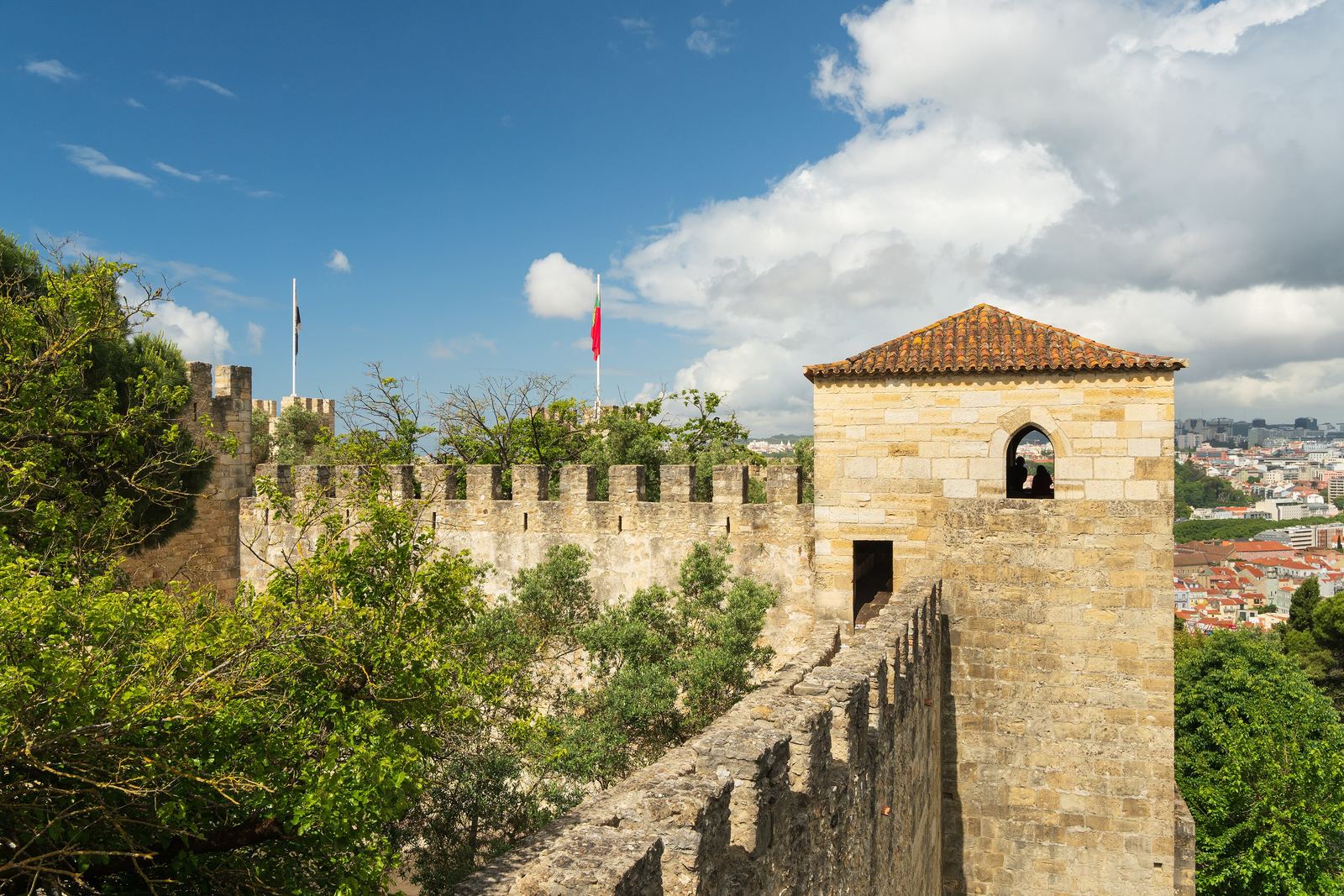
Photo: Norbert Nagel, CC BY-SA 4.0 The castle opens at 9:00 every day, and the first hour is the calm one. Walk the ramparts and towers for the view over the Baixa and the river, then join the camera obscura tour, which is included in the ticket and runs from 11:00 to 13:00 in October when the weather allows. The small museum is closed for now while the toilets are rebuilt.
Local tip Tram 28 is the scenic way up only if you board at the Martim Moniz end before 9:00, when there are still seats; get off at Largo das Portas do Sol and walk five minutes uphill. Later in the day the queue is long and pickpockets work the crush, so walk instead: it’s about 15 minutes up from the Baixa.
- Cost
- €17; ages 13–25 €8.50; 65+ €14; 12 and under free
- Hours
- Daily 9:00–21:00 until 31 October (last entry 20:30); 9:00–18:00 from 1 November
- Booking
- Optional, but it skips the ticket desk: buy on the castle's site, which sells through BOL, its only authorised online seller
On TikTok: @itsjonlam, @mazepatravel Checked: Official hours, Official prices
-
· Wander · Alfama
Portas do Sol, Santa Luzia and Alfama's lanes
Five minutes below the castle are two free terraces over Alfama’s rooftops and the river: Portas do Sol and, a few steps on, Santa Luzia with its tiled walls. From there, take the stairways down into Alfama, the oldest quarter, whose tangle of lanes largely came through the 1755 earthquake. Let yourself get a little lost on the way down to the Largo do Chafariz de Dentro, where the Fado Museum is.
Local tip The paving is polished limestone, steep and slippery even when dry, so wear shoes with grip. Keep your bag zipped at the viewpoints, where the crowds gather.
- Cost
- Free
- Hours
- Open-air, always open
Checked: Visit Lisboa: Santa Luzia, Alfama (Wikipedia)
-
· See · São Vicente
Panteão Nacional
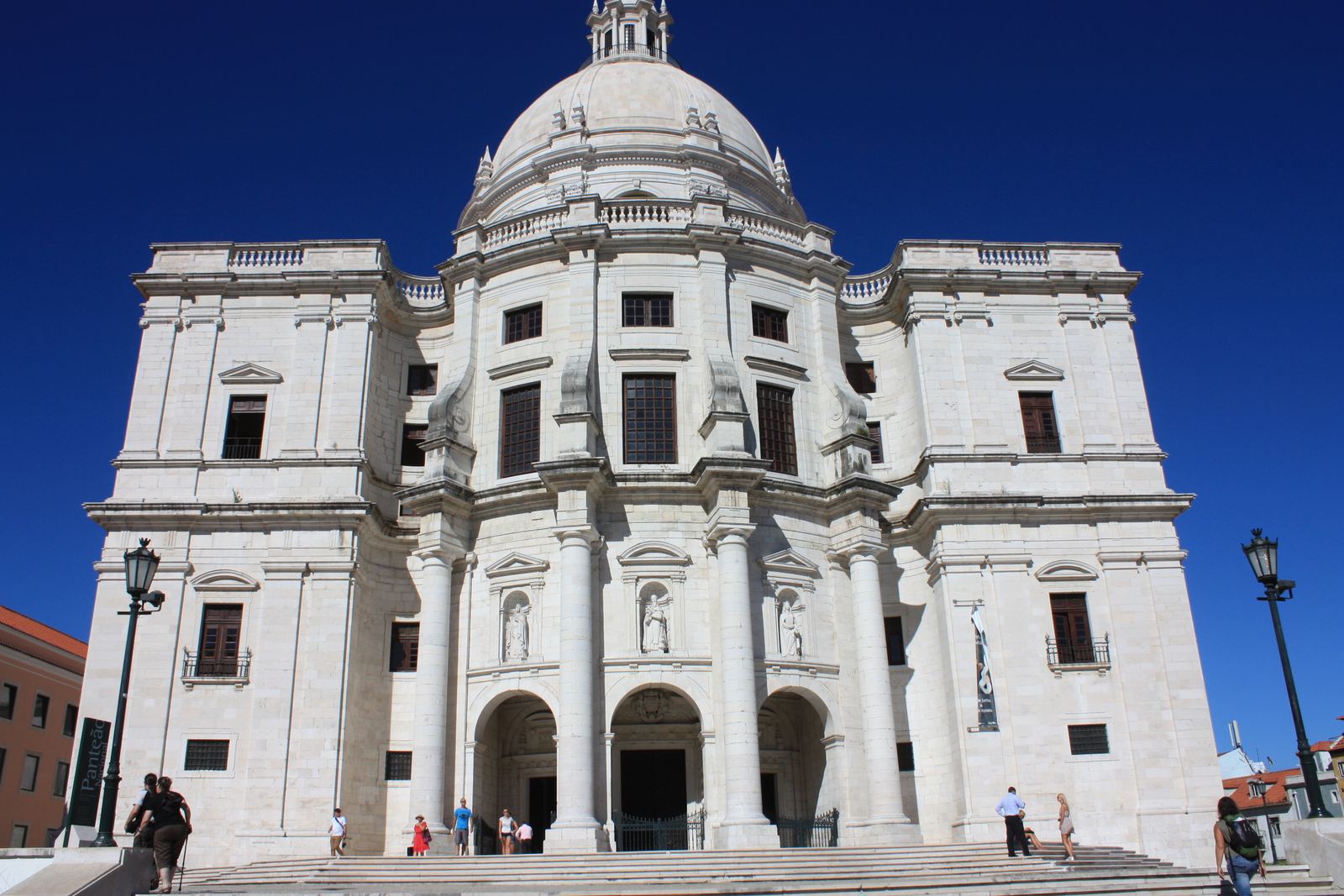
Photo: Reis Quarteu, CC BY-SA 4.0 The church of Santa Engrácia was rebuilt in the late 1600s to a design by João Antunes, then stood without a roof until the early 1960s, long enough for ‘obras de Santa Engrácia’ to become the Portuguese phrase for a job that never ends. Today it’s the National Pantheon, with the tombs of the fado singer Amália Rodrigues and the footballer Eusébio among others. Climb to the terrace around the dome for a wide view over Alfama and the river.
Local tip It’s a ten-minute climb up through the lanes from the Largo do Chafariz de Dentro. It’s closed on Mondays, and from October it shuts at 17:00, so late morning suits it.
- Cost
- €10
- Hours
- October to March: Tue–Sun 10:00–17:00; closed Monday
Checked: Official hours and price (MMP)
-
· Lunch · Mouraria
Zé da Mouraria
Time Out calls it the place in Mouraria that’s always full, and the reason arrives on a platter: a thick piece of roast cod with potatoes and chickpeas, big enough for two. Ribs with bean rice and the garlic steak are the other orders, and nobody rushes you out afterwards.
Local tip It serves lunch only, Monday to Saturday, and the kitchen winds down in the middle of the afternoon, so don’t arrive much after 1:45. Portions are huge: share.
- Cost
- Up to about €20 a head (Time Out)
- Hours
- Lunch only, Mon–Sat from 12:00 (Time Out lists 12:00–15:00); closed Sunday
Checked: Time Out Lisbon (updated 2026)
-
· Coffee with a view · Graça
Funicular up to the Miradouro da Graça
Around the corner from lunch, on Rua dos Lagares, the Graça funicular saves you the climb. It opened in 2024, stopped after the Glória accident, and reopened on 30 April 2026 as Carris route 55E, with a car every 10 to 15 minutes. At the top, the Graça viewpoint, officially named after the poet Sophia de Mello Breyner Andresen, looks back over the castle and the Baixa; get a coffee from the kiosk and sit for a while.
Local tip The funicular only runs from 9:00 to 17:00 and costs €4.30 on board for up to two rides; pass holders have their own queue and board first. Or take the Caracol da Graça steps, the climb it was built to spare you.
- Cost
- Viewpoint free; funicular €4.30 on board for up to two rides
- Hours
- Funicular daily 9:00–17:00; viewpoint always open
- Where
- Largo da Graça
Checked: Funicular reopening, hours and fare (Lisboa Para Pessoas, May 2026), Visit Lisboa: Miradouro da Graça
-
· Sunset · Graça
Miradouro da Senhora do Monte
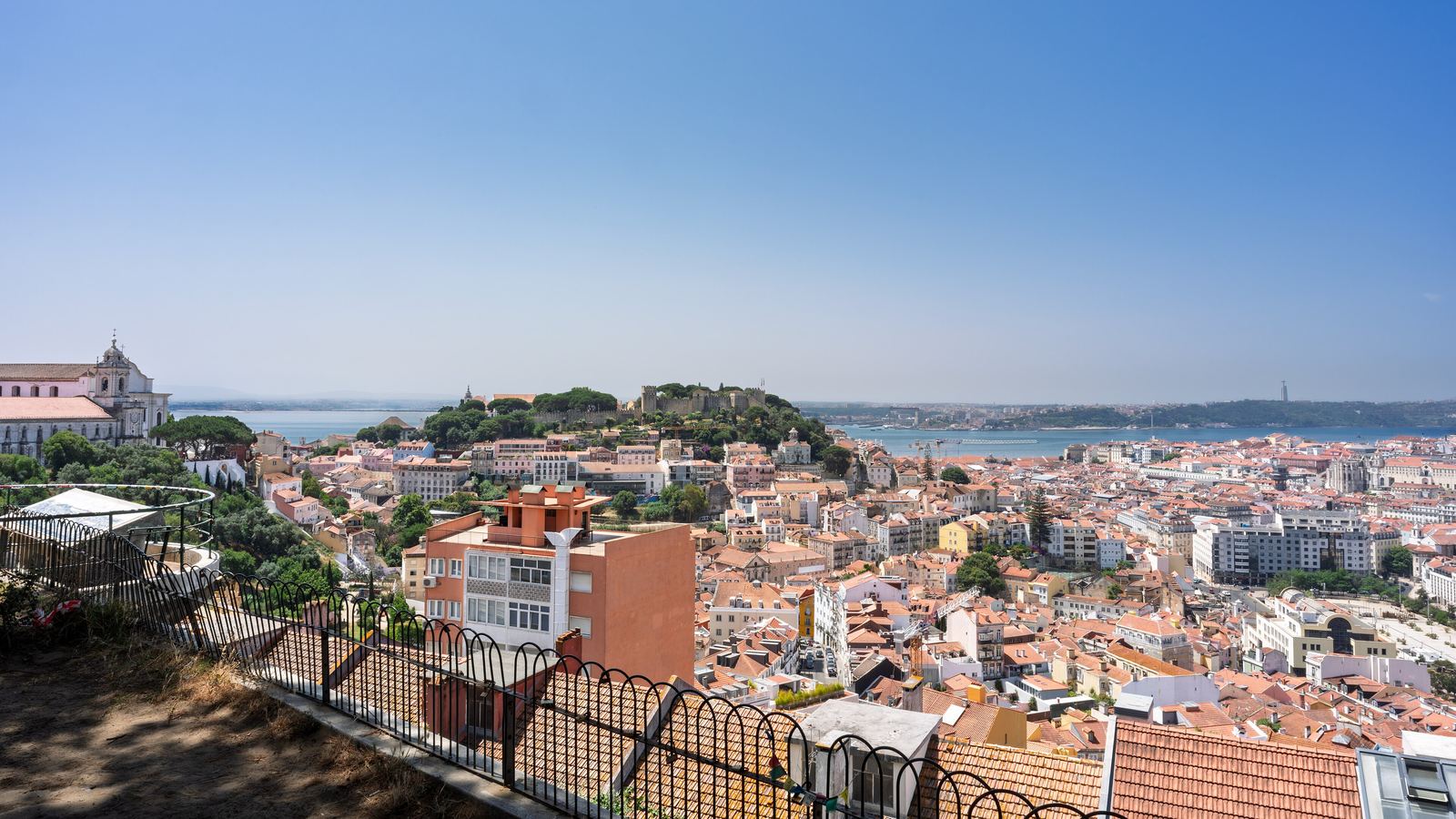
Photo: Dale Cruse, CC BY 4.0 Five minutes uphill from Graça, beside the little chapel of Nossa Senhora do Monte, this terrace faces west over the castle, the Baixa and the river, so in October the sun goes down in front of you, at about 19:00 in the middle of the month. It’s high enough to take in most of the city at once, and in the last hour of light the rooftops and the castle walls turn gold.
Local tip Get there by 18:15 for a place on the wall; it fills up by sunset. Ramiro is a 15-minute walk downhill, so you can stay until the light goes.
- Cost
- Free
- Hours
- Open-air, always open; sunset about 19:00 in mid-October
- Where
- Largo do Monte
Checked: Visit Lisboa: Senhora do Monte, Sunset times (sunrise-sunset.org)
-
· Dinner · Intendente
Cervejaria Ramiro
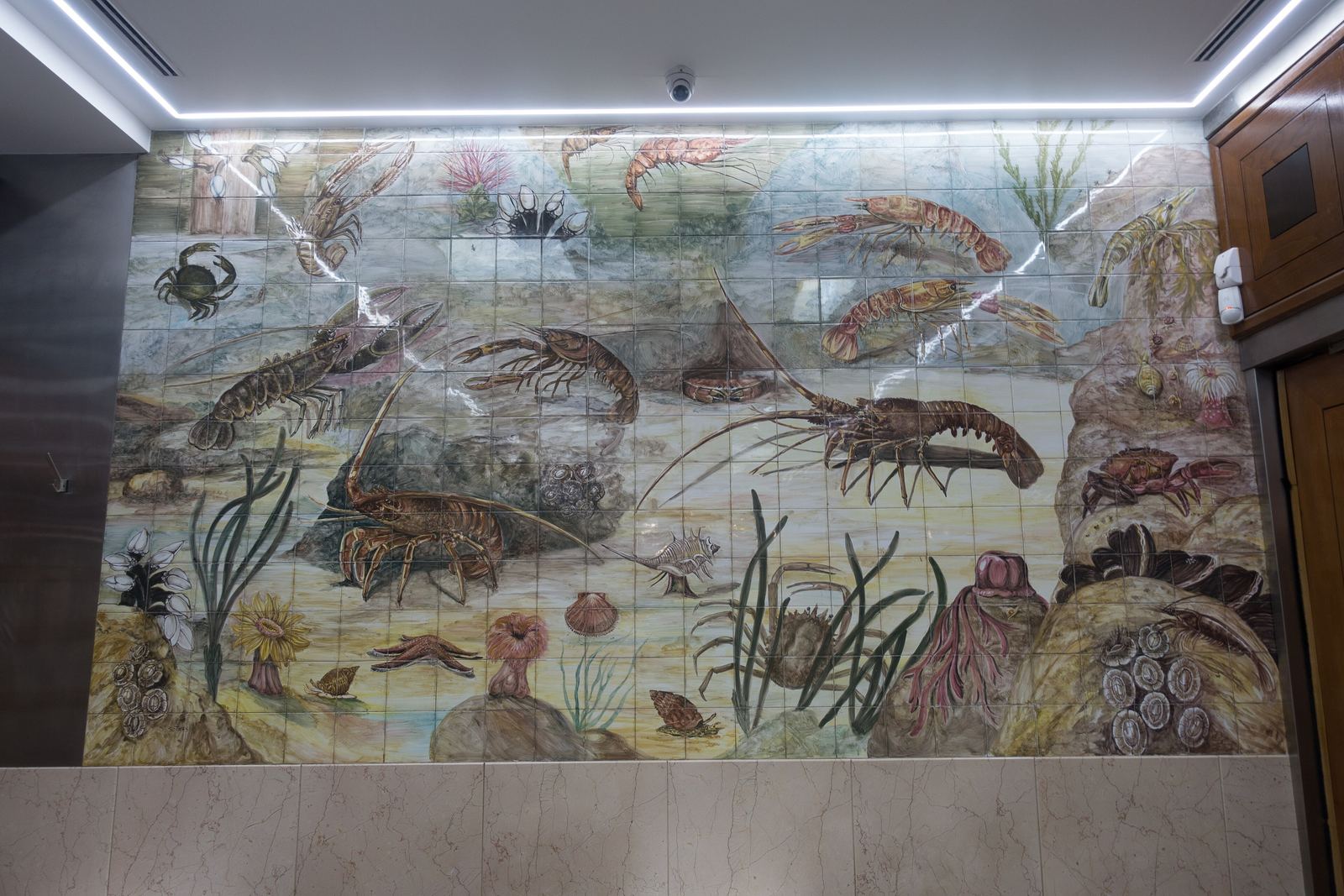
Photo: Kent Wang, CC BY-SA 2.0 Lisbon’s best-known seafood hall, busy with locals as well as visitors. Order shellfish by weight to share, from tiger prawns to the big red carabineros and a spider crab if you’re up for cracking it, with cold beer, and finish the way regulars do, with a prego, a garlicky steak roll with mustard. A Portugal-based food creator calls it a Lisbon classic that never fails.
Local tip Book on Ramiro’s own site: it charges €25 a person when you book, taken off the bill, holds the table for 15 minutes and gives it to you for two hours; cancel 24 hours ahead for a refund. Without a booking, expect a wait after 20:00, when Lisbon sits down to eat.
- Cost
- Shellfish priced by weight; €25 a head deposit if you book
- Hours
- Tue–Sat 12:00–00:00, Sun 12:00–23:00; closed Monday
- Booking
- Recommended: cervejariaramiro.com (through TheFork), €25 per person charged up front and deducted from the bill
On TikTok: @pedrofoodbible, @dlee.foodie Checked: Official hours, Booking terms
Belém by the river
One tram or train ride out to Belém. Warm pastéis de nata at 8:00, the Jerónimos cloister as it opens and the newly restored Torre de Belém on a timed slot, then lunch at a Michelin-listed tavern, royal coaches, sunset on the riverfront by MAAT and dinner at a 1925 beer hall’s riverside branch.
-
· Breakfast · Belém
Pastéis de Belém
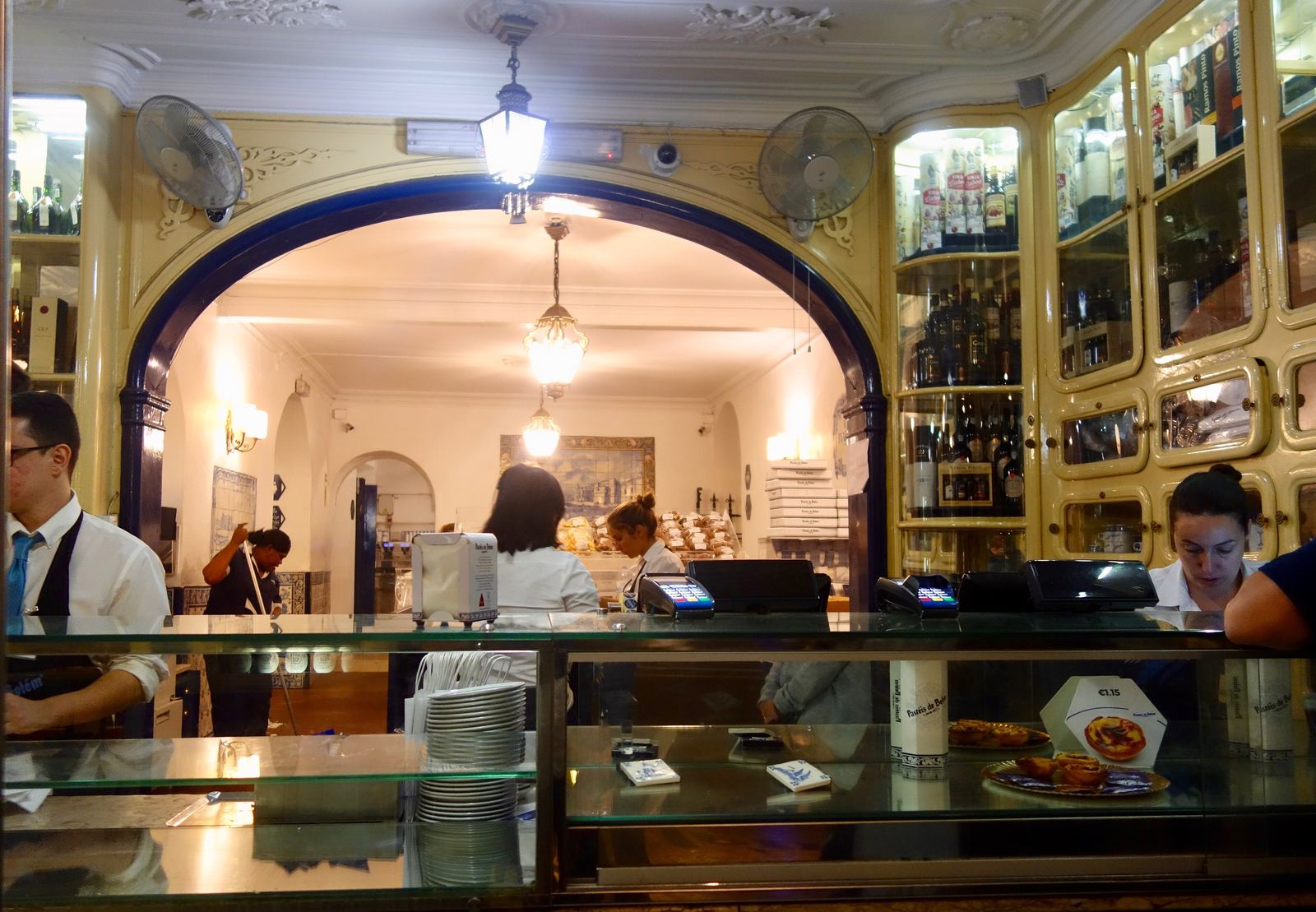
Photo: Sonse, CC BY 2.0 Since 1837 this bakery has made its tarts to a recipe from the Jerónimos monastery next door, and they’re still made by hand every day. Come at the 8:00 opening, while the tiled rooms are quiet, and eat them warm, dusted with cinnamon and icing sugar.
Local tip The long line on the pavement is usually for takeaway. There are two queues, one to take away and one to eat in, so walk inside for a table, or use the small takeaway counter on the left, which creators say is easy to miss.
- Cost
- Tarts and coffee for a few euros
- Hours
- Daily 8:00–21:00 (22:00 from July to September)
On TikTok: @thetravellingfrenchy, @palomapozanco Checked: Official hours
-
· Book ahead · Belém
Mosteiro dos Jerónimos
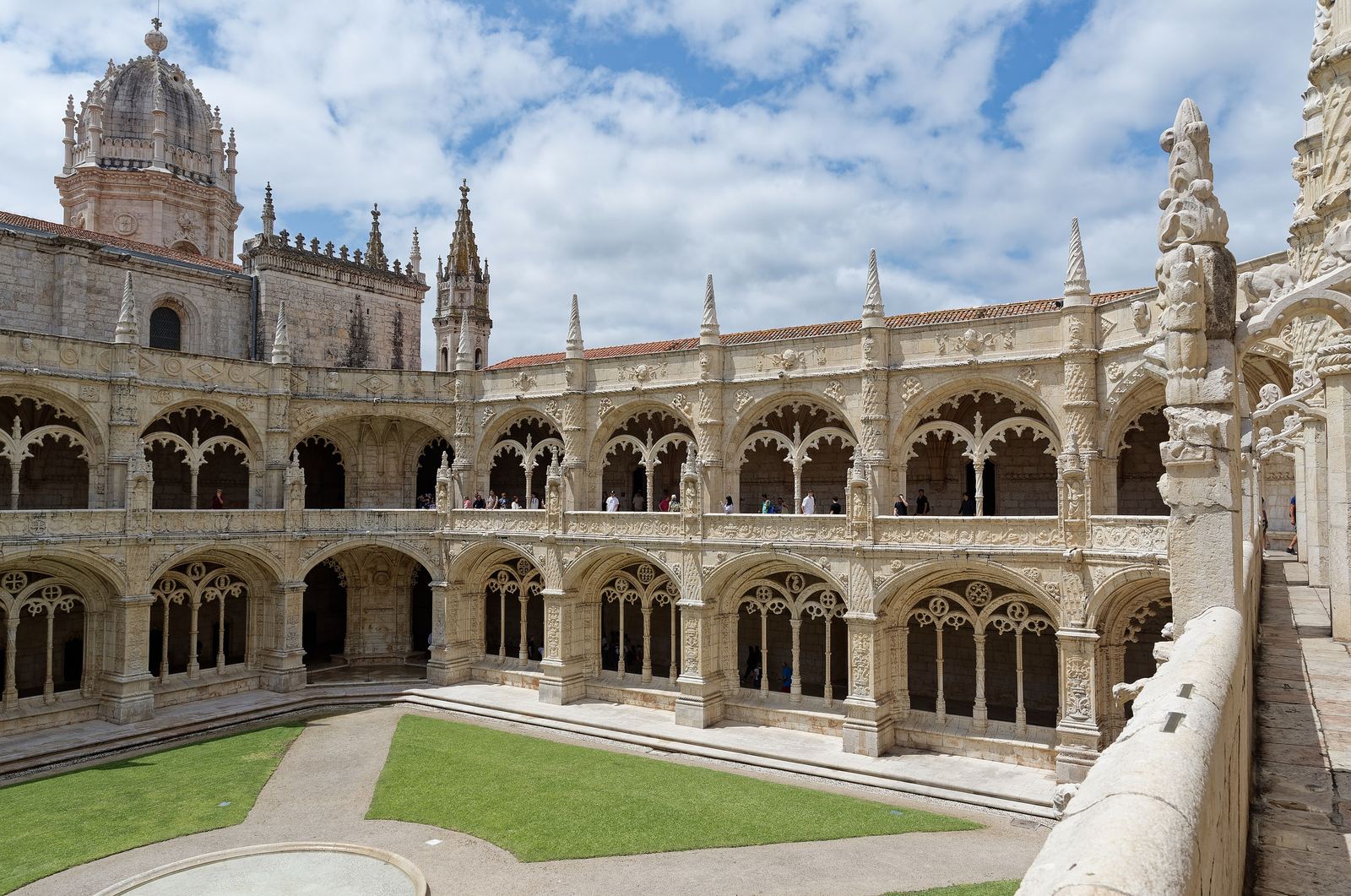
Photo: Jakub Hałun, CC BY 4.0 King Manuel I began the monastery at the start of the 1500s, and its two-storey cloister, carved all over in stone, is the showpiece of the Manueline style. Be at the door for the 9:30 opening and you’ll have the cloister before it fills up; allow an hour and a half. Vasco da Gama’s tomb is in the church next door.
Local tip Buy your ticket ahead through the monument’s official site. In 2025 a creator filmed a group trying to pickpocket visitors in the garden across the road, and again by the tower, picking on older and solo travellers, so keep bags closed here.
- Cost
- €18
- Hours
- Tue–Sun 9:30–17:30 (last entry 17:00; ticket desks close 16:30); closed Monday
- Booking
- Recommended: tickets on the official site, mosteirojeronimos.torrebelem.gov.pt
On TikTok: @peepeetan Checked: Official hours and price
-
· Timed slot · Belém
Torre de Belém
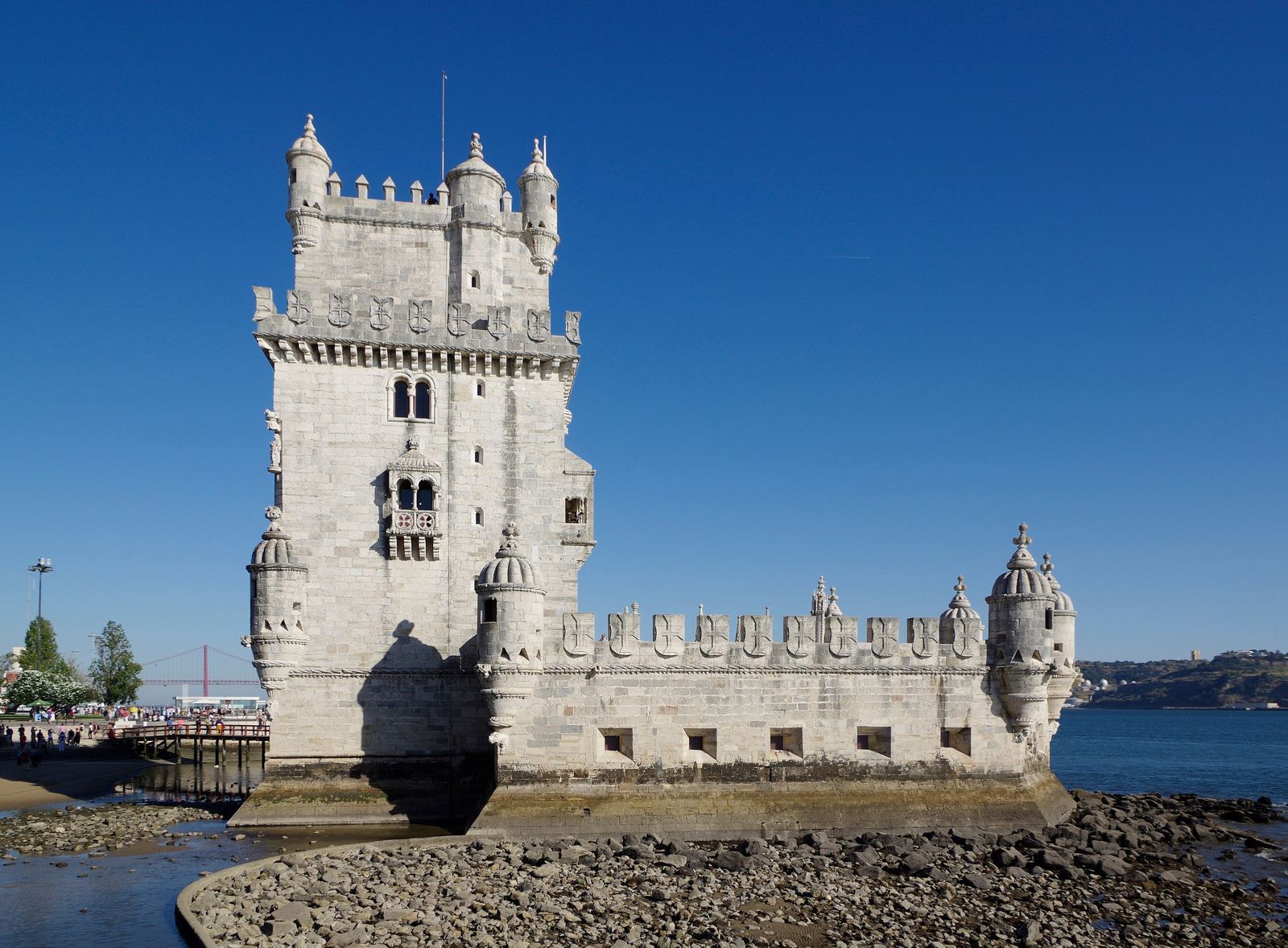
Photo: Berthold Werner, CC BY-SA 4.0 It’s a 20-minute walk west along the river, past the Padrão dos Descobrimentos and the giant compass rose set into the pavement in front of it. The 16th-century tower, a UNESCO World Heritage site since 1983, reopened on 27 May 2026 after a year-long restoration, with a new system of half-hour entry slots and a daily cap; about 60 people are allowed inside at once.
Local tip Book your slot ahead and arrive a few minutes early; the stairs inside are narrow. If you want the view back over the Jerónimos, the lift to the top of the Padrão costs €10.
- Cost
- €15
- Hours
- Tue–Sun 9:30–17:30; closed Monday; entry by half-hour slot
- Booking
- Book a half-hour slot through the official ticket office (Museus e Monumentos de Portugal)
Checked: Official hours and price (MMP), Time Out Lisboa: the reopening, Diário de Notícias: half-hour slots, Padrão dos Descobrimentos prices
-
· Lunch · Belém
O Frade
Walk back east along the river, or take tram 15E, to this small corner tavern by the Coach Museum, which the Michelin Guide lists for its Alentejo cooking: razor clams, duck rice and vinho de talha, the Alentejo’s wine made in clay amphorae. Most seats are at the counter, facing the open kitchen.
Local tip It’s lunch only, from 12:30 to 16:00 every day according to the Michelin Guide, and small, so book a counter seat through the guide’s page or by emailing reservas@fraderestaurante.com.
- Cost
- €€ in the Michelin Guide
- Hours
- Lunch daily 12:30–16:00 (Michelin Guide)
- Booking
- Recommended: through the Michelin Guide page, reservas@fraderestaurante.com or +351 939 482 939
Checked: Michelin Guide (hours), Official site
-
· See · Belém
Museu Nacional dos Coches
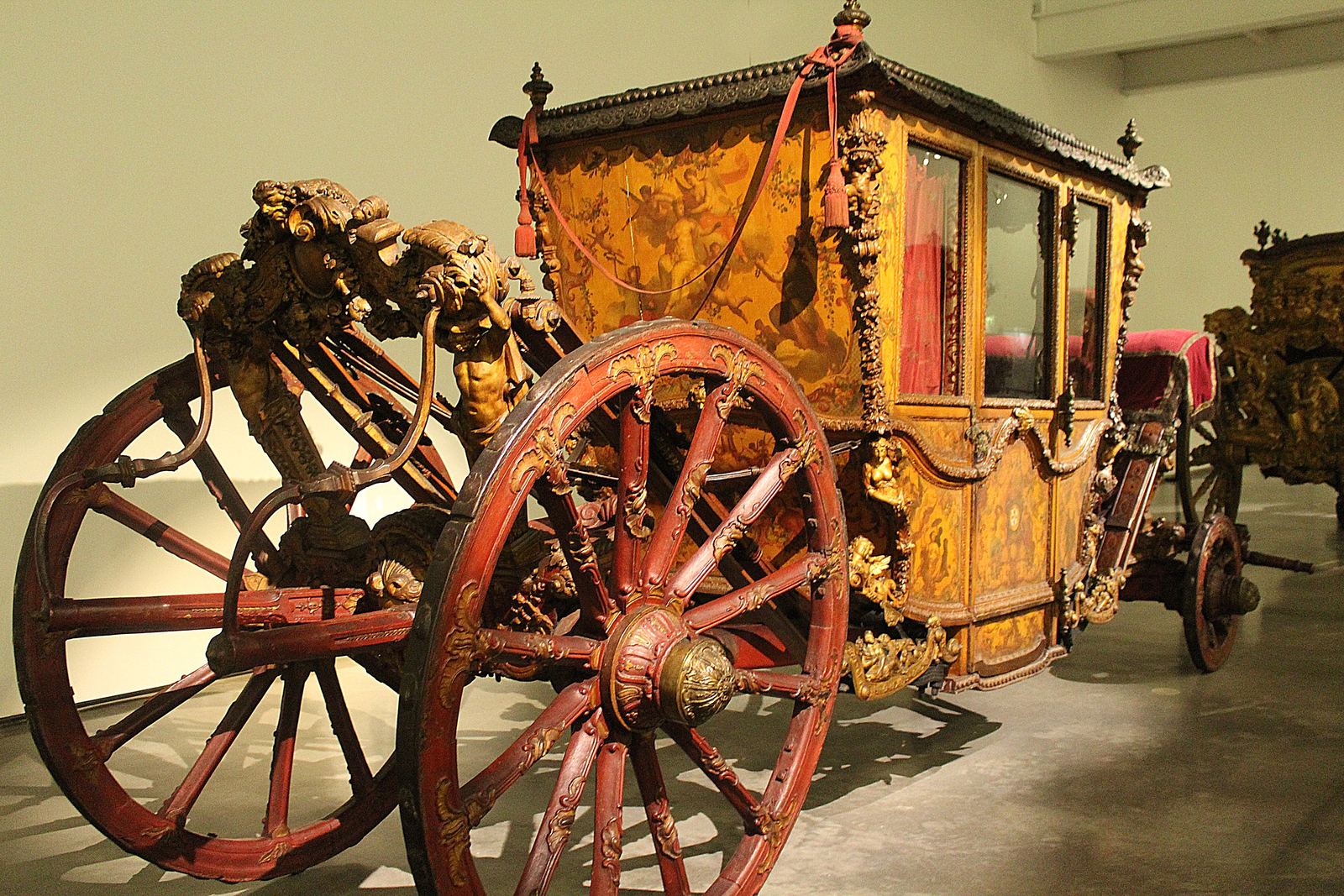
Photo: Dguendel, CC BY 4.0 One of the most visited museums in Portugal: a unique collection of coaches, berlins and gala carriages from the 16th to the 19th century, many of them thick with gilded carving, in a building that opened in 2015. The old royal riding school across the road, the Picadeiro Real, is closed for renovation.
Local tip If you’ve had enough of paid sights after the Jerónimos and the tower, skip it and go straight on to the riverfront; it’s for anyone who likes craftsmanship and gold leaf.
- Cost
- €15
- Hours
- Tue–Sun 10:00–18:00; closed Monday
Checked: Official hours and price (MMP)
-
· Sunset · Belém
MAAT and the riverfront
MAAT, the Museum of Art, Architecture and Technology, spreads across the red-brick Central Tejo power station and a newer building on the water. The galleries are optional (€16 for visitors from abroad, open until 19:00); the riverside promenade in front is free. Stay on the waterfront while the sun goes down over the river mouth, at about 19:00 in mid-October.
Local tip If you go in, start by 17:00 so you’re out for the sunset: the galleries close at 19:00, and all day on Tuesdays. The riverfront never closes.
- Cost
- Riverfront free; galleries €16 (€12 for residents of Portugal); under 12 free
- Hours
- Galleries Wed–Mon 10:00–19:00, closed Tuesday; riverfront always open
Checked: Official hours, Official prices
-
· Dinner · Belém
Portugália Belém
Portugália opened as a beer hall on Avenida Almirante Reis in 1925, and its steak in Portugália sauce is still what people come for. The Belém branch sits on the river between the CCB and the Padrão dos Descobrimentos and reopened in 2025 after a full renovation built around a long central counter, the old way to eat in a cervejaria.
Local tip It’s open every day from noon to midnight, so there’s no hurry after sunset. To get back to the centre, take tram 15E from the avenue behind, or the train from Belém station to Cais do Sodré.
- Cost
- Beer-hall classics; no current prices online
- Hours
- Daily 12:00–00:00
Checked: Time Out Lisboa (reopening, hours)
Chiado, the Baixa and the Bairro Alto
Natas from the oven, the riverside square before it fills up, a roofless Gothic church and the world’s oldest working bookshop. After a bifana at the counter, climb to two garden viewpoints, watch the sun go down over the river from Santa Catarina, and end with dinner and fado in a house that has been singing since 1927.
-
· Breakfast · Chiado
Manteigaria

Photo: Kent Wang, CC BY-SA 2.0 Manteigaria makes nothing but pastéis de nata, in full view of the counter, and rings a bell each time a new batch comes out of the oven. Eat one or two standing at the counter with a bica, Lisbon’s espresso, and decide for yourself how they compare with yesterday’s in Belém.
Local tip If you hear the bell from Largo de Camões, go: it means a fresh batch.
- Cost
- A tart and a bica for a few euros
- Hours
- Daily 8:00–00:00
Checked: Time Out Lisbon, Official site
-
· Early walk · Baixa
Praça do Comércio and the Baixa
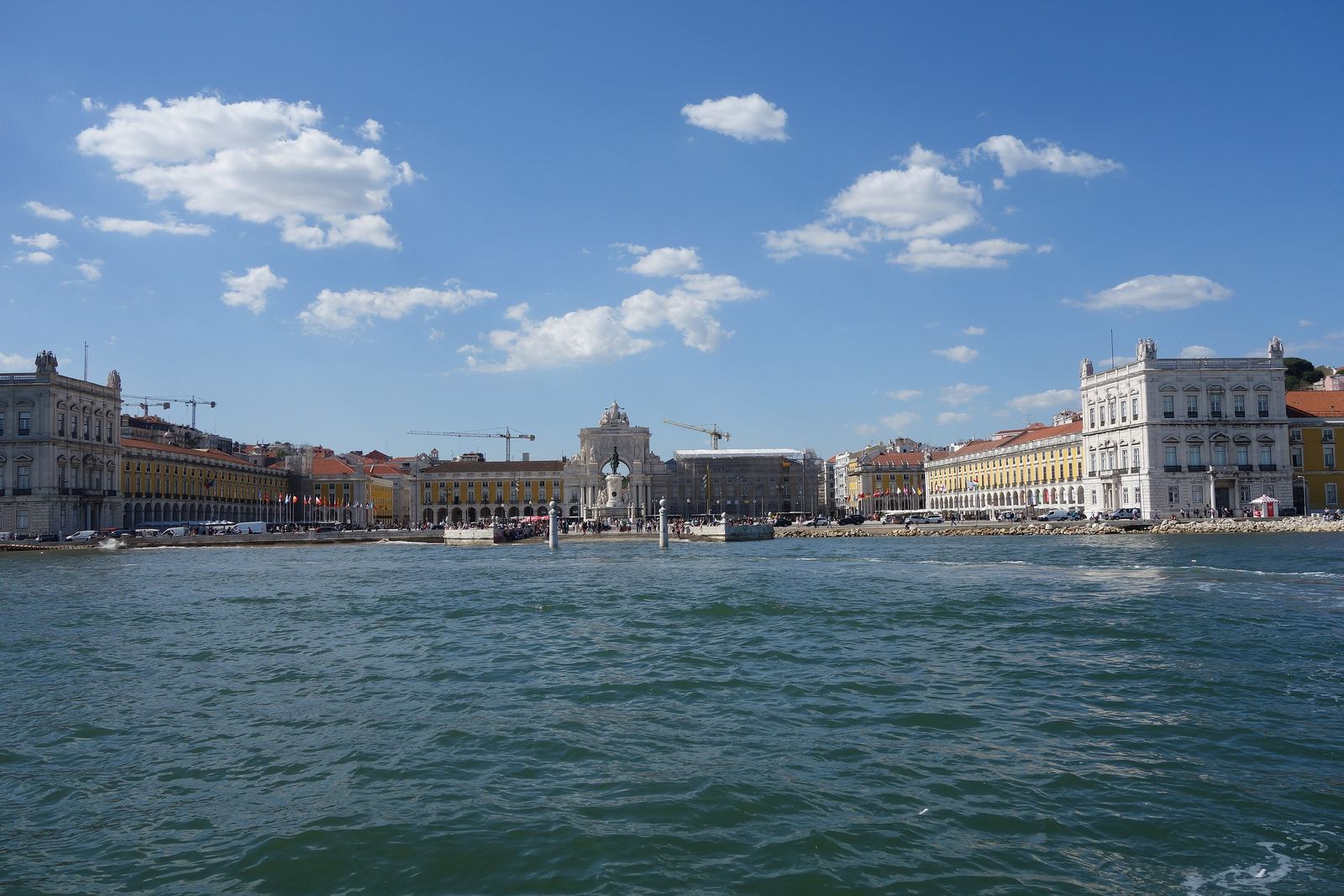
Photo: FlyingCrimsonPig, CC BY 2.0 Walk down through the Baixa, the grid of streets rebuilt after the 1755 earthquake, to the Praça do Comércio, the great arcaded square that opens straight onto the Tagus. At this hour it’s close to empty. Go through to the Cais das Colunas, the stone steps down into the river, then walk back up Rua Augusta under its triumphal arch.
Local tip With the Santa Justa lift out of service, the way back up to the Carmo is on foot: allow ten minutes from Rua do Carmo to Largo do Carmo.
- Cost
- Free
- Hours
- Open-air, always open
Checked: Praça do Comércio (Wikipedia), Carris: Santa Justa lift temporarily closed
-
· See · Carmo
Convento do Carmo
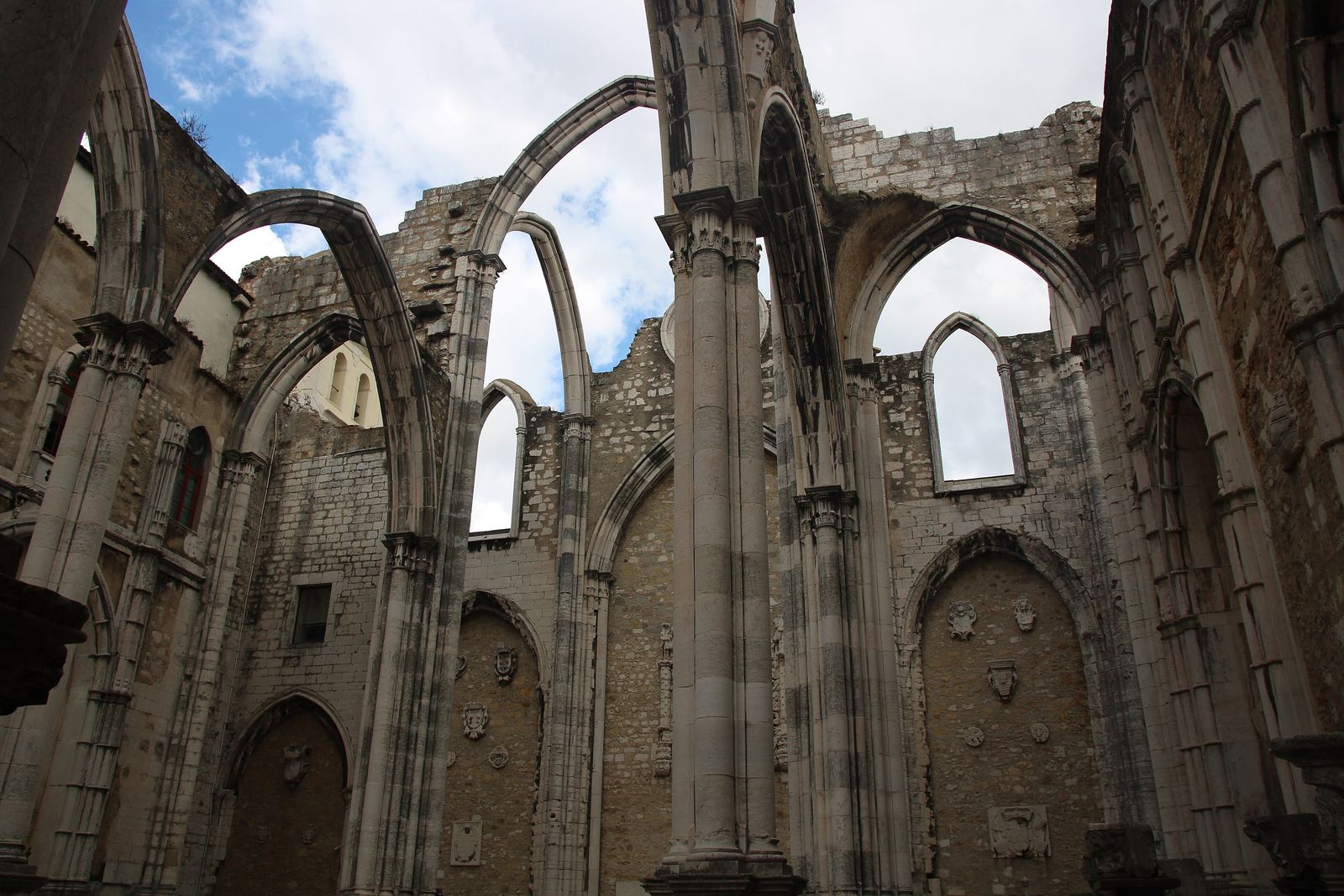
Photo: Bex Walton, CC BY 2.0 The 1755 earthquake brought down the roof of the Carmo church and it was never put back, so the Gothic arches of the nave now frame the sky. The old chancel holds the Carmo Archaeological Museum, founded in 1864, a small collection of tombs, carvings and finds.
Local tip You’ll see videos about stepping from here onto the top deck of the Santa Justa lift for free. That trick is out of date: the lift has been closed since September 2025, with no date to reopen.
- Cost
- €7; students and 65+ €5; under 15 free
- Hours
- May–October: Mon–Sat 10:00–19:00 (last entry 18:40); closed Sunday
On TikTok: @thetravellertwins Checked: Official hours and prices, Carris: Santa Justa lift temporarily closed
-
· Browse · Chiado
Livraria Bertrand and Rua Garrett
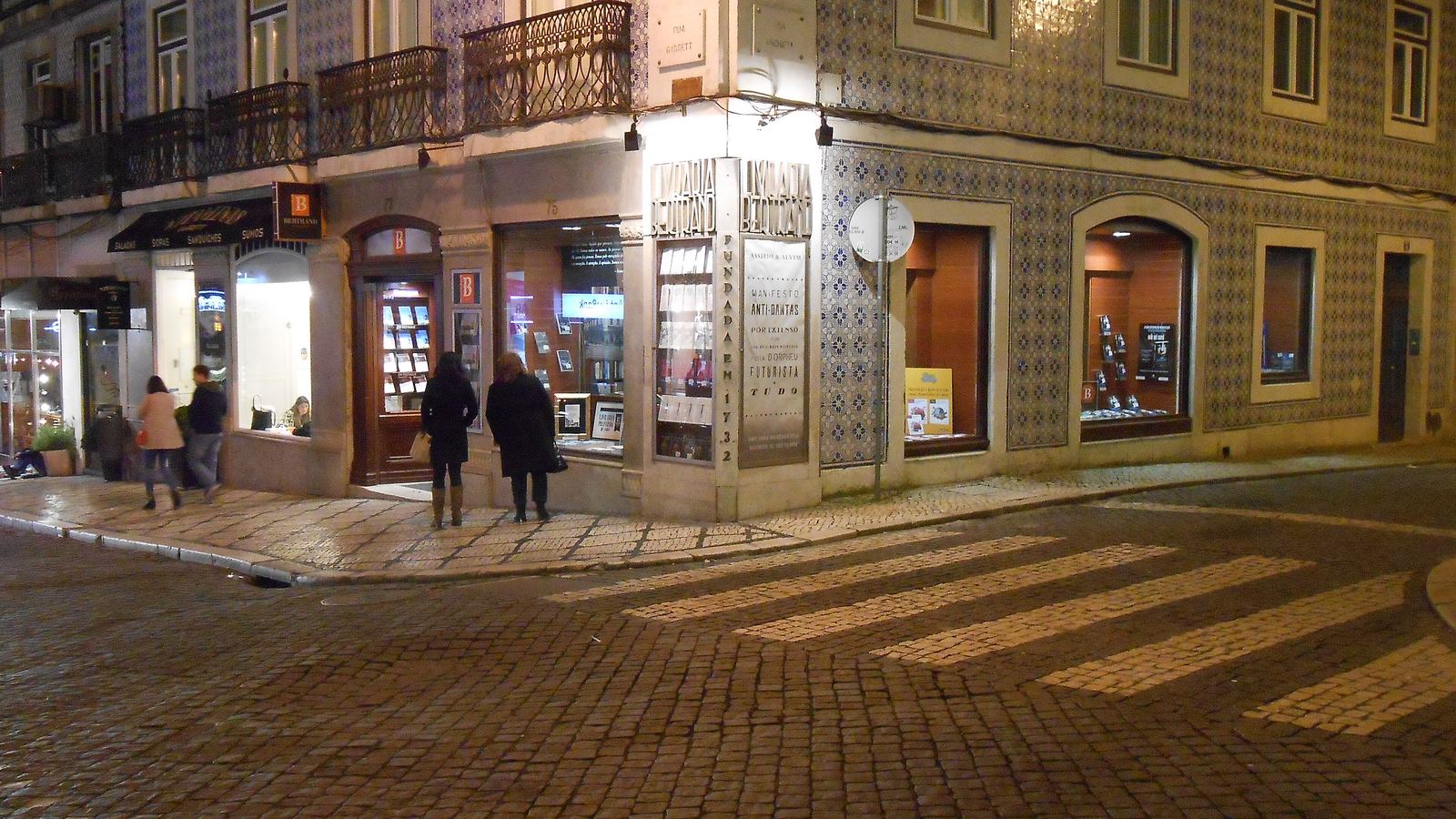
Photo: 69joehawkins, CC BY-SA 3.0 Bertrand has sold books in Chiado since 1732 and is recognised by Guinness World Records as the oldest bookshop still in business. Along the street at number 37, Alcôa sells conventual sweets from Alcobaça, eggy pastries made to recipes from the monks there, if the morning’s nata wasn’t enough.
Local tip A Brasileira, the 1905 café with a bronze Fernando Pessoa at a table outside, is a few doors up. Photograph it, then have your coffee somewhere quieter.
- Cost
- Free to browse
- Hours
- Mon–Sat 9:00–22:00, Sun 11:00–20:00 (OpenStreetMap listing; check before you go)
Checked: Livraria Bertrand (Wikipedia), Eater Lisbon (Alcôa, updated Sep 2026)
-
· Lunch · Chiado
O Trevo
A plain counter on Praça Luís de Camões whose bifana, thin slices of fried pork in a crusty roll, is famous well beyond Lisbon. Anthony Bourdain ate here on a Lisbon visit, and Time Out reckons it was one of the happiest moments of the trip. It’s a quick, cheap lunch, which leaves room for tonight.
Local tip Order at the counter and add mustard from the squeeze bottle, the way Lisbon eats it.
- Cost
- A bifana and a drink for a few euros
- Hours
- Mon–Sat 7:00–22:00; closed Sunday
Checked: Time Out Lisbon (updated 2026)
-
· Wander · Príncipe Real
São Pedro de Alcântara and Príncipe Real
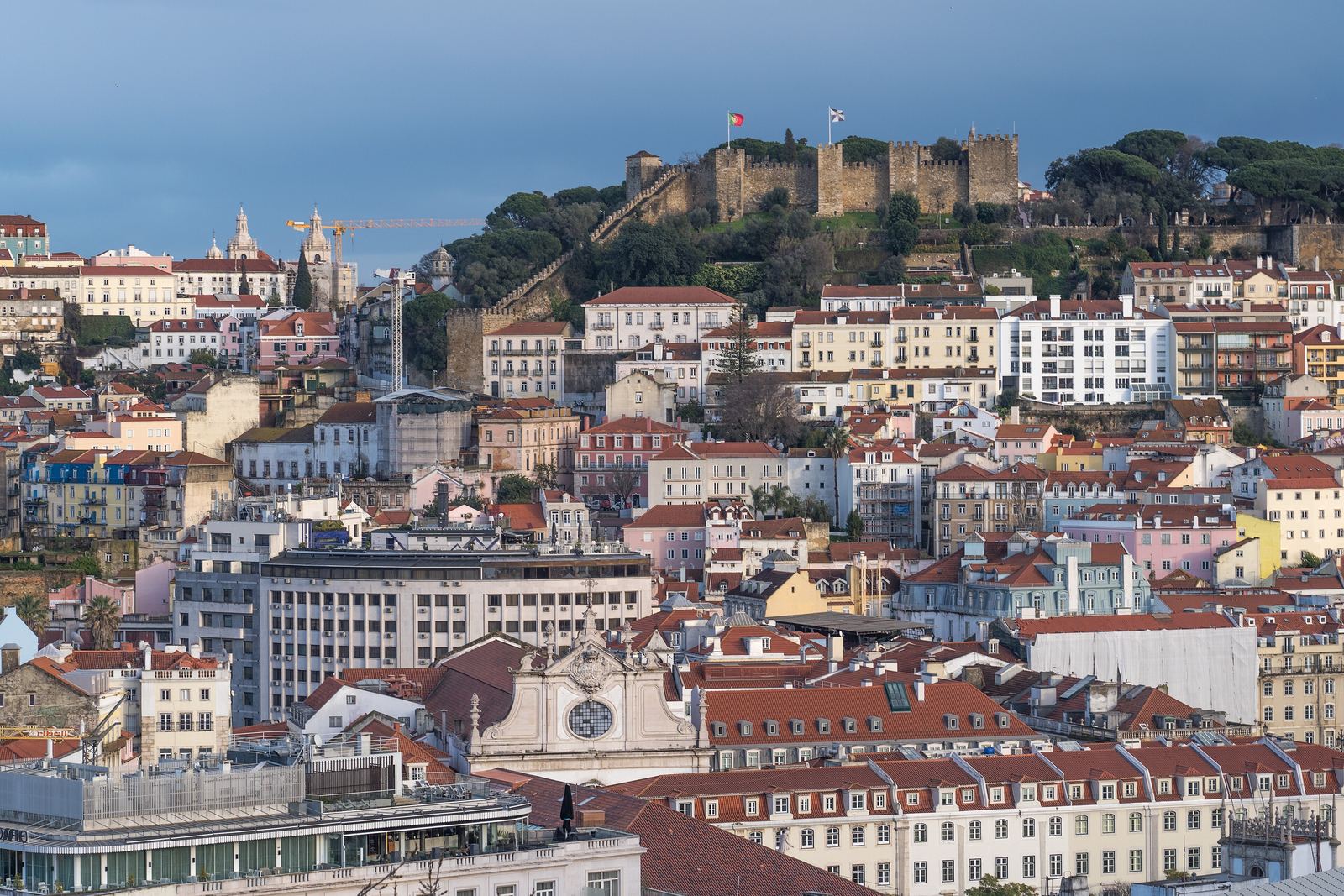
Photo: Alexkom000, CC BY 4.0 Climb through the Bairro Alto’s grid of narrow streets, quiet by day, to the São Pedro de Alcântara viewpoint, a garden terrace looking across the valley to the castle. Carry on along Rua Dom Pedro V to Príncipe Real, a garden square where a huge cedar spreads over a metal frame, ringed by independent shops. Take your time: the next stop is the sunset.
Local tip The university’s Jardim Botânico de Lisboa is a few minutes away on Rua da Escola Politécnica: open daily 10:00–17:00 from October, and free on Sunday mornings.
- Cost
- Free
- Hours
- Open-air; the botanic garden 10:00–17:00 daily from October
Checked: Botanic garden hours (ULisboa), Príncipe Real (Wikipedia)
-
· Sunset · Santa Catarina
Miradouro de Santa Catarina
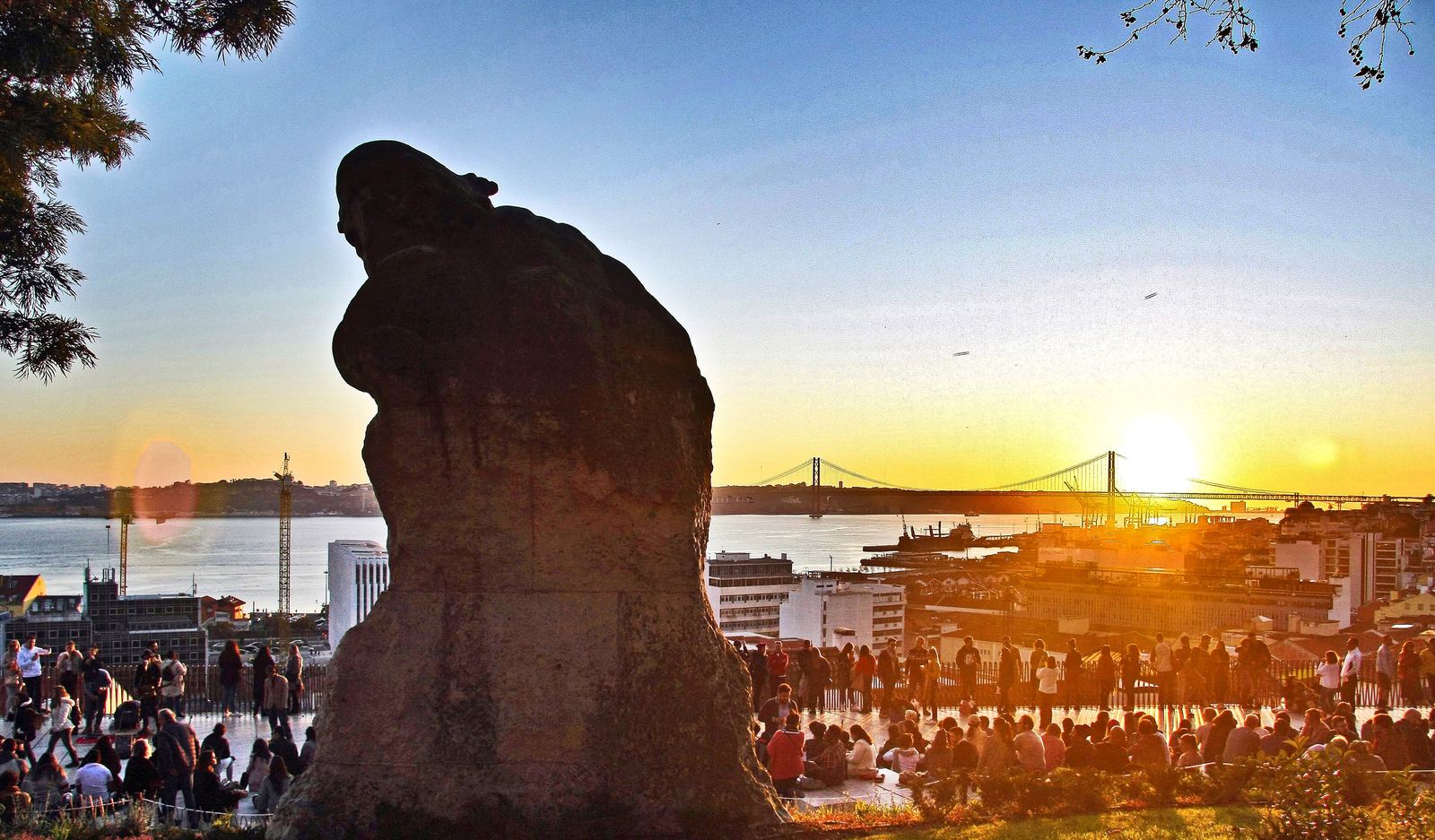
Photo: Vitor Oliveira, CC BY-SA 2.0 (cropped) Walk down through the Bairro Alto to this terrace above the river, watched over by a stone Adamastor, the sea giant from Camões’s epic The Lusiads. It faces west over the Tagus and the 25 de Abril bridge, and by sunset, at about 18:58 on 16 October, it’s full, with drinks from the kiosk.
Local tip The Bica funicular, whose two yellow cars climb the street just below, has been out of service since September 2025, but the view down Rua da Bica is still the postcard: look on your way.
- Cost
- Free
- Hours
- Open-air, always open; sunset about 18:58 on 16 October
Checked: Visit Lisboa: Santa Catarina, RFM: the lifts a year after the Glória accident (Sep 2026)
-
· Dinner and fado · Bairro Alto
Café Luso
Café Luso has been a fado house since 1927 and in the Bairro Alto since 1941, in the stone cellars and stables of a palace that survived the 1755 earthquake; Amália Rodrigues recorded an album here in 1955. Dinner is one set menu at €65, and from 20:15 the fado sets alternate with the courses, sung among the tables without microphones.
Local tip Book ahead, because the room is small and evenings fill up well in advance, and arrive by 20:00 for the first set. When the lights dim, the room goes silent, and it stays that way until the song ends.
- Cost
- €65 set menu (couvert, starter, main, dessert)
- Hours
- Daily 19:00–01:00; fado from 20:15
- Booking
- Essential: book on cafeluso.pt
Checked: Official site (hours, menu)
The practical bits
Which days this works on
It’s written for a Wednesday to Friday and works as written if you start on a Tuesday, Wednesday, Thursday or Saturday. Day 1 needs Tuesday to Saturday: Zé da Mouraria closes on Sundays, and the Panteão and Ramiro on Mondays. Day 2 needs Tuesday to Sunday, because the Jerónimos, the Torre de Belém and the Coach Museum all close on Mondays (on a Tuesday MAAT’s galleries are shut, but the riverfront isn’t). Day 3 needs Monday to Saturday: the Carmo ruins and O Trevo close on Sundays. Starting on a Friday? Swap Days 2 and 3. Starting on a Sunday, do Day 2 first; on a Monday, Day 3 first.
Getting around
Each day is built to be walked, with one exception: Belém, on Day 2, is 6 km along the river, so take tram 15E from Praça da Figueira or Praça do Comércio, or the Cascais-line train from Cais do Sodré to Belém, there and back. In 2026 a Carris/Metro ticket is €1.90 and lasts an hour across buses, trams and the metro. Loaded as Zapping credit on a reusable navegante card from any metro machine, a ride is €1.72, and metro gates also take a contactless bank card (€1.92). A 24-hour Carris/Metro ticket is €7.25, or €11.40 with CP trains added. Bought on board, a tram ride costs €3.30 and a bus €2.30. Fares checked with Metro de Lisboa’s 2026 fare notice.
Book these ahead
The Jerónimos and a half-hour slot at the Torre de Belém (both through the official Museus e Monumentos de Portugal ticket office), a table at Ramiro (on its own site, €25 a person up front), a counter seat at O Frade, and Café Luso, which fills up well in advance. The castle ticket is optional but skips the desk. Buy only from official sites: the castle and the Padrão both name BOL as their only authorised online seller. The entry fees in this plan add up to about €82 per adult, before the funicular and food.
Money, tipping and the tourist tax
Carry some cash for small tascas, kiosks and the funicular, though most places take cards. When you sit down, bread, olives or cheese may arrive without being ordered: that’s the couvert, and it isn’t free, so send back what you don’t want. Tipping isn’t expected; rounding up or leaving a few coins after a good meal is plenty. Your hotel or apartment adds Lisbon’s tourist tax, €4 per person per night, the highest rate in Portugal.
The traps, and what this plan does instead
Tram 28 at midday: a long queue and, as creators who live in Lisbon warn, pickpockets working the crush. Ride it from the Martim Moniz end before 9:00, or walk. The Santa Justa lift: the free top-deck trick in viral videos is out of date, because the lift has been shut since September 2025. The Belém gardens: in 2025 a creator filmed a pickpocketing attempt in the garden across from the Jerónimos, so keep bags closed there. Queues for nata: go to Pastéis de Belém at 8:00 and walk inside for a table, and follow Manteigaria’s bell rather than its line.
Hills, calçada and the lifts that aren't running
Lisbon is built on steep hills and paved with calçada, small polished limestone blocks that are slippery even when dry and worse in the rain, so wear shoes with real grip. After the Glória funicular derailed on 3 September 2025, the city’s historic lifts stopped: a year on, the Santa Justa lift and the Bica and Lavra funiculars still have no date to reopen, and the Glória is getting new equipment, due in 2029. The one that’s back is the modern Graça funicular (Carris route 55E, 9:00–17:00, €4.30 on board for two rides), which Day 1 uses.
Three videos worth watching first
How we made this
We started with a modest sample of Lisbon TikToks, about 30 videos, favouring people who live in Portugal and their skip-this, do-that advice, and kept the eight that changed the plan: when to ride Tram 28, how the queues at Pastéis de Belém work, what to order at Ramiro and where pickpockets work in Belém. Everything else comes from local and official sources: the venues' own sites, Museus e Monumentos de Portugal, Carris and Metro de Lisboa, Time Out Lisboa, Eater's Lisbon guide (updated in September 2026), the Michelin Guide and Lisbon's news outlets. Where a popular video has gone out of date, like the free route to the top of the Santa Justa lift, we say so.
In late September 2026 we checked every stop against its own website or official listing for mid-October opening days, hours and prices, and against this year's news for closures. That's how we found the Torre de Belém's reopening with timed slots, and the lifts still shut a year after the Glória accident. Fares come from Metro de Lisboa's 2026 fare notice, the tourist tax from 2026 reporting, and the sunset times are for mid-October. Where we couldn't confirm a price, we left it out. Hours and prices change, so check before you go. Photos come from Wikimedia Commons and are credited below.
Then we ran the plan through Bilbo, the trip planner we make. It put each day's 7 or so stops in route order and checked every one against its closing days, with nothing clashing and nothing scheduled on a day it's shut. The maps are screenshots of that plan in Bilbo.
Photos come from Wikimedia Commons and are credited below. Bilbo is made by Haplo, which also publishes this blog.
Photo credits
- Alfama's rooftops above the Tagus, with the Panteão Nacional's dome on the left · Photo: Dale Cruse, CC BY 4.0
- Walls and a tower of the Castelo de São Jorge · Photo: Norbert Nagel, CC BY-SA 4.0
- The Panteão Nacional (Santa Engrácia), Campo de Santa Clara · Photo: Reis Quarteu, CC BY-SA 4.0
- Lisbon from the Miradouro da Senhora do Monte · Photo: Dale Cruse, CC BY 4.0
- Seafood tile panel at Cervejaria Ramiro · Photo: Kent Wang, CC BY-SA 2.0
- The takeaway counter at Pastéis de Belém · Photo: Sonse, CC BY 2.0
- The cloister of the Jerónimos Monastery · Photo: Jakub Hałun, CC BY 4.0
- The Torre de Belém on the Tagus · Photo: Berthold Werner, CC BY-SA 4.0
- A royal coach at the Museu Nacional dos Coches · Photo: Dguendel, CC BY 4.0
- Praça do Comércio seen from the Tagus · Photo: FlyingCrimsonPig, CC BY 2.0
- The roofless nave of the Convento do Carmo · Photo: Bex Walton, CC BY 2.0
- Livraria Bertrand on Rua Garrett, Chiado · Photo: 69joehawkins, CC BY-SA 3.0
- Pastéis de nata from Manteigaria · Photo: Kent Wang, CC BY-SA 2.0
- The castle hill from the Miradouro de São Pedro de Alcântara · Photo: Alexkom000, CC BY 4.0
- Sunset at the Miradouro de Santa Catarina, with the Adamastor statue · Photo: Vitor Oliveira, CC BY-SA 2.0 (cropped)