 Haplo
Haplo
Push Pull Legs Routine: The Full 6-Day PPL Split
Six sessions, written as two rounds of push, pull and legs, that you can run three to six days a week. Here is every exercise with its sets, reps and rest, how to do it well, what to use when the kit is taken, and how to keep adding weight for eight weeks.
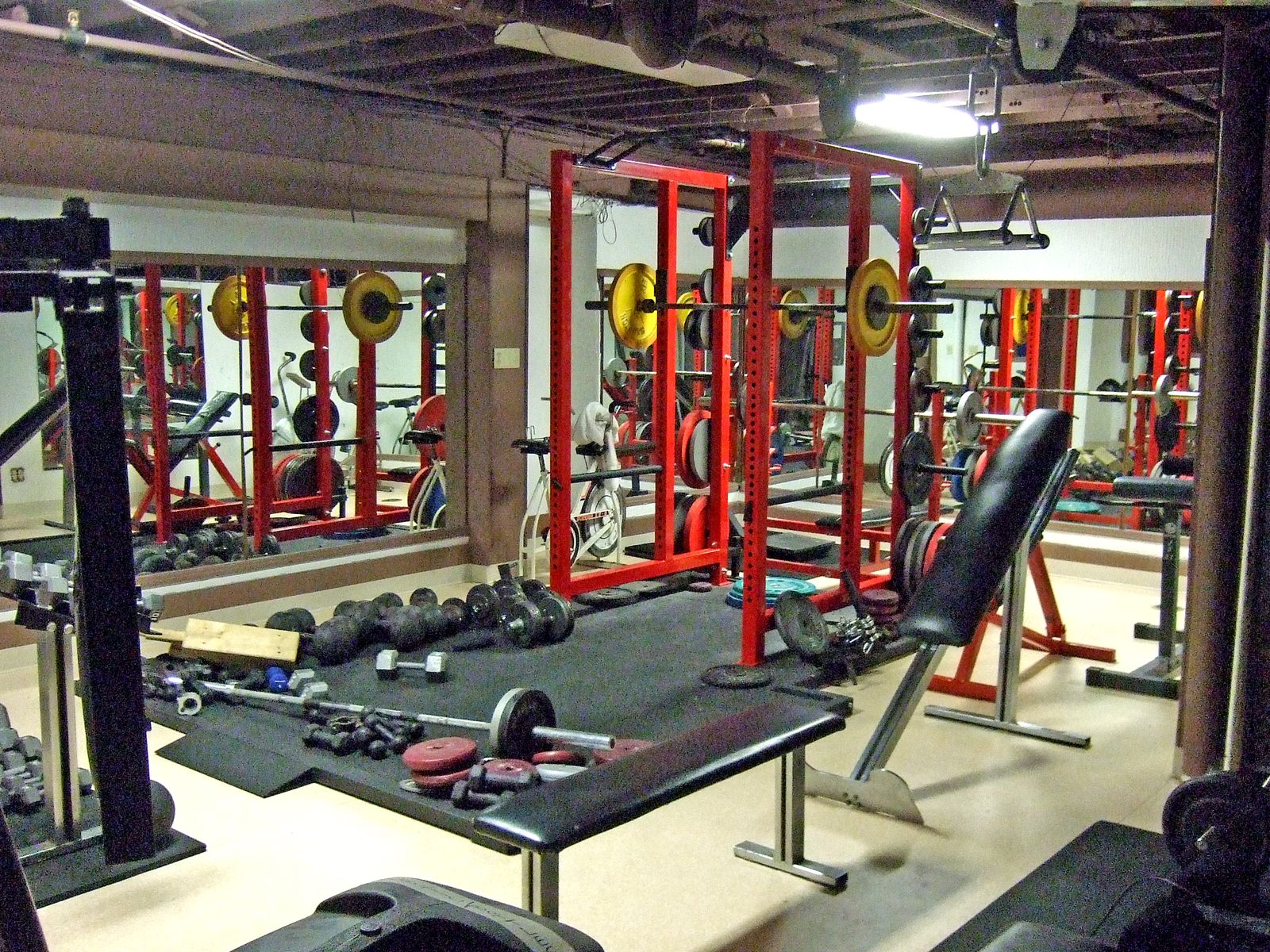
Push pull legs is the split many lifters move to once full-body workouts start to feel crowded. Each session trains muscles that work together (pushing, pulling or legs), so while one group works, the other two rest, and you can train most days of the week without hitting the same muscles two days running.
This is the Push Pull Legs plan from Cinder, the workout tracker we make, written out in full: six sessions with every set, rep and rest period exactly as the app prescribes them. It’s built as two rotations. Push A, Pull A and Legs A lead with the heavy barbell lifts (bench press, barbell row and back squat). Push B, Pull B and Legs B train the same muscles from different angles, with more machines and cables. Train six days a week and you run both rotations; train three and you run the A sessions.
For every exercise we’ve added a cue for doing it well and a swap for when the kit is busy. After the sessions, the section on running the plan covers effort, rest, progression and deloads, and the FAQ covers the 3-day versus 6-day question.
Why a push pull legs split works
The split follows how muscles work together. Pressing trains the chest, the front of the shoulders and the triceps, so the push day finishes those off. Rows and pulldowns train the back, the rear of the shoulders and the biceps, so the pull day finishes those. The legs get a day to themselves.
What best predicts muscle growth is how many hard sets each muscle gets in a week. In a 2017 meta-analysis, more weekly sets meant more growth, in a graded way, with each extra set adding a little (Schoenfeld et al., 2017). How often you train a muscle matters less than it once seemed. A 2016 meta-analysis found twice a week beat once a week (Schoenfeld et al., 2016), but a larger 2019 analysis found that once total sets were matched, frequency made no meaningful difference to growth (Schoenfeld et al., 2019). A 2026 analysis of 67 studies agreed: more sets kept adding muscle, with diminishing returns, while the effect of frequency on muscle size may be negligible (it did help strength) (Pelland et al., 2026).
So training each muscle twice a week is mostly a practical way to fit in more sets without any one session running long. The six-day version of this plan does exactly that: the chest gets 16 direct sets a week, the back 20 and the quads 17. The three-day version trains each muscle once, with roughly half the sets.
Who this PPL routine is for
Cinder rates the plan intermediate, and its own description says it “suits someone with full gym access who already knows their way around the main lifts”. You’ll want a barbell and a rack with safety arms, a bench that inclines, dumbbells, a cable stack, a pull-up bar and the usual machines: leg press, lying and seated leg curls, leg extension, calf raises, a shoulder press, a reverse pec deck and a chest supported row. Each exercise has a swap for when one of them is missing or busy.
If you’re new to lifting, a simpler plan is a better place to learn the main movements; our beginner gym workout plan is two or three full-body sessions a week, mostly on machines and dumbbells. And if you have a heart condition or high blood pressure, are pregnant, or have an injury or pain that lifting makes worse, check with your doctor or a physio before starting a plan like this.
How to use this plan
Pick your days. The plan runs three to six days a week. In Cinder you choose your training days and the app lays the sessions out on them in the plan’s order: Push A, Pull A, Legs A, Push B, Pull B, Legs B. The A sessions are marked as core and the B sessions as supporting, so a shorter week keeps all three A sessions and adds B sessions in order: four days adds Push B, five adds Pull B, and six runs everything. That’s what the plan means when it says a shorter week “fills in from the top”. The sample weeks below come from running the app’s own scheduling code.
Warm up, then do the working sets as written. “4 × 6” means four working sets of six reps after your warm-up sets, with the rest shown between them.
End most sets with a rep or two in the tank. Not every set needs to go to failure, and the heavy barbell lifts shouldn’t. The section on running the plan says how hard to push each kind of exercise.
Add reps, then weight. Cinder’s version of this plan has no week-by-week progression: in the app, all eight weeks show the same sessions under a plain “Week 1” to “Week 8”. Moving forward is up to you, and our advice for doing it comes after the sessions.
Six sessions, two rotations
Push, pull and legs, twice. The A sessions lead with the bench press, barbell row and back squat; the B sessions with the incline bench press, pull-ups and front squat. Each session has five or six exercises and 16 to 18 working sets, and Cinder estimates 35 to 42 minutes for each, not counting warm-ups.
- Length
- 8 weeks
- Days a week
- 3 to 6
- Level
- Intermediate
- Kit
- Barbell, Dumbbells, Machines, Cables, Pull-up bar, Bench
- Push A Flat bench leads. Shoulders and triceps behind it. 6 exercises · 18 sets · about 42 min
- Pull A Barbell row leads. Vertical pulling and arms behind it. 6 exercises · 18 sets · about 40 min
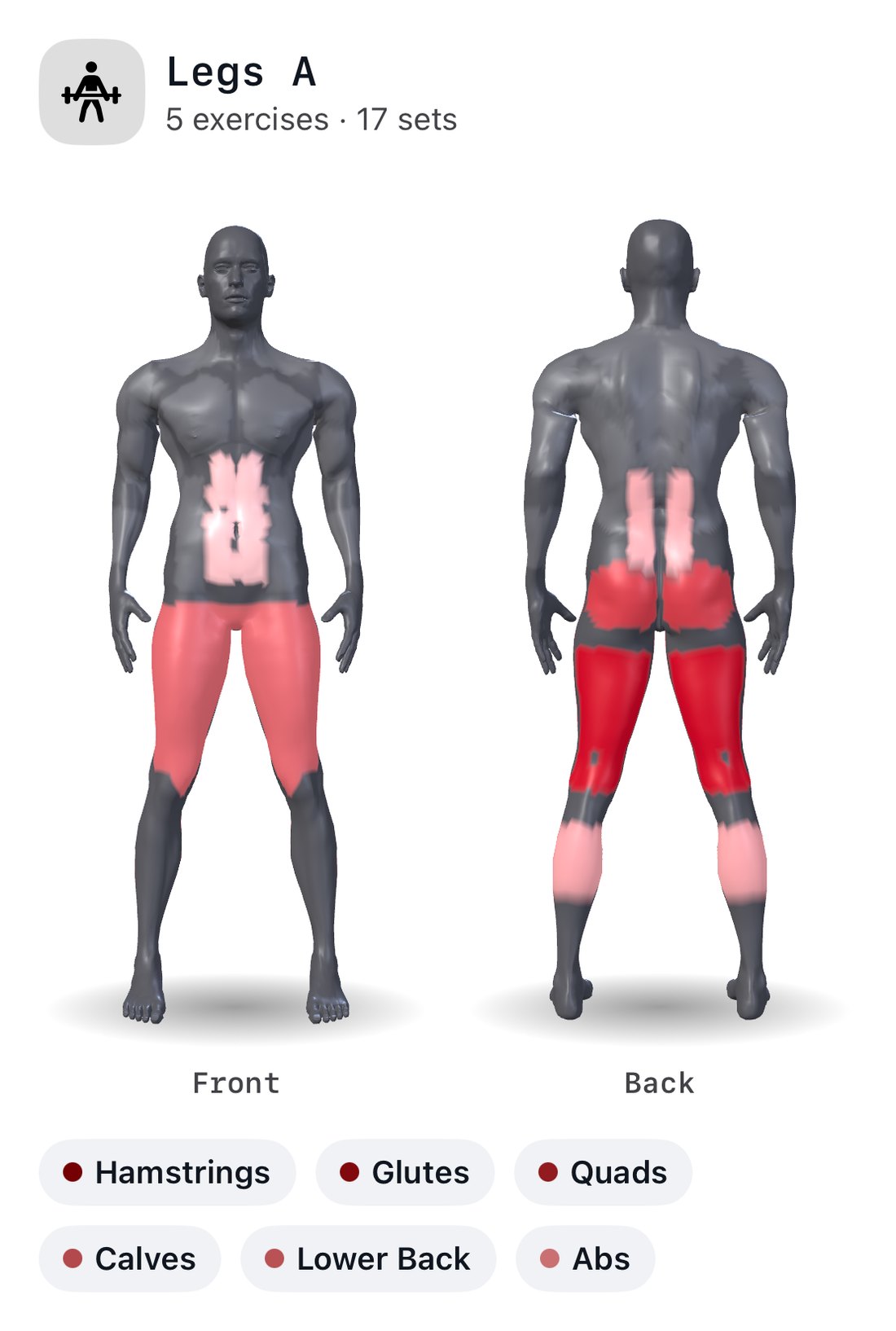
- Legs A Back squat leads, hinge second, machines to finish. 5 exercises · 17 sets · about 42 min
- Push B Incline leads, and the volume moves to machines and cables. 5 exercises · 16 sets · about 35 min
- Pull B Pull-ups lead, chest supported rowing behind them. 5 exercises · 16 sets · about 35 min
- Legs B Front squat leads, then single leg work and machines. 5 exercises · 17 sets · about 39 min
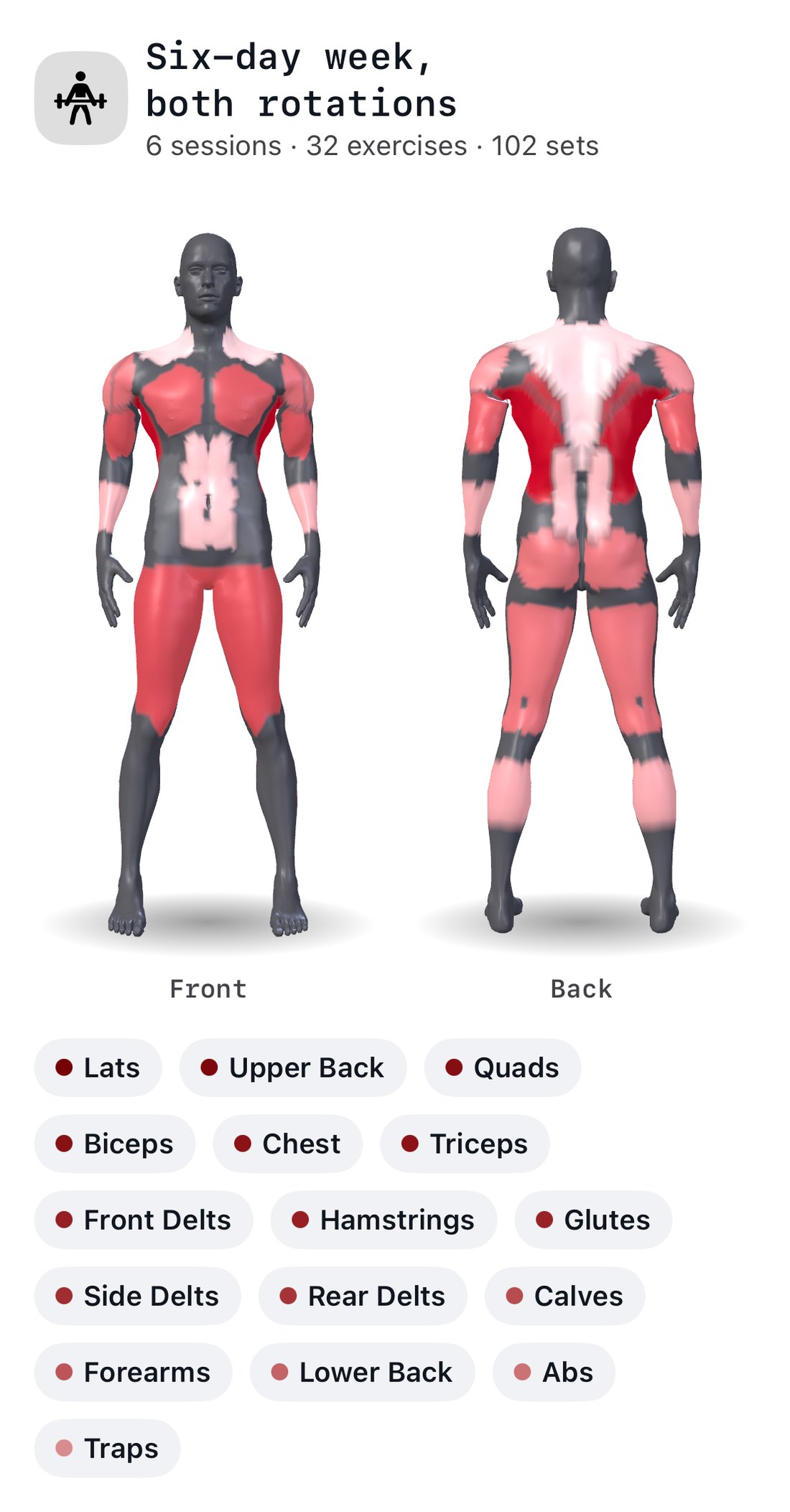
Push pull legs 3, 4, 5 or 6 days a week
3 days a week
- Mon · Push A
- Wed · Pull A
- Fri · Legs A
The A sessions only. The app leaves out Push B, Pull B and Legs B and tells you so, and every muscle gets one hard session a week. Cinder’s estimate: 124 minutes of lifting a week.
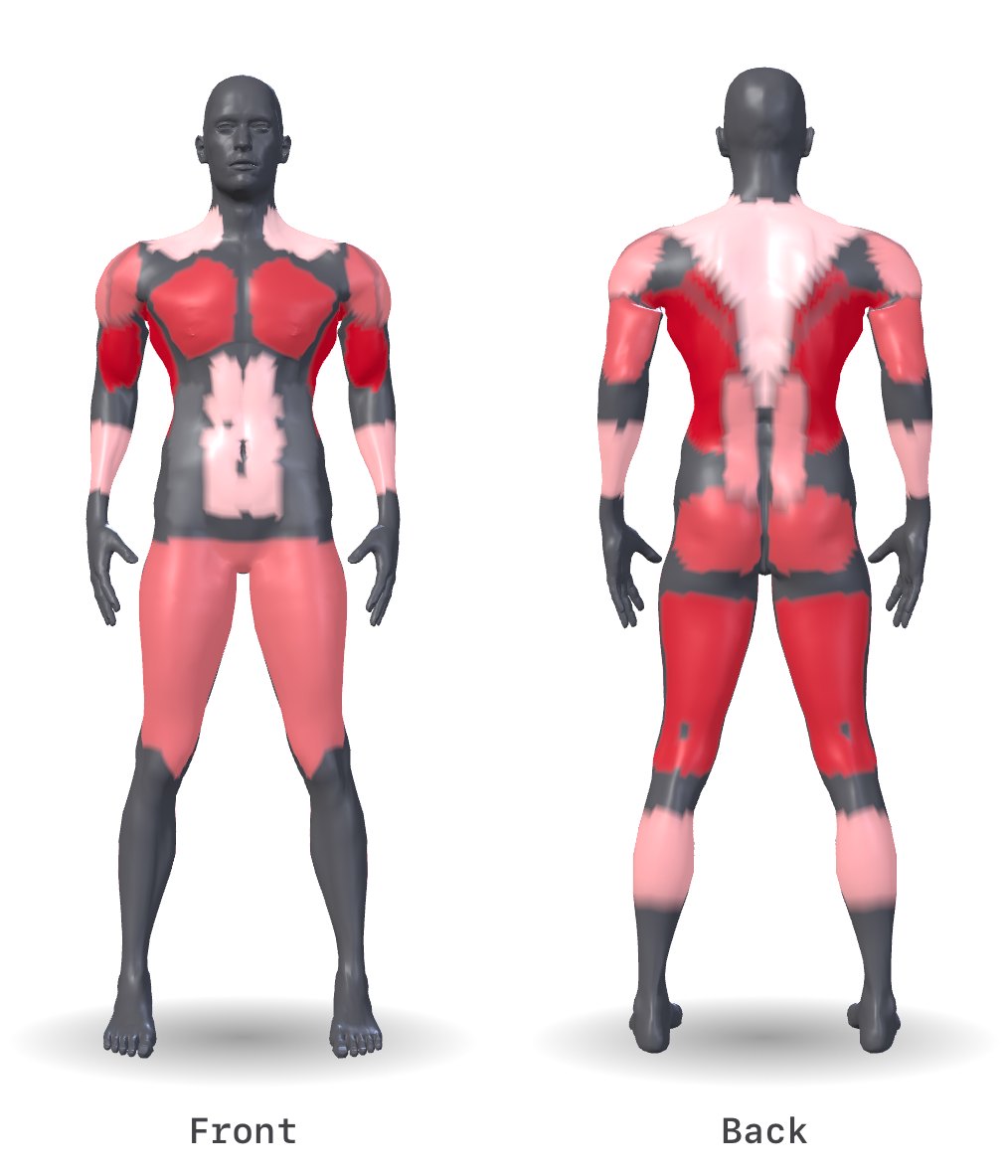
4 days a week
- Mon · Push A
- Tue · Pull A
- Thu · Legs A
- Fri · Push B
Push B is next in the plan’s order, so a fourth day adds it: push twice, pull and legs once. If your four days include both the first and last day of your calendar week (Sunday and Saturday in the US, Monday and Sunday where weeks start on Monday), Push B lands the day before the next Push A, and the app flags it rather than reshuffling. 159 minutes a week.
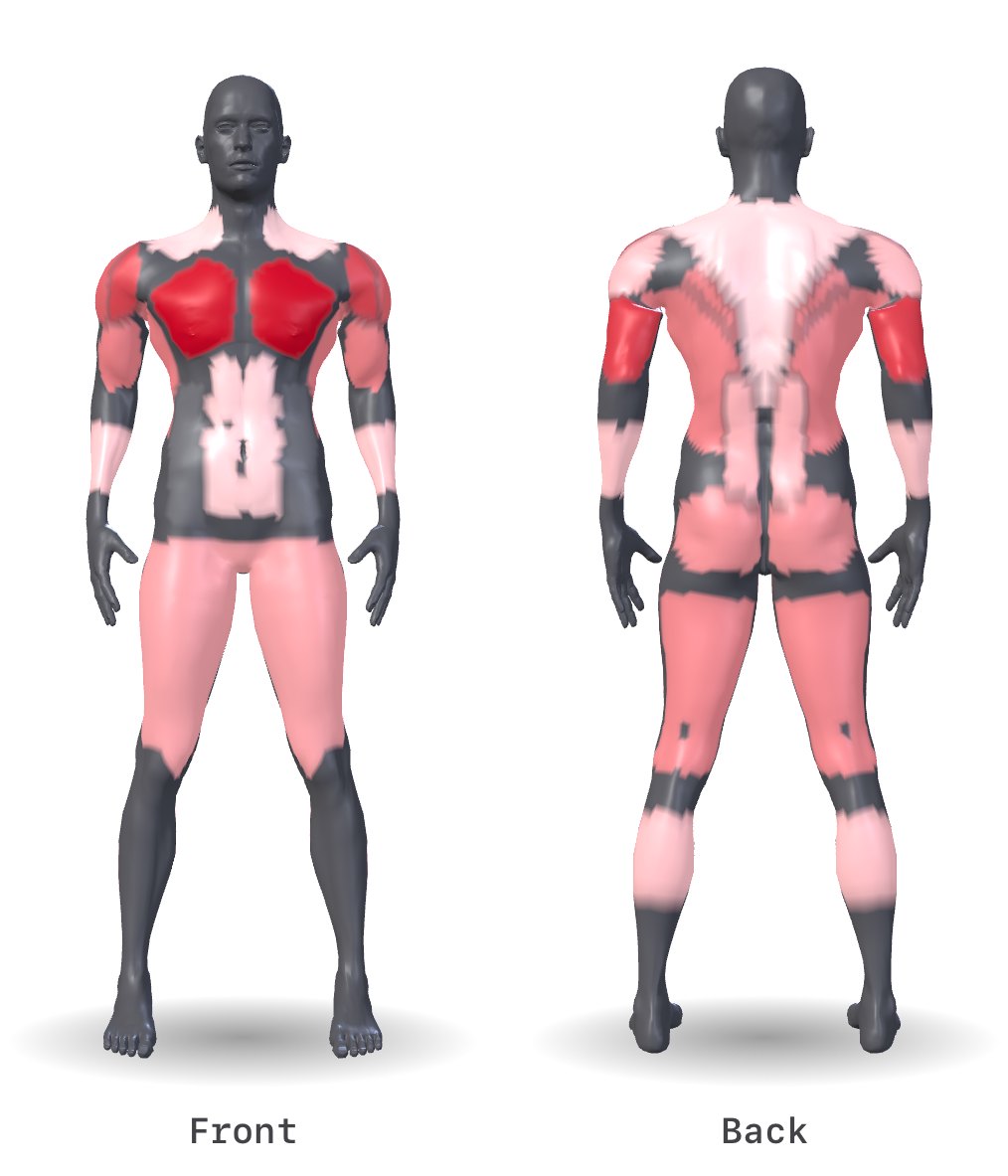
5 days a week
- Mon · Push A
- Tue · Pull A
- Wed · Legs A
- Thu · Push B
- Fri · Pull B
Only Legs B drops out, so the upper body gets two sessions and the legs one. Any five days work: no layout puts an A session and its B session back to back. 194 minutes a week.
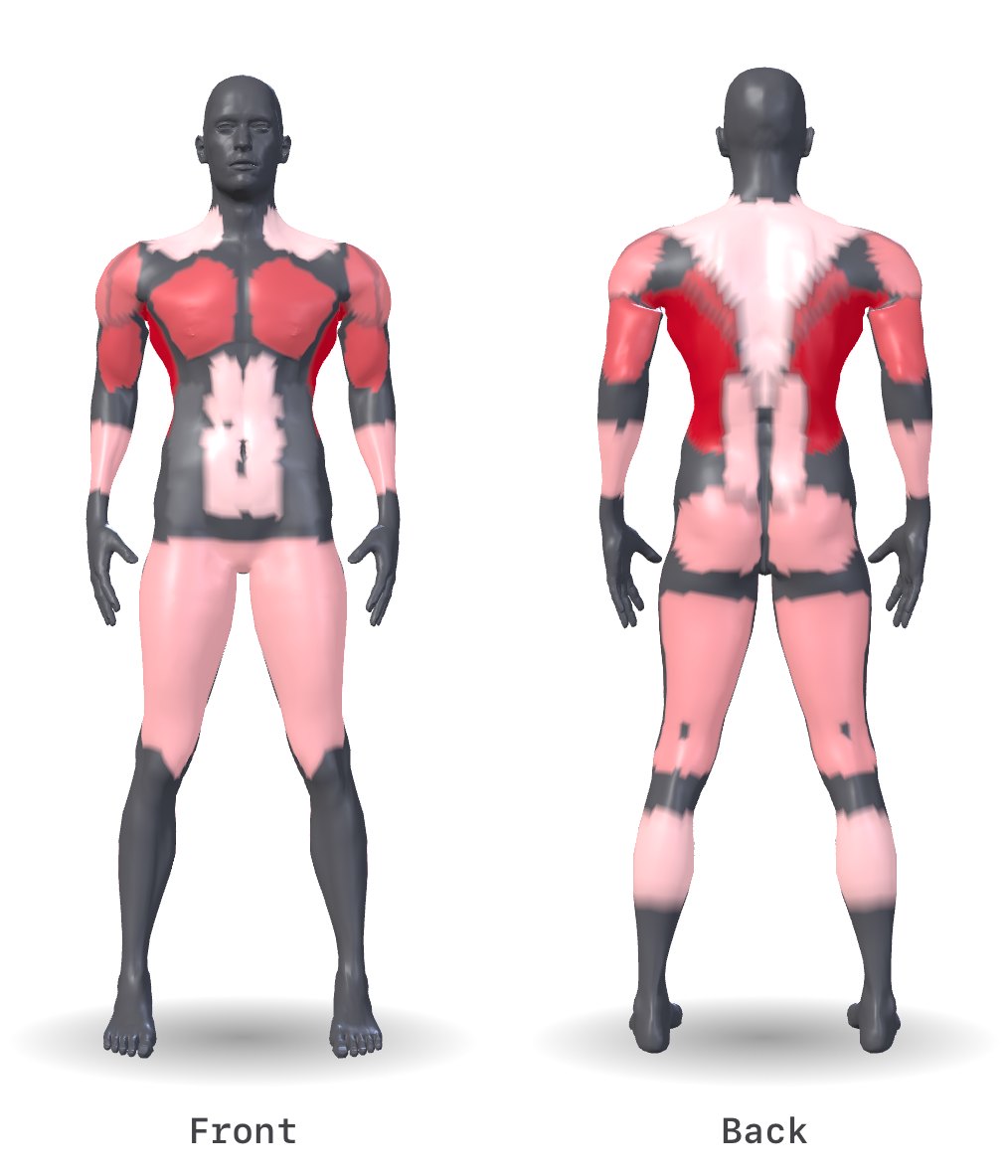
6 days a week
- Mon · Push A
- Tue · Pull A
- Wed · Legs A
- Thu · Push B
- Fri · Pull B
- Sat · Legs B
The full plan, and the days the app suggests first: six spread from the start of your week (Monday to Saturday, or Sunday to Friday where weeks start on Sunday). Each A session and its B are three days apart in this layout. Pick a seventh day and it stays empty; the plan doesn’t invent extra work. 233 minutes a week.
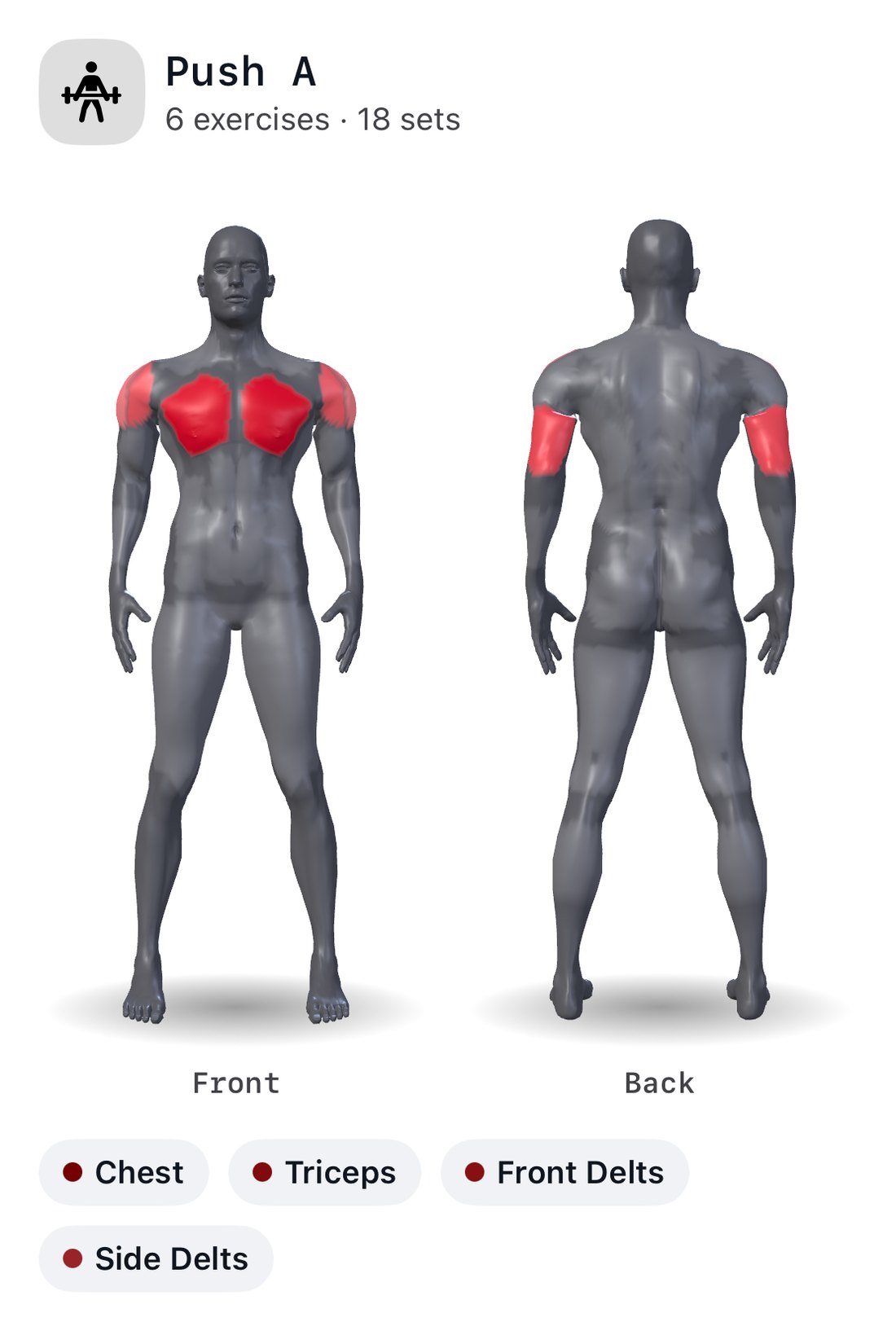
Push A
Flat bench leads. Shoulders and triceps behind it.
The heaviest pressing day of the week. The bench press comes first, while you’re fresh, with the longest rests in the session; on Cinder’s estimate it takes about a third of the time on its own. The two dumbbell presses add volume for the shoulders and upper chest, and three lighter exercises finish the side delts, triceps and chest.
Expect one heavy, focused lift, then steady work with moderate weights and higher reps.
-
4 × 6 · Rest 3 min
Bench Press
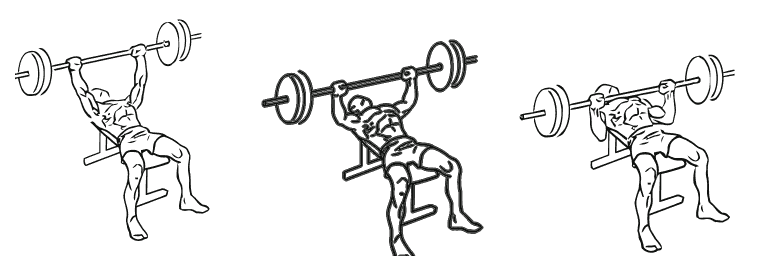
Pull your shoulder blades back and down before you unrack, keep your feet planted, and lower the bar under control to your lower chest before pressing it back up. Bench inside a rack with the safety arms set just below your chest, or with a spotter, and stop each set with two or three reps left: this slot is for heavy, clean sixes.
Swap A Smith machine bench press or a heavy Dumbbell Bench Press, for the same 4 × 6.
-
3 × 10 · Rest 90 s
Dumbbell Seated Shoulder Press
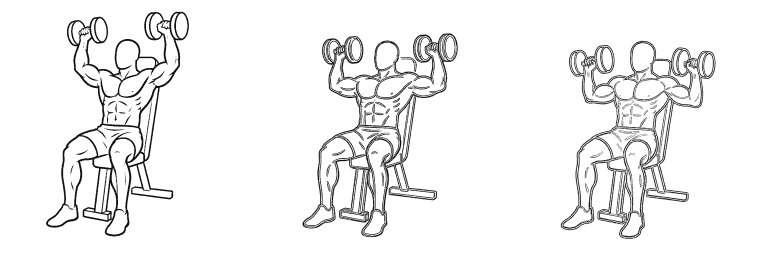
Set the bench upright or one notch back, start with the dumbbells at shoulder height, and press until your arms are straight without banging the weights together. Keep your ribs down: if your lower back arches away from the pad, the weight is too heavy.
Swap The Machine Shoulder Press from Push B, or a standing barbell Overhead Press.
-
3 × 10 · Rest 90 s
Incline Dumbbell Press
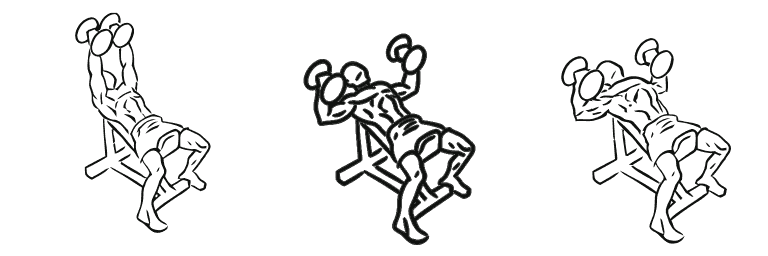
Set the bench to about 30 degrees. In an EMG study of trained lifters, that angle produced the most upper-chest activity, while angles past 45 degrees shifted the work toward the front of the shoulders. Lower the dumbbells until you feel a stretch across your chest, then press them up and slightly together.
Swap An incline Smith machine press or an incline machine press at the same angle.
Research: Rodríguez-Ridao et al., 2020
-
3 × 15 · Rest 1 min
Lateral Raise
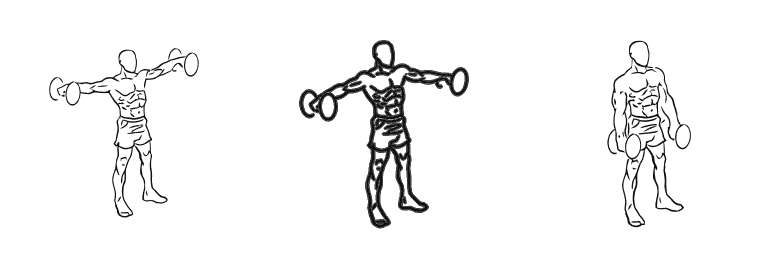
Raise the dumbbells out to your sides until your arms are level with your shoulders, leading with the elbows, then lower them slowly. Pick a weight you can control for all 15 reps; if you have to swing it up, it’s too heavy.
Swap A Cable Lateral Raise one arm at a time, or a lateral raise machine.
-
3 × 12 · Rest 1 min
Tricep Pushdown
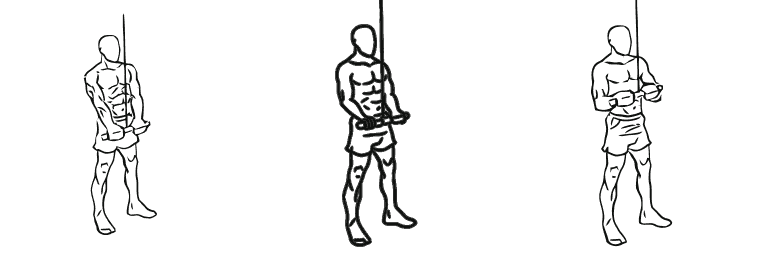
Pin your elbows to your sides and move only your forearms: press down until your arms are straight, then let the attachment rise until your forearms are just above parallel to the floor. Stay upright; if you have to lean over the stack, go lighter.
Swap Any attachment works (rope, straight bar or V-bar); with no cable free, do a dumbbell skullcrusher.
-
2 × 15 · Rest 1 min
Cable Fly
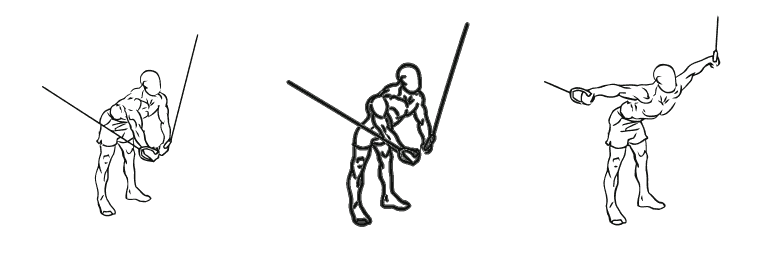
Set the pulleys at about shoulder height, take a step forward, and bring your hands together in a wide hug, with a slight bend in your elbows that doesn’t change. It’s a finisher: two sets chasing a good stretch and a hard squeeze, not a heavy weight.
Swap A pec deck machine, or a Dumbbell Fly on a flat bench.
Pull A
Barbell row leads. Vertical pulling and arms behind it.
The heavy back day. The barbell row goes first, while your lower back and grip are fresh, then a pulldown and a cable row add volume from two directions, one vertical and one horizontal. Face pulls cover the rear delts and upper back, and two curls finish the arms.
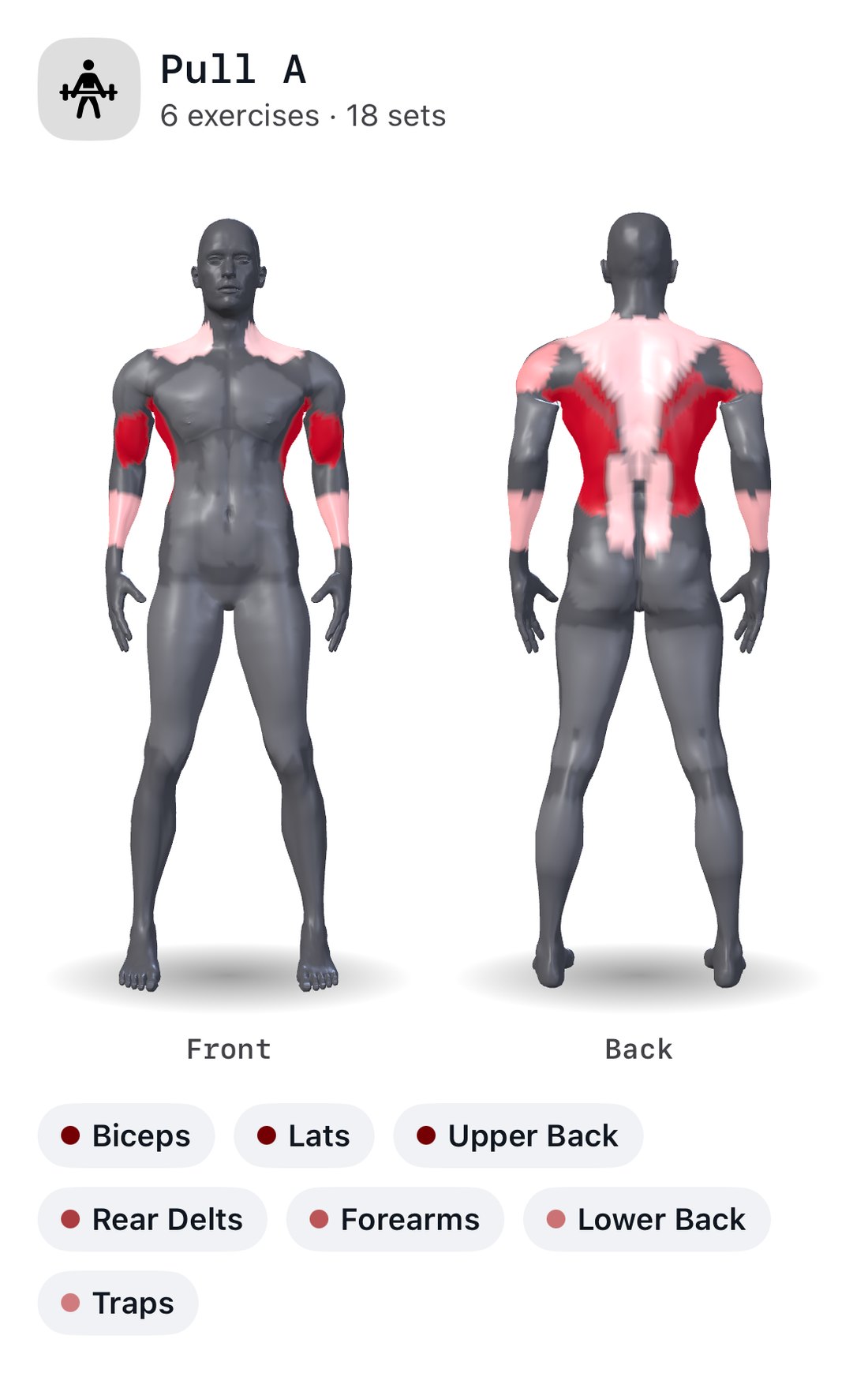
-
4 × 6 · Rest 2 min 30 s
Barbell Row
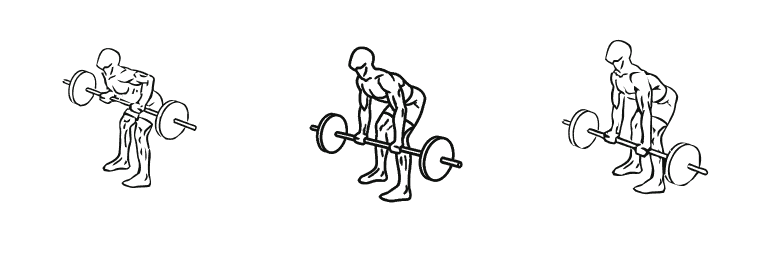
Hinge until your torso is at about 45 degrees or lower, brace, and pull the bar into your lower ribs, then lower it to arm’s length without standing up between reps. If your torso rocks to move the bar, drop the weight until it doesn’t.
Swap A T-Bar Row, or the Chest Supported Row from Pull B if your lower back needs a break.
-
3 × 10 · Rest 90 s
Lat Pulldown
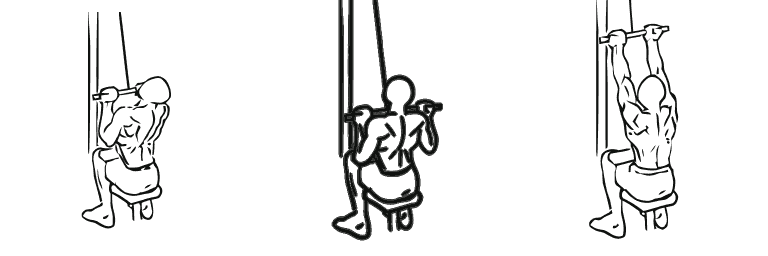
Lock your thighs under the pad, lean back only slightly, and pull the bar to your upper chest by driving your elbows down toward your hips. Let it rise all the way at the top so your lats get a full stretch before the next rep.
Swap An Assisted Pull-up, or pull-ups if you can manage 3 × 10 with good form.
-
3 × 10 · Rest 90 s
Seated Cable Row
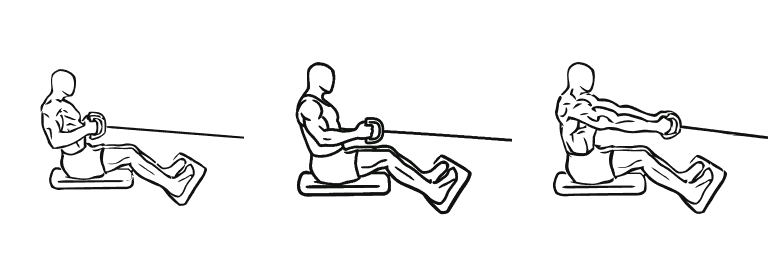
Sit tall with your knees slightly bent, pull the handle to your stomach, and squeeze your shoulder blades together. On the way back, let your arms and shoulders reach forward without rounding your lower back.
Swap A One-Arm Dumbbell Row, 3 × 10 on each side.
-
3 × 15 · Rest 1 min
Face Pull
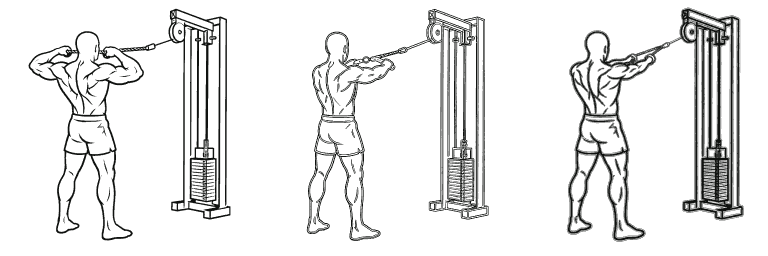
Set a rope at about face height, pull it toward your eyes while pulling the ends apart, and finish with your hands beside your ears and your elbows high. Keep it light and smooth; it’s there for the rear delts and upper back, so don’t lean back to heave it.
Swap The Reverse Pec Deck from Pull B, or a Bent-Over Rear Delt Raise with light dumbbells.
-
3 × 12 · Rest 1 min
Bicep Curl
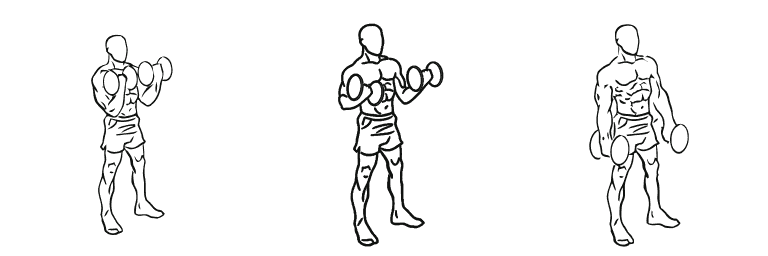
Keep your elbows still at your sides, curl the dumbbells up without swinging, and lower them slowly to straight arms. If you need to rock your hips to finish a rep, use lighter dumbbells.
Swap A cable curl, or the EZ-Bar Curl from Pull B.
-
2 × 12 · Rest 1 min
Hammer Curl
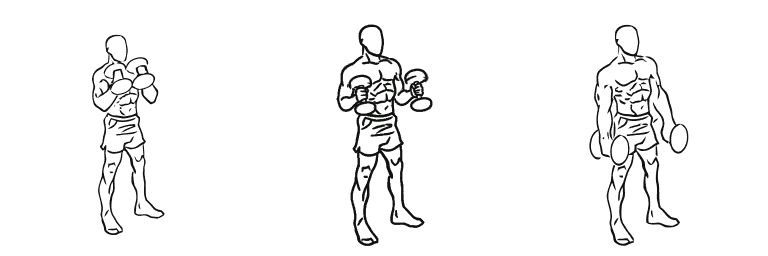
Curl with your palms facing each other the whole way, elbows still, and lower slowly. It’s two sets to finish the arms, and alternating arms makes it easier to stay strict.
Swap A rope cable curl with your palms facing in.
Legs A
Back squat leads, hinge second, machines to finish.
The hardest session of the six, and on four- or five-day weeks your only leg day, so it’s the one to protect. The back squat leads with the longest rest, the Romanian deadlift covers the hamstrings and glutes, and the machines that follow (leg press, leg curl and calf raise) are easier to push hard safely because there’s nothing to balance.
-
4 × 6 · Rest 3 min
Squat
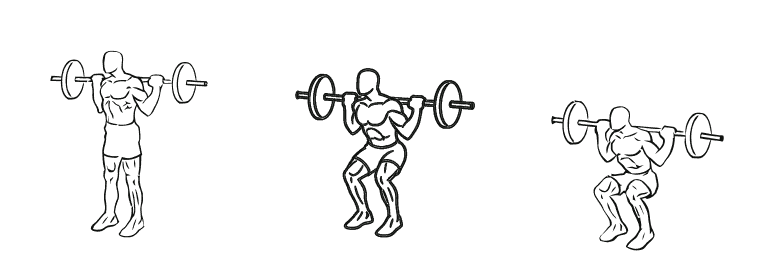
Brace before each rep, sit down between your heels with your knees tracking over your toes, and go as deep as you can while your back holds its position. In a 10-week study, full squats grew the glutes and inner thighs more than half squats did. Squat inside a rack with the safety arms set just below the bottom of your squat.
Swap A Hack Squat or a Smith machine squat, for the same 4 × 6.
Research: Kubo et al., 2019
-
3 × 8 · Rest 2 min
Romanian Deadlift
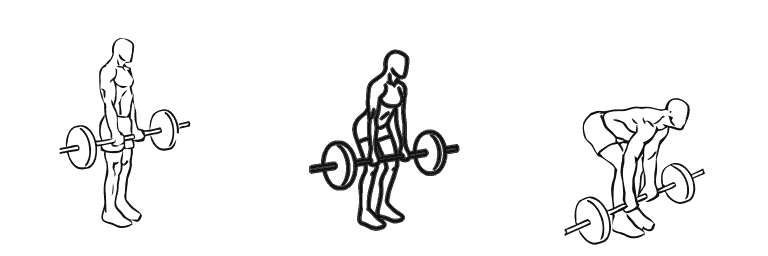
Stand tall with the bar, soften your knees, and push your hips back as the bar slides down your thighs. Stop when your hamstrings are fully stretched and your back is still flat (usually around mid-shin), then drive your hips forward to stand. It’s a hinge, not a squat: your knees barely move.
Swap A Dumbbell Romanian Deadlift, or a Cable Pull-Through if your lower back needs a lighter day.
-
3 × 12 · Rest 90 s
Leg Press
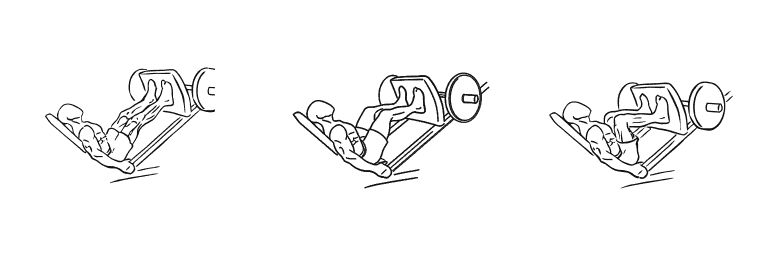
Put your feet about shoulder-width apart in the middle of the platform. Lower until your knees are deeply bent but your hips and lower back stay on the pad, then press back up without snapping your knees straight.
Swap A Hack Squat, or a belt squat if your gym has one.
-
3 × 12 · Rest 1 min
Leg Curl
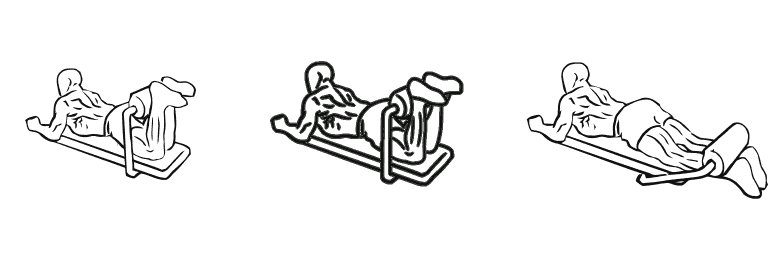
Lying face down, keep your hips pressed into the pad, curl your heels toward your glutes, and lower slowly to straight legs. Legs B uses the seated version, which grew the hamstrings more in a 12-week study (14% against 9%), so if your gym has only one curl machine, the seated one is the better pick.
Swap The Seated Leg Curl, or a standing single-leg curl machine.
Research: Maeo et al., 2021
-
4 × 15 · Rest 1 min
Standing Calf Raise
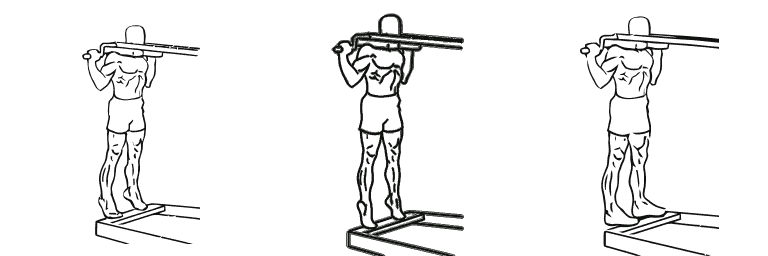
Lower into a full stretch, pause for a second at the bottom, then rise as high as you can, and don’t bounce out of the bottom. This is the calf exercise to protect: in a 12-week MRI study of untrained adults, standing raises grew the calves far more than seated ones.
Swap Calf raises on the leg press with straight knees, or a Single-Leg Calf Raise holding a dumbbell.
Research: Kinoshita et al., 2023
Push B
Incline leads, and the volume moves to machines and cables.
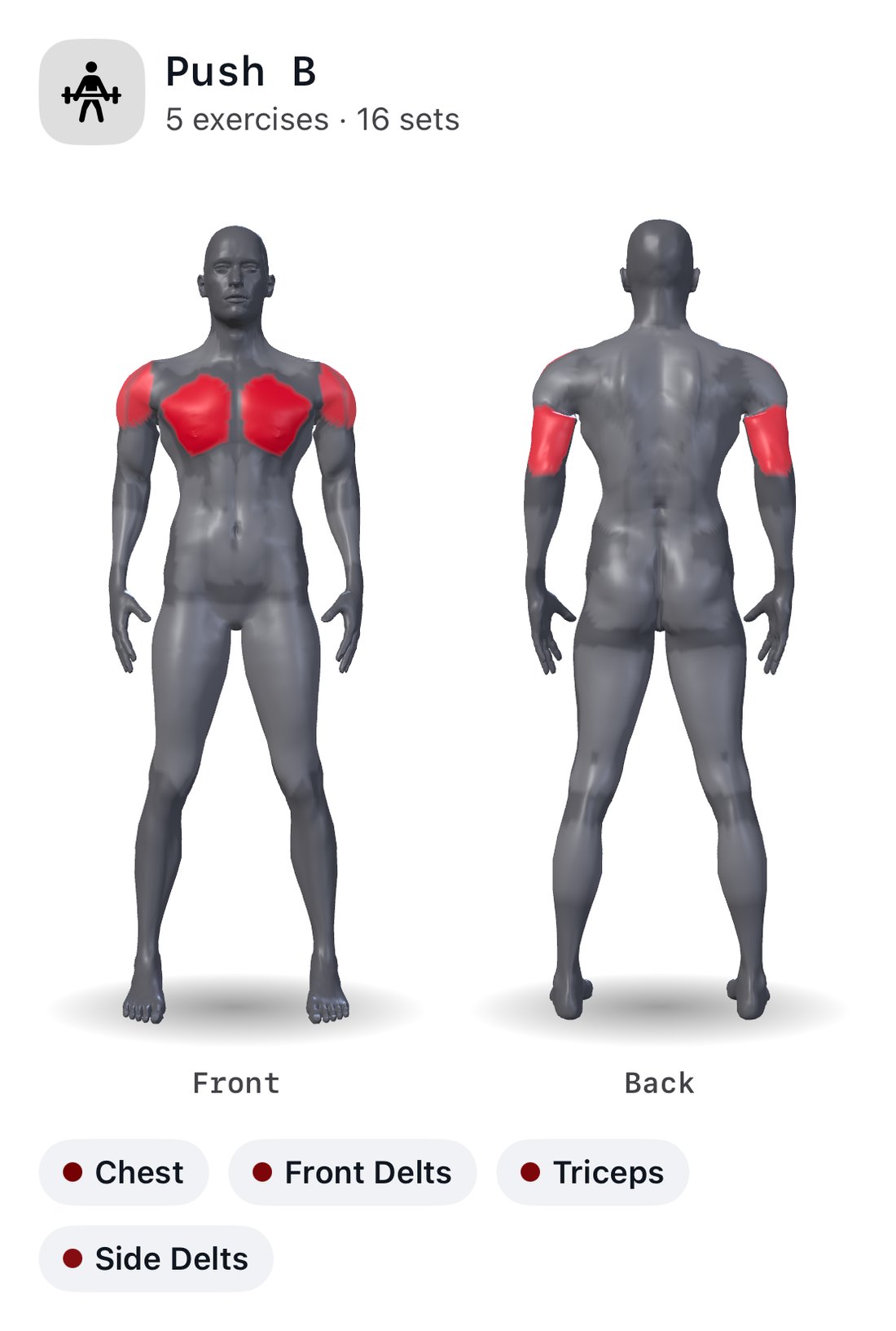
The second push day trains the same muscles with different tools. The incline bench press leads, a machine takes over the shoulder pressing, and the isolation work switches equipment: dumbbells for the fly, a cable for the lateral raise, and an overhead cable extension instead of a pushdown for the triceps.
On a four-day week, this is the one B session you keep.
-
4 × 8 · Rest 2 min 30 s
Incline Bench Press
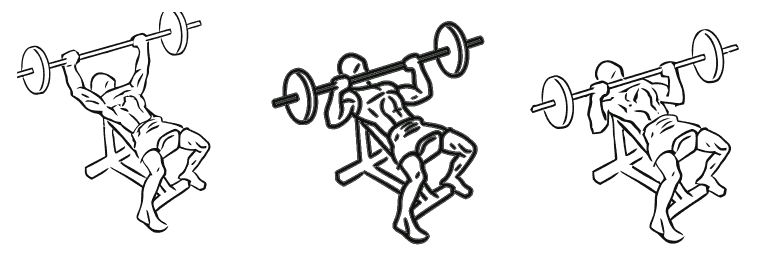
Same setup as the flat bench (shoulder blades pinned, feet planted) on a bench at about 30 degrees, lowering the bar to your upper chest. In an eight-week study of untrained men, incline pressing grew the upper chest more than flat pressing did, which makes it a useful partner to Push A’s bench.
Swap An Incline Dumbbell Press or an incline Smith machine press, for the same 4 × 8.
Research: Chaves et al., 2020, Rodríguez-Ridao et al., 2020
-
3 × 10 · Rest 90 s
Machine Shoulder Press
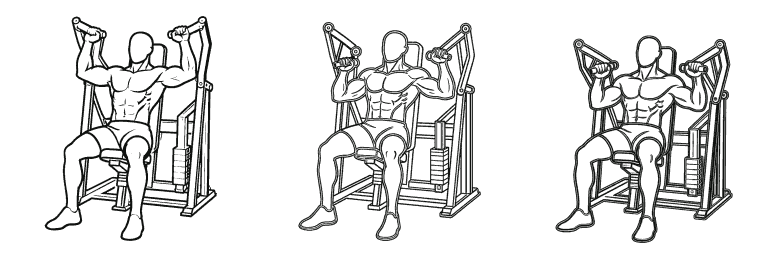
Set the seat so the handles start at about shoulder height, keep your back against the pad, and press without slamming into lockout. With nothing to balance, it’s a safe place to end a set with just one rep in reserve.
Swap The Dumbbell Seated Shoulder Press from Push A.
-
3 × 12 · Rest 1 min
Dumbbell Fly
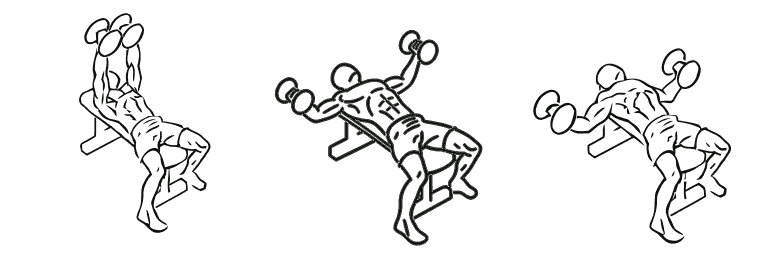
Lie flat with the dumbbells over your chest and a slight bend in your elbows that stays fixed, then open your arms in a wide arc until you feel a deep stretch across your chest, and bring them back up. Go only as deep as you can control, and keep the weight moderate.
Swap The Cable Fly from Push A, or a pec deck.
-
3 × 15 · Rest 1 min
Cable Lateral Raise
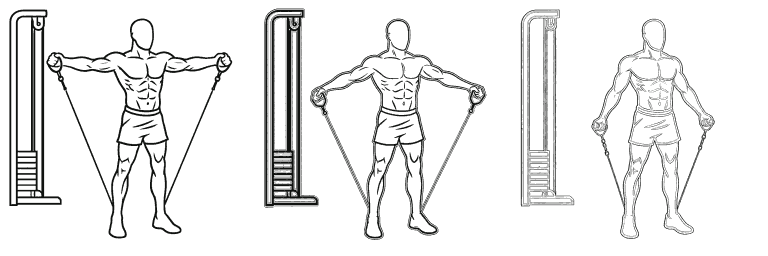
Stand side-on to a low pulley with the cable running in front of you, raise your arm out to shoulder height, then lower it slowly. Most people do these one arm at a time, all 15 on one side and then the other; the cable keeps the shoulder working at the bottom, where a dumbbell barely loads it.
Swap The dumbbell Lateral Raise from Push A, or a lateral raise machine.
-
3 × 12 · Rest 1 min
Overhead Tricep Extension
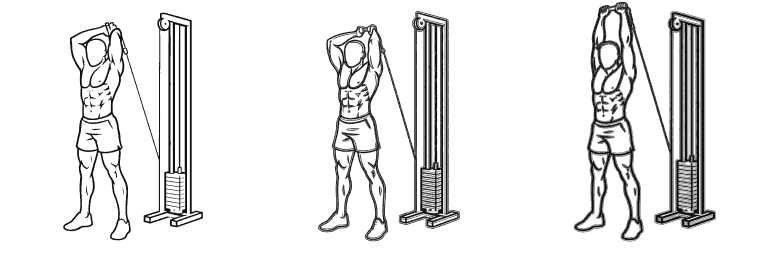
Face away from a cable stack holding a rope behind your head, elbows pointing forward, and straighten your arms overhead, then let your hands travel back to a deep stretch. In a 12-week study, overhead cable extensions grew the triceps about 1.4 times as much as the same movement with the arms down by the sides, the pushdown position.
Swap A dumbbell overhead extension, holding one dumbbell in both hands.
Research: Maeo et al., 2023
Pull B
Pull-ups lead, chest supported rowing behind them.
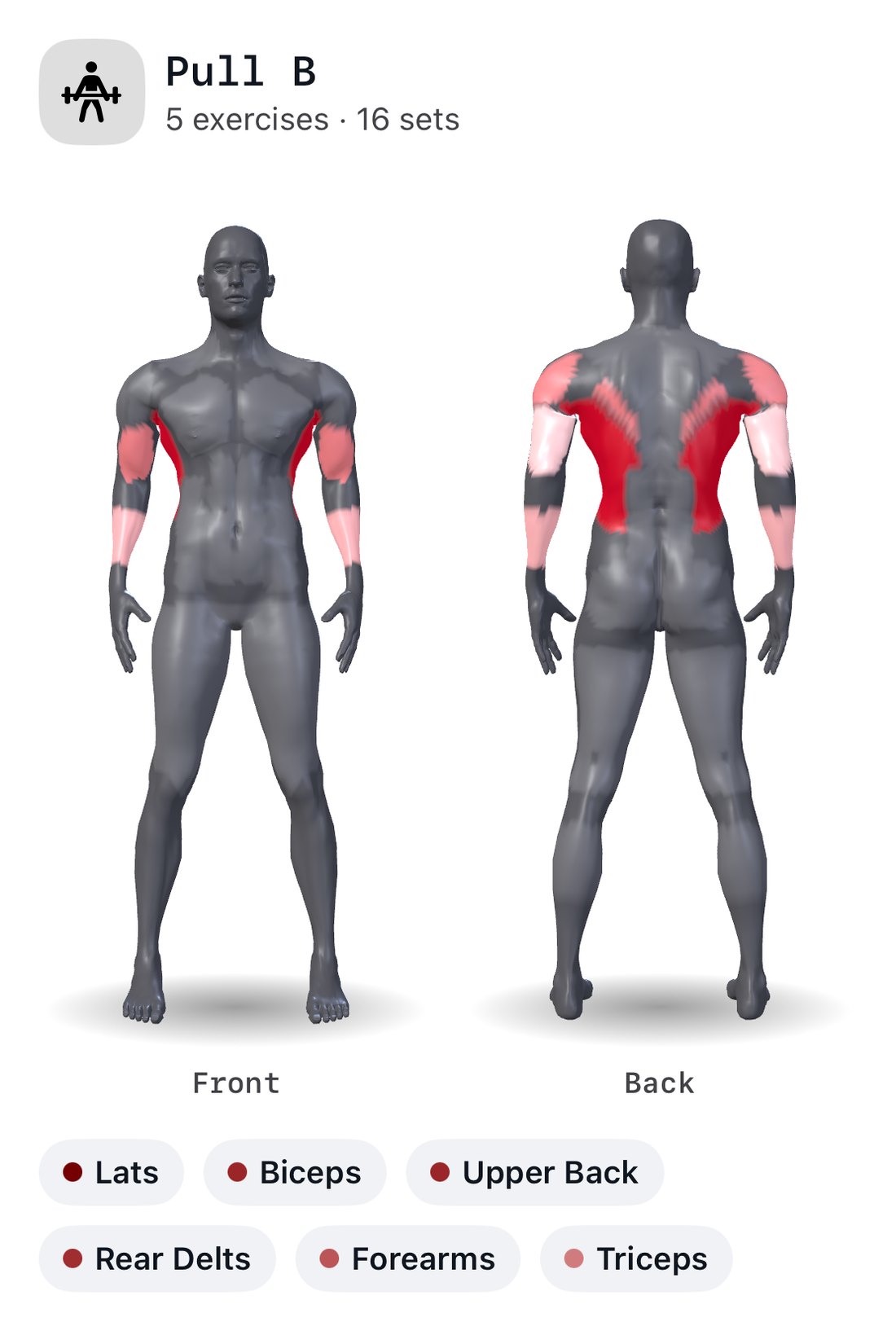
Pull-ups lead, and the rowing is chest supported, so your lower back does far less than in Pull A’s barbell row. The straight-arm pulldown works the lats with the biceps taken out, the reverse pec deck trains the rear delts from a different angle to the face pull, and an EZ-bar curl finishes the arms.
-
4 × 6 · Rest 2 min 30 s
Pull-up
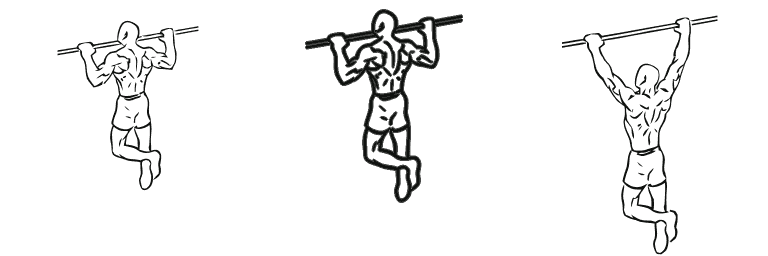
Start from a dead hang, pull your shoulders down, and pull until your chin clears the bar, then lower all the way. If you can’t manage 4 sets of 6, use an assisted machine or a band so every rep is full range; once 6 gets easy, add weight with a dip belt.
Swap An Assisted Pull-up, or a Lat Pulldown heavy enough that 6 reps is hard.
-
3 × 10 · Rest 90 s
Chest Supported Row
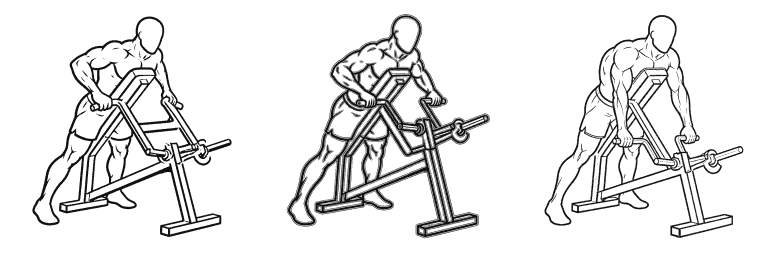
Chest on the pad, pull the handles toward your lower ribs and pause with your shoulder blades squeezed, then let your shoulders reach forward at the bottom. With your chest supported, the only way to cheat is to shorten the range, so don’t.
Swap A dumbbell row lying face down on an incline bench, or the Seated Cable Row from Pull A.
-
3 × 12 · Rest 1 min
Straight-Arm Pulldown
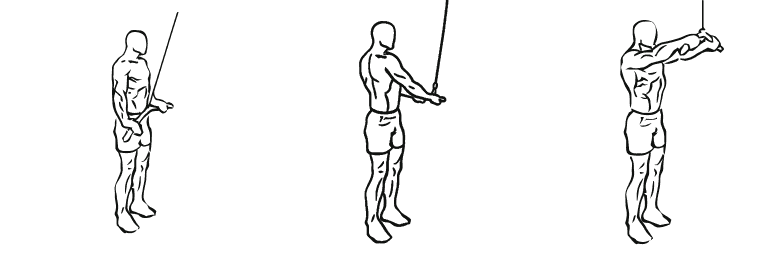
Face a high pulley holding a bar or rope, hinge forward slightly, and with your arms nearly straight sweep your hands down to your thighs, then let them rise until your lats stretch. Your elbows stay almost locked, which takes the biceps out and leaves the lats doing the work.
Swap A dumbbell pullover across a flat bench.
-
3 × 15 · Rest 1 min
Reverse Pec Deck
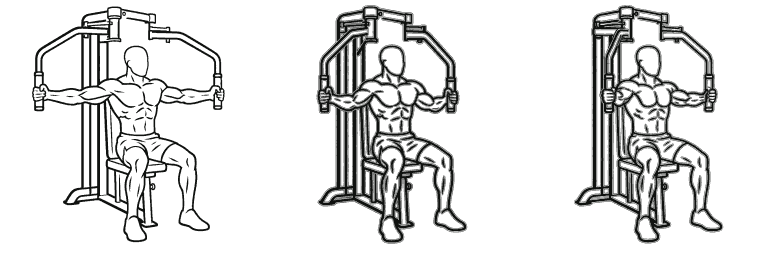
Sit facing the pad with the handles at shoulder height, and sweep your arms back in a wide arc, thinking about pushing your hands out to the sides. Keep it light and strict so the rear delts do the work, not momentum.
Swap The Face Pull from Pull A, or a Bent-Over Rear Delt Raise.
-
3 × 10 · Rest 1 min
EZ-Bar Curl
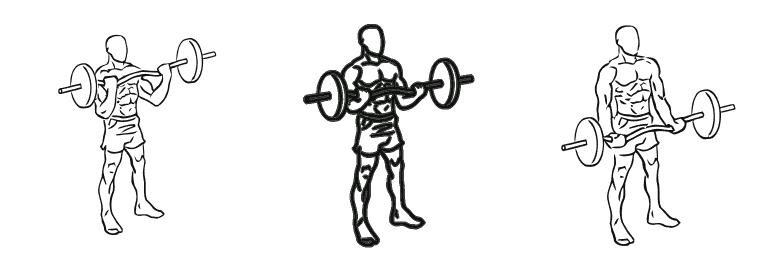
Hold the angled parts of the bar, keep your elbows by your sides, and curl without leaning back, then lower slowly. Use whichever of the bar’s grips feels best on your wrists.
Swap A dumbbell Bicep Curl, or a cable curl with a straight bar.
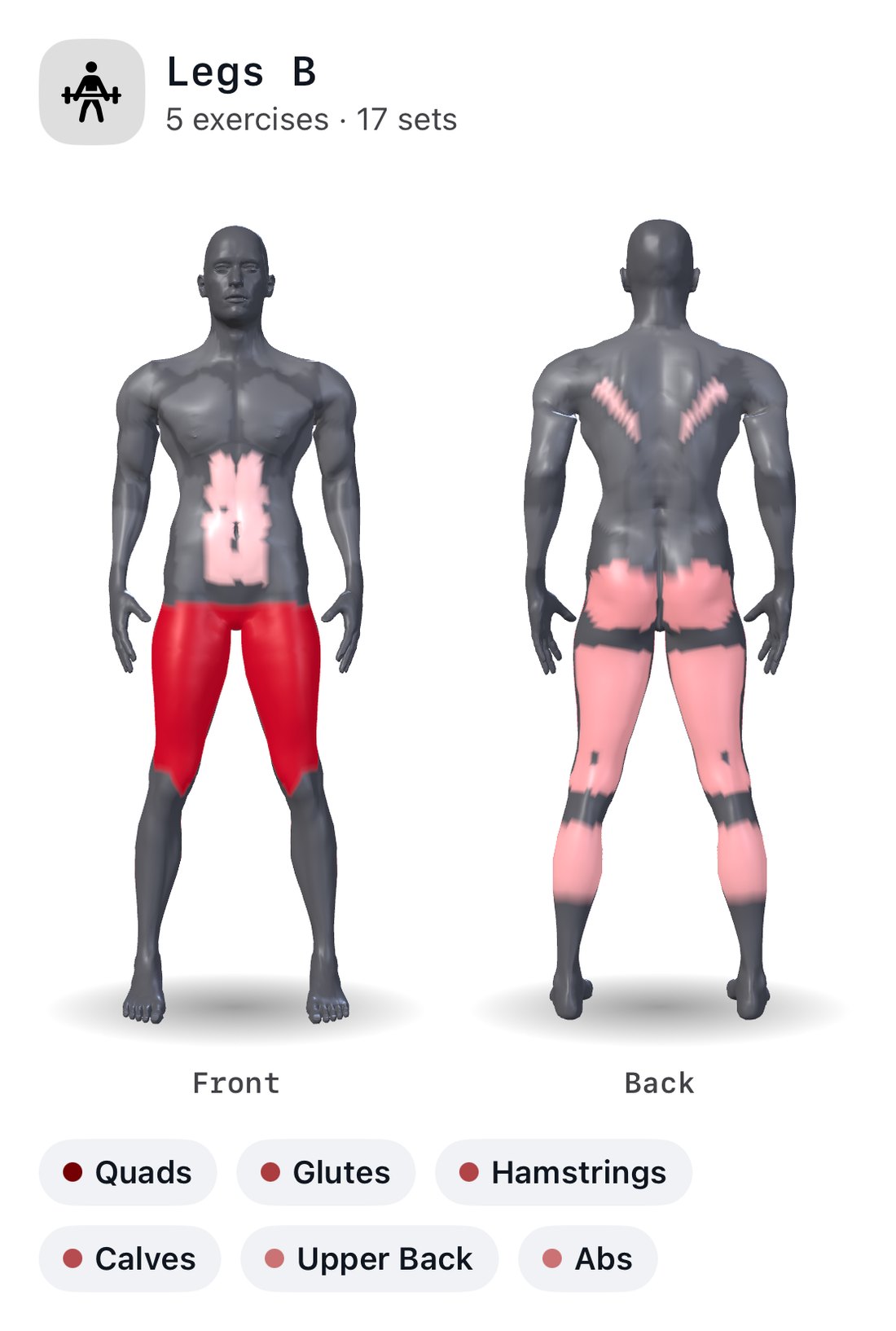
Legs B
Front squat leads, then single leg work and machines.
A quad-focused leg day. The front squat keeps your torso more upright than the back squat, the Bulgarian split squat works one leg at a time, and the machines finish the quads, hamstrings and calves.
There’s no hip hinge in this session, which leaves the hamstrings a little light across the week (see where the plan is light, below). It only appears on six-day weeks.
-
4 × 6 · Rest 3 min
Front Squat
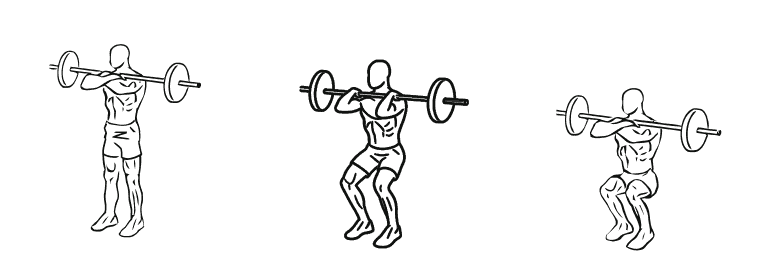
Rest the bar on the front of your shoulders with your elbows high (a clean grip, crossed arms or wrist straps all work), keep your chest up, and squat to full depth. If the bar starts to roll forward, your elbows have dropped: drive them up first on the way out of the bottom.
Swap A Hack Squat, or back squats if the front rack position isn’t comfortable yet.
-
3 × 8 · Rest 90 s
Bulgarian Split Squat
Each side
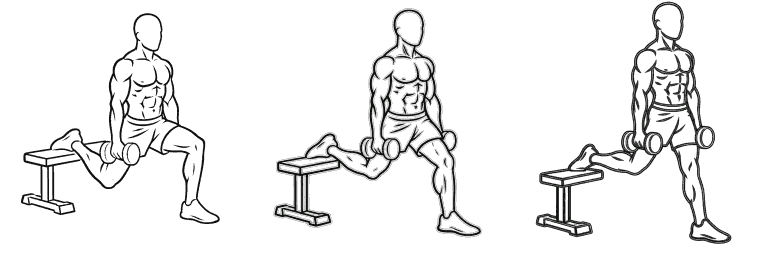
Put your rear foot on a bench and your front foot far enough forward that you can drop straight down. Lower until your back knee nearly touches the floor, then push up through your front foot. Do all 8 on one leg, then the other, starting with your weaker side.
Swap A Walking Lunge or a Step-Up, 3 × 8 on each side.
-
3 × 15 · Rest 1 min
Leg Extension
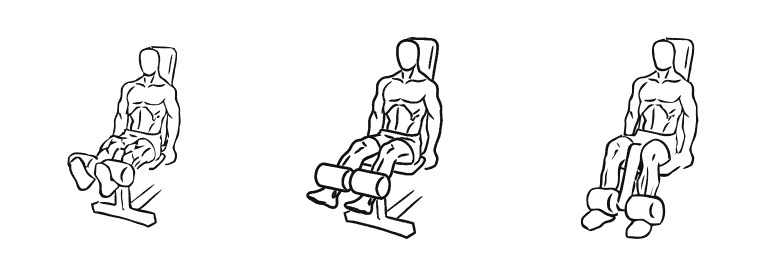
Line your knees up with the machine’s pivot, straighten your legs fully, pause for a moment at the top, and lower under control. There’s nothing to balance, so it’s a good place to take the last set close to failure.
Swap A Heel-Elevated Goblet Squat, or two extra sets of leg press.
-
3 × 12 · Rest 1 min
Seated Leg Curl
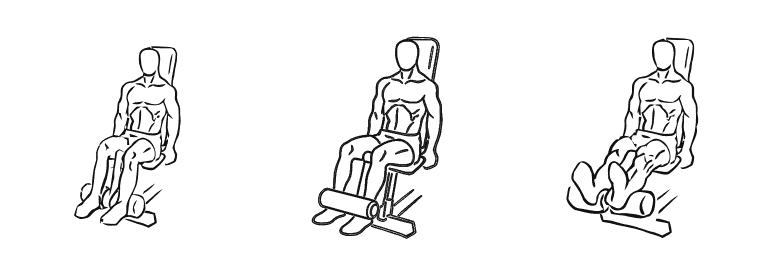
Set the back pad so your knees line up with the pivot and lock the thigh pad down firmly, then curl all the way and return slowly to straight legs. Sitting puts the hamstrings on a stretch at the hip, and in a 12-week MRI study, seated curls grew the hamstrings more than lying ones.
Swap The lying Leg Curl from Legs A, or a Romanian Deadlift if there’s no curl machine.
Research: Maeo et al., 2021
-
4 × 15 · Rest 1 min
Seated Calf Raise
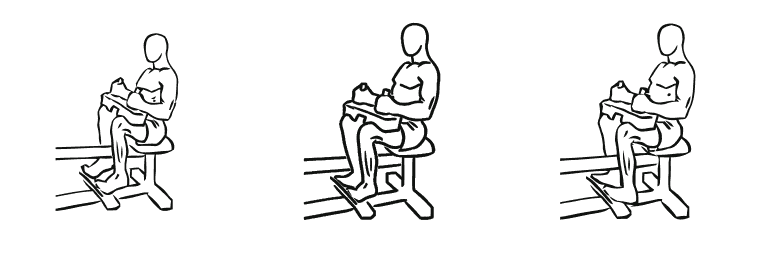
Pad snug on your thighs and the balls of your feet on the edge; lower to a full stretch, pause, and rise all the way. With your knees bent this mostly trains the soleus, and in the same MRI study the soleus grew about as much from standing raises, so if calves are a priority, doing standing raises here too is a reasonable swap (our suggestion).
Swap The Standing Calf Raise from Legs A, or a Single-Leg Calf Raise holding a dumbbell.
Research: Kinoshita et al., 2023
How to run the plan
Warm-ups and starting weights
Before the first lift of each session, do two to four warm-up sets: start light, then add weight and drop reps each set, so the last one is a single or a double a little under your working weight. After that, one lighter set before each new exercise is usually plenty.
In week one, choose weights you could lift for two or three more reps than the plan asks for, and log every set. Week one is for finding your numbers, not testing them; you have seven more weeks to push them up.
How close to failure to train
Reps in reserve (RIR) is how many more reps you could have done when you stopped: 0 means you couldn’t have done another, 2 means two more were there. The scale was developed and tested by researchers as a practical way to rate effort in lifting (Zourdos et al., 2016). Our advice:
- The main lifts (bench press, barbell row, squat, Romanian deadlift, incline bench press, pull-ups, front squat): stop with 2 or 3 reps in reserve. A failed rep under a heavy barbell is a safety problem, and sets taken to failure leave you more fatigued for the sets that follow.
- The other compound lifts (dumbbell and machine presses, pulldowns, cable and machine rows, leg press, split squats): 1 or 2 in reserve.
- Isolation and cable work (raises, curls, extensions, flys, calf raises): 0 to 2 in reserve; taking the last set to failure is fine here.
The research supports getting close without needing to reach failure every set. A 2024 analysis found muscle growth improved as sets ended closer to failure, while strength gains were similar across a wide range of effort (Robinson et al., 2024). A meta-analysis found no clear advantage to training to momentary failure over stopping short of it (Refalo et al., 2023), and in an eight-week trial in trained lifters, stopping with 1 or 2 reps left grew the quads as much as going to failure, with less fatigue (Refalo et al., 2024).
Rest periods
The plan’s rests follow the weight: 3 minutes after the bench press, squat and front squat; two and a half minutes after the barbell row, pull-ups and incline bench; 2 minutes after the Romanian deadlift; 90 seconds after the other compound lifts; and 60 seconds after isolation work. Take them.
In trained men, resting 3 minutes between sets built more strength and more thigh muscle than resting 1 minute (Schoenfeld et al., 2016), and a 2024 meta-analysis found a small benefit to resting longer than 60 seconds, with little difference beyond 90 (Singer et al., 2024). Shorter rests mainly cost you reps on the next set, so if you need a little longer to hit your reps on a heavy day, take it.
How to progress: our double-progression rule
Cinder’s Push Pull Legs template ships no progression. In the app, each of the eight weeks shows the same sessions, sets and reps under a plain “Week 1” to “Week 8”, so moving forward is up to you. We suggest double progression: add reps first, then weight.
- Start each exercise with a weight that gets you the plan’s reps at your target reps in reserve.
- Next session, keep the weight and try to beat your reps. One extra rep on one set counts.
- When you can do two more reps than the plan asks on every set (8 on a 4 × 6, 12 on a 3 × 10) at the same effort, add the smallest jump you can, usually 2.5 kg or 5 lb on a barbell or the next dumbbell up, and go back to the plan’s reps.
That’s close to the American College of Sports Medicine’s long-standing guideline: raise the load by 2 to 10% once you can do one or two reps over your target (ACSM, 2009). The rep-adding phase is real progress too. In an eight-week trial in trained lifters, adding reps at a fixed weight built about as much leg muscle as adding weight (Plotkin et al., 2022). That matters most on raises, curls and flys, where the next dumbbell up (10 kg to 12 kg, say) is a 20% jump.
Expect your reps to dip for a session or two after each weight increase. If a lift stops moving for two or three sessions in a row, look at your sleep and your effort before you look at the plan.
When to deload
The plan doesn’t write in a lighter week, and eight weeks is a long block. Our advice: if you’re stalling on most lifts for a week or two, your joints ache, or you just feel run down, take a deload week. Keep the same days and sessions, do about half the sets, take a little weight off, and stop every set with 3 or 4 reps in reserve. And if you finish the eight weeks feeling run down, take a deload week before starting the next block, a little above where you began this one.
An international panel of strength and physique coaches defined a deload as “a period of reduced training stress designed to mitigate physiological and psychological fatigue, promote recovery, and enhance preparedness for subsequent training” (Bell et al., 2023). In a survey of 246 competitive strength and physique athletes, deloads lasted about a week, came roughly every five to six weeks, and cut sets, reps, load and effort while keeping the same exercises and training days (Rogerson et al., 2024).
Don’t expect a deload to build muscle by itself, though. In a nine-week trial, a week off at the midpoint left muscle gains unchanged and strength gains smaller than training straight through (Coleman et al., 2024). Take one because you need it, not because the calendar says so.
Where the plan is light, and our fixes
We counted the sets (the full table is in the FAQ below). On six days the plan covers nearly everything, with a few gaps worth knowing about:
- Abs get no direct work. Squats and rows make your trunk work hard to hold position, but no session trains the abs directly. Our suggestion: add 3 sets of 10 to 15 reps of a hanging knee raise, cable crunch or ab wheel rollout at the end of two sessions a week.
- Hamstrings trail the quads. Legs B has no hip hinge, so a six-day week gives the hamstrings 9 direct sets against 17 for the quads. Our suggestion: if that matters to you, add 3 × 8 of a Romanian deadlift or a back extension to Legs B.
- Four and five days are lopsided. Filling in from the top means four days trains push twice and pull and legs once, and five days trains legs once. Our suggestion: rotate the extra day. On four days, do Push B, Pull B and Legs B in that slot in turn, one per week; on five, alternate Legs B with Pull B. The app keeps listing the session it scheduled, so this is a swap you make yourself.
- Calves get 4 sets a week on three to five days. Only Legs A has calf work until Legs B joins in. Our suggestion: add 3 sets of standing calf raises to another session.
What isn’t light: the rear delts get face pulls on Pull A, the reverse pec deck on Pull B and every row besides, and the arms get 6 to 8 direct sets a week on six days on top of all the pressing and pulling.
Common mistakes
- Treating every set like a max. The 4 × 6 lifts are heavy on purpose. Grind the first set to failure and the next three suffer.
- Adding weight before the reps are there. A heavier weight lifted badly isn’t progress. Earn each jump with the double-progression rule above.
- Cutting rest on the heavy lifts to save time. It mostly costs you reps. If you’re short on time, drop a set from the last exercise instead.
- Skipping Legs A when the week gets busy. On four and five days it’s your only leg session.
- Swapping exercises every week. The plan repeats the same sessions so you can watch your numbers move. Swap only when the equipment forces you to, and then keep the swap.
- Letting form slide on the last reps. If your torso swings on rows and curls, or your hips shoot up first on squats, the weight is too heavy for the reps.
- Choosing more days than your week can hold. Six days only beats three if you can keep it up for all eight weeks.
Push pull legs FAQ
Is PPL good for beginners?
It can work, but it isn’t where we’d start. Cinder rates this plan intermediate, and it has 32 different exercises across six sessions, several of them technical barbell lifts. The American College of Sports Medicine suggests beginners train two to three days a week with loads they can lift for about 8 to 12 reps (ACSM, 2009), which a full-body plan covers with far fewer exercises to learn. Our beginner gym workout plan is that plan. If you already know the main lifts, the three-day version of this one is a reasonable first split.
PPL 3 days vs 6 days: which is better?
Six days gives every muscle twice the sessions and roughly twice the sets: 102 working sets a week against 53, and on Cinder’s estimate 233 minutes of lifting against 124. More weekly sets tends to mean more growth, with diminishing returns (Pelland et al., 2026), so six days is the bigger stimulus if you can recover from it and keep it up. Three days still trains everything hard once a week, and it’s the better choice if six would fall apart by week three. Four and five days sit in between, with the imbalances described above.
How many sets per muscle does this PPL split give you?
Counting only sets where the muscle is the main target (face pulls count as rear delts):
| Muscle | 3 days | 4 days | 5 days | 6 days |
|---|---|---|---|---|
| Chest | 9 | 16 | 16 | 16 |
| Back (lats and upper back) | 10 | 10 | 20 | 20 |
| Shoulder presses | 3 | 6 | 6 | 6 |
| Side delts | 3 | 6 | 6 | 6 |
| Rear delts | 3 | 3 | 6 | 6 |
| Triceps | 3 | 6 | 6 | 6 |
| Biceps | 5 | 5 | 8 | 8 |
| Quads | 7 | 7 | 7 | 17 |
| Hamstrings | 6 | 6 | 6 | 9 |
| Calves | 4 | 4 | 4 | 8 |
| Abs | 0 | 0 | 0 | 0 |
The smaller muscles also get plenty of indirect work: every press trains the triceps and front delts, and every row and pulldown trains the biceps and rear delts. In the 2026 analysis, counting each indirect set as half a set predicted results best (Pelland et al., 2026). Counted that way, the triceps get roughly 15 sets a week on six days.
How long should a PPL workout take?
Cinder estimates 35 to 42 minutes per session. Its formula allows 4 seconds per rep plus the rest the plan prescribes, so it leaves out warm-up sets, setting up and waiting for equipment. Add those and we’d budget about an hour, with the A sessions the longest.
Can you do push pull legs 4 or 5 days a week?
Yes, and the app lays those weeks out for you, but they’re lopsided: four days is push twice with pull and legs once, and five days is legs once. The rotation in “Where the plan is light” evens it out, or, if four days is your number every week, a four-day upper/lower split trains everything twice.
What if you miss a day?
Do the next session in order when you’re back, rather than skipping ahead or doubling up. If you lose most of a week, repeat that week’s sessions instead of jumping forward.
Can you run on a PPL split?
Yes. Keep most runs easy, and keep hard runs away from the leg days where you can. Our hybrid training plan is built for lifting and running in the same week, and our guide to zone 2 training covers the easy runs.
How we made this
This is Cinder's Push Pull Legs plan exactly as the app ships it. Every session name, summary, exercise, set, rep, rest time and note on this page was taken from the app's plan catalog (WorkoutPlanCatalog.swift), and we checked the page against that source line by line. We haven't changed the plan: the cues, swaps and fixes are ours, and labelled that way.
The sample weeks come from running Cinder's own scheduling code (WorkoutPlanScheduler.swift) against this plan for every possible set of three to six training days, with the week starting on Monday and on Sunday. That is where the details come from: which sessions each week keeps, that the only spacing warning within three to six days comes from certain four-day weeks, and the weekly minute totals.
Session times are Cinder's own estimate: for each exercise, sets × (reps × 4 seconds + the prescribed rest), added up and rounded to the nearest minute. It leaves out warm-ups and setting up.
The training advice (effort, rest, progression and deloads) is ours, and every research claim links to a study whose abstract we read on PubMed before citing it. Many of those studies are short, some are small, and several used untrained people, so treat them as good guidance rather than guarantees.
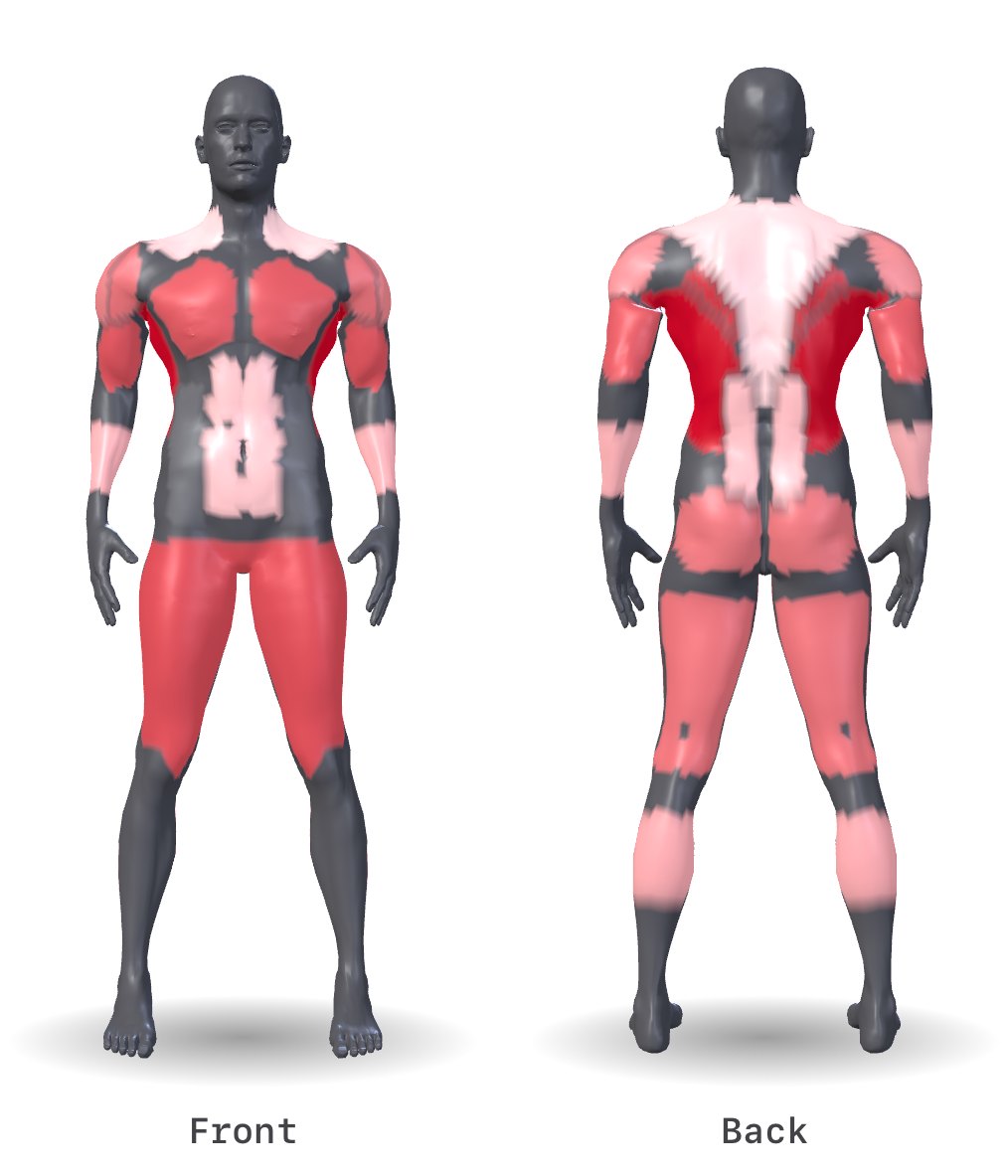
The muscle maps are Cinder's own. We rendered each session in a developer build of the app, with the same 3D muscle map and the same arithmetic it uses after you log a workout: every set counts in full for an exercise's main muscles and half for the muscles that assist, and the shading runs from grey (not worked) to deep red (the session's hardest-worked muscle). The whole-week maps add the sessions together the same way.
The exercise drawings are the ones Cinder shows next to each exercise, by Bryl Lim for Everkinetic (CC BY-SA 4.0), set side by side here in movement order.
The photo comes from Wikimedia Commons and is credited below. Cinder is made by Haplo, which also publishes this blog.
References
- Schoenfeld BJ, Ogborn D, Krieger JW (2017). Dose-response relationship between weekly resistance training volume and increases in muscle mass: a systematic review and meta-analysis. Journal of Sports Sciences 35(11):1073-1082.
- Schoenfeld BJ, Ogborn D, Krieger JW (2016). Effects of resistance training frequency on measures of muscle hypertrophy: a systematic review and meta-analysis. Sports Medicine 46(11):1689-1697.
- Schoenfeld BJ, Grgic J, Krieger J (2019). How many times per week should a muscle be trained to maximize muscle hypertrophy? A systematic review and meta-analysis of studies examining the effects of resistance training frequency. Journal of Sports Sciences 37(11):1286-1295.
- Pelland JC, Remmert JF, Robinson ZP, Hinson SR, Zourdos MC (2026). The resistance training dose response: meta-regressions exploring the effects of weekly volume and frequency on muscle hypertrophy and strength gains. Sports Medicine 56(2):481-505.
- Schoenfeld BJ, Pope ZK, Benik FM, et al. (2016). Longer interset rest periods enhance muscle strength and hypertrophy in resistance-trained men. Journal of Strength and Conditioning Research 30(7):1805-1812.
- Singer A, Wolf M, Generoso L, et al. (2024). Give it a rest: a systematic review with Bayesian meta-analysis on the effect of inter-set rest interval duration on muscle hypertrophy. Frontiers in Sports and Active Living 6:1429789.
- Robinson ZP, Pelland JC, Remmert JF, et al. (2024). Exploring the dose-response relationship between estimated resistance training proximity to failure, strength gain, and muscle hypertrophy: a series of meta-regressions. Sports Medicine 54(9):2209-2231.
- Refalo MC, Helms ER, Trexler ET, Hamilton DL, Fyfe JJ (2023). Influence of resistance training proximity-to-failure on skeletal muscle hypertrophy: a systematic review with meta-analysis. Sports Medicine 53(3):649-665.
- Refalo MC, Helms ER, Robinson ZP, Hamilton DL, Fyfe JJ (2024). Similar muscle hypertrophy following eight weeks of resistance training to momentary muscular failure or with repetitions-in-reserve in resistance-trained individuals. Journal of Sports Sciences 42(1):85-101.
- Zourdos MC, Klemp A, Dolan C, et al. (2016). Novel resistance training-specific rating of perceived exertion scale measuring repetitions in reserve. Journal of Strength and Conditioning Research 30(1):267-275.
- American College of Sports Medicine (2009). Position stand: progression models in resistance training for healthy adults. Medicine and Science in Sports and Exercise 41(3):687-708.
- Plotkin D, Coleman M, Van Every D, et al. (2022). Progressive overload without progressing load? The effects of load or repetition progression on muscular adaptations. PeerJ 10:e14142.
- Bell L, Strafford BW, Coleman M, Androulakis Korakakis P, Nolan D (2023). Integrating deloading into strength and physique sports training programmes: an international Delphi consensus approach. Sports Medicine - Open 9:87.
- Rogerson D, Nolan D, Androulakis Korakakis P, et al. (2024). Deloading practices in strength and physique sports: a cross-sectional survey. Sports Medicine - Open 10:26.
- Coleman M, Burke R, Augustin F, et al. (2024). Gaining more from doing less? The effects of a one-week deload period during supervised resistance training on muscular adaptations. PeerJ 12:e16777.
- Kubo K, Ikebukuro T, Yata H (2019). Effects of squat training with different depths on lower limb muscle volumes. European Journal of Applied Physiology 119(9):1933-1942.
- Maeo S, Huang M, Wu Y, et al. (2021). Greater hamstrings muscle hypertrophy but similar damage protection after training at long versus short muscle lengths. Medicine and Science in Sports and Exercise 53(4):825-837.
- Maeo S, Wu Y, Huang M, et al. (2023). Triceps brachii hypertrophy is substantially greater after elbow extension training performed in the overhead versus neutral arm position. European Journal of Sport Science 23(7):1240-1250.
- Kinoshita M, Maeo S, Kobayashi Y, et al. (2023). Triceps surae muscle hypertrophy is greater after standing versus seated calf-raise training. Frontiers in Physiology 14:1272106.
- Chaves SFN, Rocha-Júnior VA, Encarnação IGA, et al. (2020). Effects of horizontal and incline bench press on neuromuscular adaptations in untrained young men. International Journal of Exercise Science 13(6):859-872.
- Rodríguez-Ridao D, Antequera-Vique JA, Martín-Fuentes I, Muyor JM (2020). Effect of five bench inclinations on the electromyographic activity of the pectoralis major, anterior deltoid, and triceps brachii during the bench press exercise. International Journal of Environmental Research and Public Health 17(19):7339.
Image credits
- Weights room in Turner Hall, Milwaukee · Photo: James Steakley, CC BY-SA 4.0 (Resized)
- Exercise drawings (the same ones Cinder shows) · Drawings: Bryl Lim, from Everkinetic, CC BY-SA 4.0 (rasterized, recolored and traced for Cinder; recolored and set side by side here)